
Stöbern
genialokal zum Startbildschirm hinzufügen
Installieren Sie die genialokal App auf Ihrem Startbildschirm für einen schnellen Zugriff und eine komfortable Nutzung.
Installieren Sie die genialokal App auf Ihrem Startbildschirm für einen schnellen Zugriff und eine komfortable Nutzung.
Tippen Sie einfach auf Teilen:
 Und dann auf "Zum Home-Bildschirm [+]".
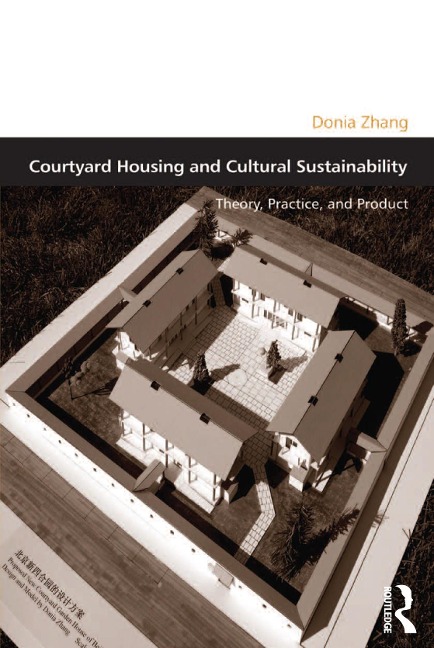
Cultural sustainability is a very important aspect of the overall sustainability framework and is regarded as the fourth pillar alongside the other three: environmental, economic, and social sustainability. However, the concept is neither fully explored, nor widely accepted or recognized. This book elicits the interplay of nature-culture-architecture and theorizes the concept of cultural sustainability and culturally sustainable architecture. It identifies four key themes in Chinese philosophy: Harmony with Heaven, Harmony with Earth, Harmony with Humans, and Harmony with Self, along with Greek philosopher Aristotle's physics: form, space, matter, and time, it sets them as criteria to evaluate the renewed and new courtyard housing projects constructed in China since the 1990s. Using an innovative architectural and social science approach, this book examines the political, economic, social, and spatial factors that affect cultural sustainability. Supported by a multiplicity of data including: field surveys, interviews with residents, architects, and planners, time diaries, drawings, photos, planning documents, observation notes, and real estate brochures, the book proposes new courtyard garden house design strategies that promote healthy communities and human care for one another, a concept that is universally applicable. The volume is a first opportunity to take a holistic view, to encompass eastern and western, tangible and intangible, cultures in the theorization of cultural sustainability and culturally sustainable architecture. It is a comprehensive contribution to architectural theory.
Donia Zhang is a graduate of Oxford Brookes University (BArch, MA, PhD) in the UK and Brock University (MEd) in Canada. She has worked in the architectural industry for 7 years, taught art history and AutoCAD, among other subjects, in Ontario. She has published two other books: Courtyard Houses of Beijing: Past, Present, and Future (2009/2010/2011), and Schoolyard Gardening as Multinaturalism: Theory, Practice, and Product (2009).
Contents: Foreword, Ronald G. Knapp; Prologue; Introduction: lost link between Heaven and Earth; Part I Cultural Sustainability: Four pillars of sustainable development: courtyard housing and cultural sustainability; Four key themes in Chinese philosophy on city planning and courtyard house design. Part II Classical Courtyard Houses of China: Form and environmental quality, space and construction quality of classical courtyard houses; Matters of social cohesion, time and cultural activities in classical courtyard houses. Part III New Courtyard Housing: Historic preservation and modernization of classical courtyard houses; Harmony with Heaven: form and environmental quality of the new courtyard housing; Harmony with Earth: space and construction quality of the new courtyard housing; Harmony with humans: matters of social cohesion in the new courtyard housing; Harmony with self: time and cultural activities in the new courtyard housing. Part IV Culturally Sustainable Architecture: Four cornerstones of culturally sustainable architecture. Part V Future New Courtyard Garden Houses: Conclusion: in search of paradise; Epilogue; Appendix; References; Index.
Dieses eBook wird im PDF-Format geliefert und ist mit einem Adobe Kopierschutz (DRM) versehen. Sie können dieses eBook mit allen Geräten lesen, die das PDF-Format und den Adobe Kopierschutz (DRM) unterstützen.
Zum Beispiel mit den folgenden Geräten:
• tolino Reader
Laden Sie das eBook direkt über den Reader-Shop auf dem tolino herunter oder übertragen Sie das eBook auf Ihren tolino mit einer kostenlosen Software wie beispielsweise Adobe Digital Editions.
• Sony Reader & andere eBook Reader
Laden Sie das eBook direkt über den Reader-Shop herunter oder übertragen Sie das eBook mit der kostenlosen Software Sony READER FOR PC/Mac oder Adobe Digital Editions auf ein Standard-Lesegeräte mit epub- und Adobe DRM-Unterstützung.
• Tablets & Smartphones
Möchten Sie dieses eBook auf Ihrem Smartphone oder Tablet lesen, finden Sie hier unsere kostenlose Lese-App für iPhone/iPad und Android Smartphone/Tablets.
• PC & Mac
Lesen Sie das eBook direkt nach dem Herunterladen mit einer kostenlosen Lesesoftware, beispielsweise Adobe Digital Editions, Sony READER FOR PC/Mac oder direkt über Ihre eBook-Bibliothek in Ihrem Konto unter „Meine eBooks“ - „online lesen“.
Schalten Sie das eBook mit Ihrer persönlichen Adobe ID auf bis zu sechs Geräten gleichzeitig frei.
Bitte beachten Sie, dass die Kindle-Geräte das Format nicht unterstützen und dieses eBook somit nicht auf Kindle-Geräten lesbar ist.