
Stöbern
genialokal zum Startbildschirm hinzufügen
Installieren Sie die genialokal App auf Ihrem Startbildschirm für einen schnellen Zugriff und eine komfortable Nutzung.
Installieren Sie die genialokal App auf Ihrem Startbildschirm für einen schnellen Zugriff und eine komfortable Nutzung.
Tippen Sie einfach auf Teilen:
 Und dann auf "Zum Home-Bildschirm [+]".
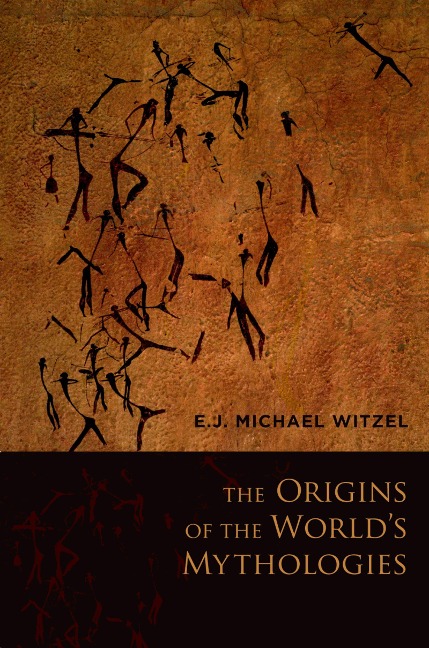
This remarkable book is the most ambitious work on mythology since that of the renowned Mircea Eliade, who all but single-handedly invented the modern study of myth and religion. Focusing on the oldest available texts, buttressed by data from archeology, comparative linguistics and human population genetics, Michael Witzel reconstructs a single original African source for our collective myths, dating back some 100,000 years. Identifying features shared by this "Out of Africa" mythology and its northern Eurasian offshoots, Witzel suggests that these common myths--recounted by the communities of the "African Eve"--are the earliest evidence of ancient spirituality. Moreover these common features, Witzel shows, survive today in all major religions. Witzel's book is an intellectual hand grenade that will doubtless generate considerable excitement--and consternation--in the scholarly community. Indeed, everyone interested in mythology will want to grapple with Witzel's extraordinary hypothesis about the spirituality of our common ancestors, and to understand what it tells us about our modern cultures and the way they are linked at the deepest level.
E.J. Michael Witzel is Wales Professor of Sanskrit at Harvard University.
Contents §1 Introduction 1.1 What is myth, how do we study and compare it? 1.2 Definition; study of myth in the past 1.3 Comparative mythology 1.4 Laurasian mythology: establishing the common origin of the mythologies of Eurasia and the Americas 1.5 Earlier explanations of myth 1.6 Ur-forms, history, and archaeology 1.7 Summary
§ 2 Comparison and Theory 2.1 Theory and practice of comparisons 2.2 Reconstructing Laurasian mythology 2.2.1 Similarities 2.2.2 Regular correspondences and establishment of a unified narrative scheme 2.2.3 Oldest texts to be used 2.2.4 Geographically dispersed items 2.2.5 Reconstruction of the Laurasian common story line and individual myths 2.3 Enhancing the reconstruction: local, regional, macro-regional, and subcontinental variations 2.4 Reconstructing the Laurasian mythological system and inherent problems 2.5 Structure and content in some macro-areas of Laurasian myth. 2.5.1 Macro-areas 2.5.2 The Four ages in the Eurasian and Meso-American macro-areas 2.5.3 Later centers of innovations 2.5.4 Late borrowings (diffusion) 2.6 Some objections to the approach of historical comparative mythology 2.7 Conclusion
§ 3 Creation Myths: The Laurasian Story Line, Our First Novel 3.1 Primordial Creation 1. Chaos and darkness 2. Water 3. Earth diver and floating earth 4. Giant 5. Bull 6. Egg 7. Combined versions 3.2 Father Heaven, Mother Earth 3.3 Separation of heaven and earth, the prop 3.4. Creation of land 3.5 The demiurge or trickster 3.5.1 Creation of light 3.5.2. The slaying of the dragon 3.5.3 The theft of fire and of the heavenly drink 3.6 Generations, Four Ages and five suns 3.7 The creation of humans 3.8 Descent of 'noble' lineages 3.9 The flood 3.10 Heroes 3.11 The final destruction 3.12 Summary
§ 4 The Contributions of Other Sciences: comparison of language, physical anthropology, genetics, archaeology 4.1. Linguistics 4.2 Physical anthropology 4.3. Genetics 4.3.1 Recent advances in human population genetics 4.3.2 Overview of recent developments 4.3.3 Out of Africa 4.3.4 Movement northward after the last two Ice Ages 4.3.5 Genetics, language and mythology 4.3.6 Summary and outlook 4.4. Archaeology 4.4.1 Cave paintings and plastic art 4.4.2 Sacrifice in Late Palaeolithic art 4.4.3 Food production 4.4.4 Domestic animals and pastoralism 4.5 Other items of comparison: children's songs and games; ancient music and regional styles; use of colors; gestures and their regional variations. 4.6. Conclusions resulting from the comparison of the sciences involved
§ 5 The Countercheck: Australia, Melanesia, sub-Saharan Africa 5.1 Possible ways to countercheck 5.1.1 Method 5.1.2 Criteria for testing the theory 5.1.3 Diffusion vs genetic relationship 5.1.4 Later additions 5.2 Beyond Laurasia: Gondwana mythology 5.3. Gondwana mythologies 5.3.1 Sub-Saharan Africa, the Andamans, New Guinea, Australia and Tasmania -- an overview 5.3.2 Australia 5.3.2.1 Tasmania 5.3.3. Melanesia 5.3.3.1 Negritos and other southern remnant populations 5.3.4 Andaman Islands 5.3.5 Africa 5.3.5.1 Remnant populations: San and Pygmies 5.3.5.2 Sub-Saharan Africa 5.3.5.3 Northern influences: the western North-South highway 5.3.5.4 The eastern North-South Highway 5.3.6 Summary 5.4. Individual Gondwana myth types and their common characteristics 5.5 Secondary influences on Gondwana mythology 5.6. Conflicting myths in Gondwanaland 5.6.1 Gondwana element in Laurasian myth 5.6.2 Laurasian elements in Gondwana myth 5.7 Countercheck of Laurasian mythology based on Gondwana mythology 5.7.1 Essential features of Gondwana and Laurasian mythology 5.7.2 The flood myth in world wide perspective
§ 6 First Tales: Pan-Gaean Mythology 6.1 Beyond Laurasia and Gondwana: common myths 6.2 Our first tales
§ 7 Laurasian Mythology in Historical Development 7.1 Late Palaeolithic religion 7.1.1 Late Palaeolithic shamanism 7.1.2 Sacrifice 7.2. Changes from Palaeolithic to state societies 7.3. Dating Gondwana and Laurasian mythology
§ 8 Outlook 8.1 The meaning of Laurasian Mythology 8.2 Beyond Laurasia, Gondwana and Pan-Gaia 8.2.1 Persistence of myth 8.2.2 Some reasons 8.3 Epilogue
Dieses eBook wird im PDF-Format geliefert und ist mit einem Adobe Kopierschutz (DRM) versehen. Sie können dieses eBook mit allen Geräten lesen, die das PDF-Format und den Adobe Kopierschutz (DRM) unterstützen.
Zum Beispiel mit den folgenden Geräten:
• tolino Reader
Laden Sie das eBook direkt über den Reader-Shop auf dem tolino herunter oder übertragen Sie das eBook auf Ihren tolino mit einer kostenlosen Software wie beispielsweise Adobe Digital Editions.
• Sony Reader & andere eBook Reader
Laden Sie das eBook direkt über den Reader-Shop herunter oder übertragen Sie das eBook mit der kostenlosen Software Sony READER FOR PC/Mac oder Adobe Digital Editions auf ein Standard-Lesegeräte mit epub- und Adobe DRM-Unterstützung.
• Tablets & Smartphones
Möchten Sie dieses eBook auf Ihrem Smartphone oder Tablet lesen, finden Sie hier unsere kostenlose Lese-App für iPhone/iPad und Android Smartphone/Tablets.
• PC & Mac
Lesen Sie das eBook direkt nach dem Herunterladen mit einer kostenlosen Lesesoftware, beispielsweise Adobe Digital Editions, Sony READER FOR PC/Mac oder direkt über Ihre eBook-Bibliothek in Ihrem Konto unter „Meine eBooks“ - „online lesen“.
Schalten Sie das eBook mit Ihrer persönlichen Adobe ID auf bis zu sechs Geräten gleichzeitig frei.
Bitte beachten Sie, dass die Kindle-Geräte das Format nicht unterstützen und dieses eBook somit nicht auf Kindle-Geräten lesbar ist.