
Stöbern
genialokal zum Startbildschirm hinzufügen
Installieren Sie die genialokal App auf Ihrem Startbildschirm für einen schnellen Zugriff und eine komfortable Nutzung.
Installieren Sie die genialokal App auf Ihrem Startbildschirm für einen schnellen Zugriff und eine komfortable Nutzung.
Tippen Sie einfach auf Teilen:
 Und dann auf "Zum Home-Bildschirm [+]".
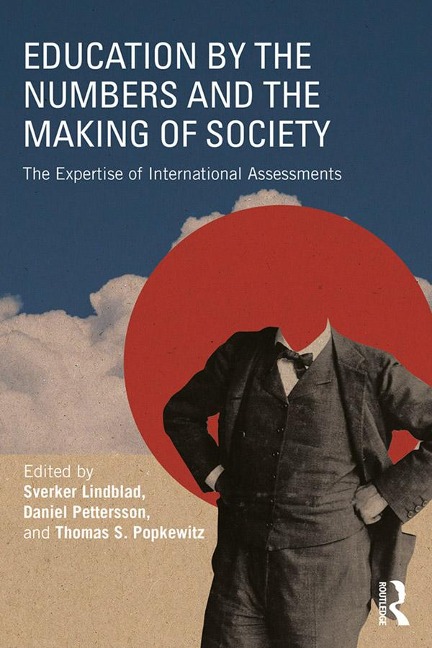
International statistical comparisons of nations have become commonplace in the contemporary landscape of education policy and social science. This book discusses the emergence of these international comparisons as a particular style of reasoning about education, society and science. By examining how international educational assessments have come to dominate much of contemporary policymaking concerning school system performance, the authors provide concrete case studies highlighting the preeminent role of numbers in furthering neoliberal education reform. Demonstrating how numbers serve as 'rationales' to shape and fashion social issues, this text opens new avenues for thinking about institutional and epistemological factors that produce and shape educational policy, research and schooling in transnational contexts.
Sverker Lindblad is Professor of Education and Special Education at the University of Gothenburg, Sweden. Daniel Pettersson is Associate Professor at the University of Gävle and Uppsala University, Sweden. Thomas S. Popkewitz is Professor of Curriculum and Instruction at the University of Wisconsin-Madison, USA.
1. Getting the Numbers Right: An Introduction, Sverker Lindblad, Daniel Pettersson, and Thomas S. Popkewitz SECTION I Numbers: A History of a Style of Reasoning 2. Politics by the Numbers, Theodore M. Porter 3. On the Contest of Lists and Their Governing Capacities: How 'Tax Havens' Became 'Secrecy Jurisdictions', Hans Krause Hansen and Anne Vestergaard 4. Time, Drawing, Testing: The Making Up of the Developmental Child and the Measuring of the Nation's Development, Catarina S. Martins 5. And the World Has Finally Been Made to Measure, Barbara Czarniawska SECTION II The Field of Making of Data: Problematics of Assessment 6. Producing the 'Right Kind of People': The OECD Education Indicators in the 1960s, Regula Bürgi and Daniel Tröhler 7. Standards: Normative, Interpretative, and Performative, Radhika Gorur 8. International Assessments and Its Expertise Fabricating Expert Knowledge for Policy, Luis Miguel Carvalho 9. The Implications of Understanding That PISA Is Simply Another Standardized Achievement Test, David C. Berliner SECTION III Large-Scale Assessment as the Production of Numbers 10. PISA as a Social Media Event: Powering the 'Logics of Competition', Miguel A. Pereyra, Antonio Luzón, Mónica Torres, and Daniel Torres-Salinas 11. Who Governs the Numbers?: The Framing of Educational Knowledge by TIMSS Research, Christina Elde Mølstad and Daniel Pettersson 12. OECD as a Site of Coproduction: The European Education Governance and the New Politics of 'Policy Mobilization', Sotiria Grek SECTION IV The Dissolution of the Science/Society Distinction 13. Statistics Reasoning, Governing Education and Making Differences as Kinds of People, Thomas S. Popkewitz and Sverker Lindblad 14. Anticipating the Future Society: The Cultural Inscription of Numbers and International Large-Scale Assessment, Thomas S. Popkewitz
Dieses eBook wird im PDF-Format geliefert und ist mit einem Adobe Kopierschutz (DRM) versehen. Sie können dieses eBook mit allen Geräten lesen, die das PDF-Format und den Adobe Kopierschutz (DRM) unterstützen.
Zum Beispiel mit den folgenden Geräten:
• tolino Reader
Laden Sie das eBook direkt über den Reader-Shop auf dem tolino herunter oder übertragen Sie das eBook auf Ihren tolino mit einer kostenlosen Software wie beispielsweise Adobe Digital Editions.
• Sony Reader & andere eBook Reader
Laden Sie das eBook direkt über den Reader-Shop herunter oder übertragen Sie das eBook mit der kostenlosen Software Sony READER FOR PC/Mac oder Adobe Digital Editions auf ein Standard-Lesegeräte mit epub- und Adobe DRM-Unterstützung.
• Tablets & Smartphones
Möchten Sie dieses eBook auf Ihrem Smartphone oder Tablet lesen, finden Sie hier unsere kostenlose Lese-App für iPhone/iPad und Android Smartphone/Tablets.
• PC & Mac
Lesen Sie das eBook direkt nach dem Herunterladen mit einer kostenlosen Lesesoftware, beispielsweise Adobe Digital Editions, Sony READER FOR PC/Mac oder direkt über Ihre eBook-Bibliothek in Ihrem Konto unter „Meine eBooks“ - „online lesen“.
Schalten Sie das eBook mit Ihrer persönlichen Adobe ID auf bis zu sechs Geräten gleichzeitig frei.
Bitte beachten Sie, dass die Kindle-Geräte das Format nicht unterstützen und dieses eBook somit nicht auf Kindle-Geräten lesbar ist.