Und dann auf "Zum Home-Bildschirm [+]".

Stöbern
genialokal zum Startbildschirm hinzufügen
Installieren Sie die genialokal App auf Ihrem Startbildschirm für einen schnellen Zugriff und eine komfortable Nutzung.
Installieren Sie die genialokal App auf Ihrem Startbildschirm für einen schnellen Zugriff und eine komfortable Nutzung.
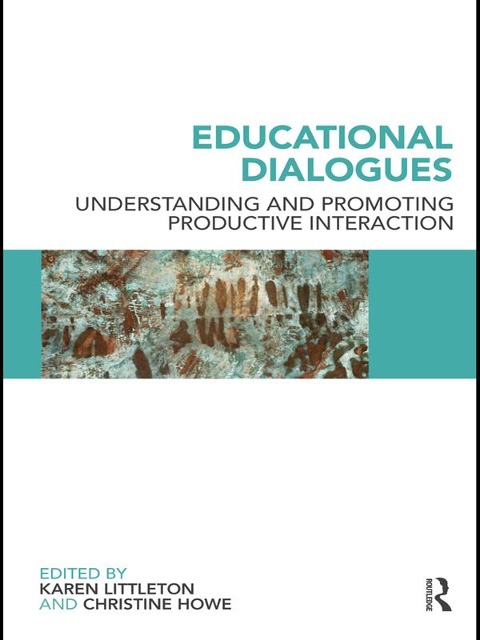
Educational Dialogues provides a clear, accessible and well-illustrated case for the importance of dialogue and its significance for learning and teaching. The contributors characterise the nature of productive dialogues, to specify the conditions and pedagogic contexts within which such dialogues can most effectively be resourced and promoted. Drawing upon a broad range of theoretical perspectives, this collection examines: - theoretical frameworks for understanding teaching and learning dialogues - teacher-student and student-student interaction in the curricular contexts of mathematics, literacy, science, ICT and philosophy - the social contexts supporting productive dialogues - implications for pedagogic design and classroom practice. Bringing together contributions from a wide range of internationally renowned researchers, this book will form essential reading for all those concerned with the use of dialogue in educational contexts.
Karen Littleton is Professor of Psychology in Education at the University of Jyväskylä, Finland. Christine Howe is Professor of Education at the University of Cambridge, UK.
Contributors Acknowledgements Introduction: Educational Dialogues: Understanding and Promoting Productive Interaction Part 1: Productive Dialogue Introduction to Part 1 1. Knowing and Arguing In A Panel Debate: Speaker Roles and Responsivity to Others Mikaela Åberg, Åsa Mäkitalo and Roger Säljö 2. Peer Dialogue and Cognitive Development: A Two-Way Relationship? Christine Howe 3. Productive Interaction as Agentic Participation in Dialogic Enquiry Kristiina Kumpulainen and Lasse Lipponen 4. Can You Think With Me? The Social and Cognitive Conditions and the Fruits of Learning Valérie Tartas, Aleksandar Baucal and Anne-Nelly Perret-Clermont Part 2: Understanding Productive Interaction in Specific Curricular Contexts Introduction to Part 2 5. The Role of Discourse in Learning Science Jonathan Osborne and Christine Chin 6. Argumentation and Mathematics Baruch B. Schwarz, Rina Hershkowitz and Naomi Prusak 7. Dialogical Interactions Among Peers in Collaborative Writing Contexts Sylvia Rojas-Drummond, Karen Littleton, Flora Hernández and Mariana Zúñiga 8. Philosophy for Children as Dialogic Teaching Margaret Hardman and Barbara Delafield Part 3: Social Context Introduction to Part 3 9. More Helpful as Problem than Solution: Some Implications of Situating Dialogue in Classrooms Adam Lefstein 10. Dialogue Enhancement in Classrooms: Towards a Relational Approach for Group Working Peter Kutnick and Jennifer Colwell 11. Gender, Collaboration and Children's Learning Patrick J. Leman 12. Change in Urban Classroom Culture and Interaction Ben Rampton and Roxy Harris Part 4: Promoting Productive Educational Dialogues Introduction to Part 4 13. The Significance of Educational Dialogues Between Primary School Children Karen Littleton and Neil Mercer 14. Teaching and Learning Disciplinary Knowledge: Developing the Dialogic Space for an Answer When There Isn't Even a Question Phil Scott, Jaume Ametller, Eduardo Mortimer and Jonathan Emberton 15. Dialogue and Teaching Thinking With Technology: Opening, Expanding and Deepening The 'Inter-Face' Rupert Wegerif 16. Collaborative Learning of Computer Science Concepts R. Keith Sawyer and Kenneth J. Goldman
Dieses eBook wird im PDF-Format geliefert und ist mit einem Adobe Kopierschutz (DRM) versehen. Sie können dieses eBook mit allen Geräten lesen, die das PDF-Format und den Adobe Kopierschutz (DRM) unterstützen.
Zum Beispiel mit den folgenden Geräten:
• tolino Reader
Laden Sie das eBook direkt über den Reader-Shop auf dem tolino herunter oder übertragen Sie das eBook auf Ihren tolino mit einer kostenlosen Software wie beispielsweise Adobe Digital Editions.
• Sony Reader & andere eBook Reader
Laden Sie das eBook direkt über den Reader-Shop herunter oder übertragen Sie das eBook mit der kostenlosen Software Sony READER FOR PC/Mac oder Adobe Digital Editions auf ein Standard-Lesegeräte mit epub- und Adobe DRM-Unterstützung.
• Tablets & Smartphones
Möchten Sie dieses eBook auf Ihrem Smartphone oder Tablet lesen, finden Sie hier unsere kostenlose Lese-App für iPhone/iPad und Android Smartphone/Tablets.
• PC & Mac
Lesen Sie das eBook direkt nach dem Herunterladen mit einer kostenlosen Lesesoftware, beispielsweise Adobe Digital Editions, Sony READER FOR PC/Mac oder direkt über Ihre eBook-Bibliothek in Ihrem Konto unter „Meine eBooks“ - „online lesen“.
Schalten Sie das eBook mit Ihrer persönlichen Adobe ID auf bis zu sechs Geräten gleichzeitig frei.
Bitte beachten Sie, dass die Kindle-Geräte das Format nicht unterstützen und dieses eBook somit nicht auf Kindle-Geräten lesbar ist.