
Stöbern
genialokal zum Startbildschirm hinzufügen
Installieren Sie die genialokal App auf Ihrem Startbildschirm für einen schnellen Zugriff und eine komfortable Nutzung.
Installieren Sie die genialokal App auf Ihrem Startbildschirm für einen schnellen Zugriff und eine komfortable Nutzung.
Tippen Sie einfach auf Teilen:
 Und dann auf "Zum Home-Bildschirm [+]".
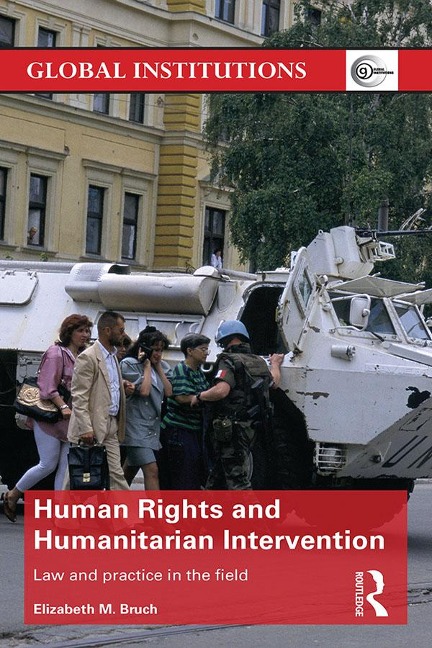
Human rights, peacekeeping, and humanitarian intervention have emerged in the past decades as important components of international law and practice. Adopting a methodology of Institutional Ethnography informed by Actor-Network Theory, this book traces the practices of law and expertise from global IGO headquarters to the 'field' and back again, and through various contemporary field missions from Bosnia to Afghanistan and East Timor to Sierra Leone. It answers several fundamental questions: - How is human rights law engaged in 'establishing the peace,' 'rebuilding the nation,' and 'restoring the rule of law' in post-conflict situations? - How do human rights experts use law in their everyday work in the context of humanitarian intervention? - How are law and expertise established, sustained and transformed in the field? Offering a complex and nuanced explanation of humanitarian intervention based upon a multi-dimensional understanding of law and power, this book will be of interest and use to scholars, students and practitioners in international law and policy, human rights, and humanitarian intervention. Its cross-disciplinary approach should also appeal to the professional communities engaged directly and indirectly with projects of humanitarian intervention - including staff at inter-governmental organizations, international lawyers and practitioners, and activists.
Elizabeth M. Bruch is an Assistant Professor in the School of Interdisciplinary Arts and Sciences at the University of Washington Tacoma. She previously taught at the University of British Columbia, and on the law faculty at American University's Washington College of Law, Arizona State University College of Law, and Valparaiso University School of Law. She also worked as a human rights lawyer and served for two years as the Executive Officer of the Human Rights Chamber for Bosnia and Herzegovina.
Introduction 1 Multi-dimensional law in humanitarian intervention: violence, bureaucracy, and governance 2 Power in writing: formal law, mandates, and reports in humanitarian intervention 3 Law in translation: human rights field officers as international experts 4 The rule of law in the field: standards, politics, and pragmatism Conclusion Appendix: Research and expertise in the field of humanitarian intervention
Dieses eBook wird im PDF-Format geliefert und ist mit einem Adobe Kopierschutz (DRM) versehen. Sie können dieses eBook mit allen Geräten lesen, die das PDF-Format und den Adobe Kopierschutz (DRM) unterstützen.
Zum Beispiel mit den folgenden Geräten:
• tolino Reader
Laden Sie das eBook direkt über den Reader-Shop auf dem tolino herunter oder übertragen Sie das eBook auf Ihren tolino mit einer kostenlosen Software wie beispielsweise Adobe Digital Editions.
• Sony Reader & andere eBook Reader
Laden Sie das eBook direkt über den Reader-Shop herunter oder übertragen Sie das eBook mit der kostenlosen Software Sony READER FOR PC/Mac oder Adobe Digital Editions auf ein Standard-Lesegeräte mit epub- und Adobe DRM-Unterstützung.
• Tablets & Smartphones
Möchten Sie dieses eBook auf Ihrem Smartphone oder Tablet lesen, finden Sie hier unsere kostenlose Lese-App für iPhone/iPad und Android Smartphone/Tablets.
• PC & Mac
Lesen Sie das eBook direkt nach dem Herunterladen mit einer kostenlosen Lesesoftware, beispielsweise Adobe Digital Editions, Sony READER FOR PC/Mac oder direkt über Ihre eBook-Bibliothek in Ihrem Konto unter „Meine eBooks“ - „online lesen“.
Schalten Sie das eBook mit Ihrer persönlichen Adobe ID auf bis zu sechs Geräten gleichzeitig frei.
Bitte beachten Sie, dass die Kindle-Geräte das Format nicht unterstützen und dieses eBook somit nicht auf Kindle-Geräten lesbar ist.