
Stöbern
genialokal zum Startbildschirm hinzufügen
Installieren Sie die genialokal App auf Ihrem Startbildschirm für einen schnellen Zugriff und eine komfortable Nutzung.
Installieren Sie die genialokal App auf Ihrem Startbildschirm für einen schnellen Zugriff und eine komfortable Nutzung.
Tippen Sie einfach auf Teilen:
 Und dann auf "Zum Home-Bildschirm [+]".
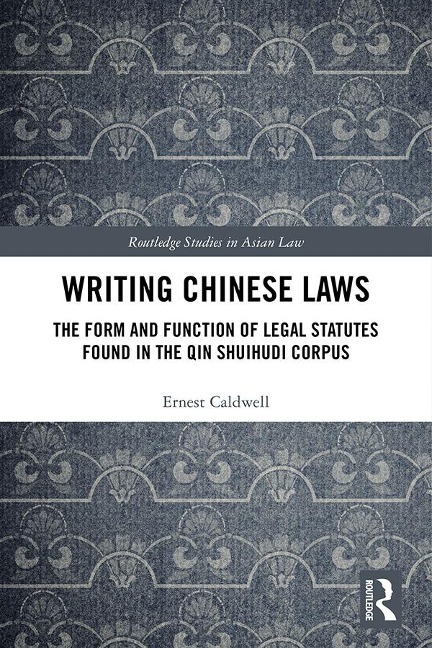
The legal institutions of the short-lived Qin dynasty (221-207 BCE) have been vilified by history as harsh and draconian. Yet ironically, many Qin institutional features, such as written statutory law, were readily adopted by subsequent dynasties as the primary means for maintaining administrative and social control. This book utilizes both traditional texts and archeologically excavated materials to explore how these influential Qin legal institutions developed. First, it investigates the socio-political conditions which led to the production of law in written form. It then goes on to consider how the intended function of written law influenced the linguistic composition of legal statutes, as well as their physical construction. Using a function and form approach, it specifically analyses the Shuihudi legal corpus. However, unlike many previous studies of Chinese legal manuscripts, which have focused on codicological issues of transcription and translation, this book considers the linguistic aspects of these manuscripts and thus their importance for understanding the development of early Chinese legal thought. Writing Chinese Laws will be useful to students and scholars of Chinese Studies, as well as Asian law and history more generally.
Ernest Caldwell is Assistant Professor in the School of Law at SOAS, University of London, UK. He specializes in legal history, environmental law, and public law in China, Taiwan, and Southeast Asia.
1. Introduction 2. Social Change and Written Law in Pre-Imperial China 3. Inscribing Control in Qin 4. The Anatomy of a Qin Legal Statute I 5. The Anatomy of a Qin Legal Statute II 6. Conclusion
Dieses eBook wird im PDF-Format geliefert und ist mit einem Adobe Kopierschutz (DRM) versehen. Sie können dieses eBook mit allen Geräten lesen, die das PDF-Format und den Adobe Kopierschutz (DRM) unterstützen.
Zum Beispiel mit den folgenden Geräten:
• tolino Reader
Laden Sie das eBook direkt über den Reader-Shop auf dem tolino herunter oder übertragen Sie das eBook auf Ihren tolino mit einer kostenlosen Software wie beispielsweise Adobe Digital Editions.
• Sony Reader & andere eBook Reader
Laden Sie das eBook direkt über den Reader-Shop herunter oder übertragen Sie das eBook mit der kostenlosen Software Sony READER FOR PC/Mac oder Adobe Digital Editions auf ein Standard-Lesegeräte mit epub- und Adobe DRM-Unterstützung.
• Tablets & Smartphones
Möchten Sie dieses eBook auf Ihrem Smartphone oder Tablet lesen, finden Sie hier unsere kostenlose Lese-App für iPhone/iPad und Android Smartphone/Tablets.
• PC & Mac
Lesen Sie das eBook direkt nach dem Herunterladen mit einer kostenlosen Lesesoftware, beispielsweise Adobe Digital Editions, Sony READER FOR PC/Mac oder direkt über Ihre eBook-Bibliothek in Ihrem Konto unter „Meine eBooks“ - „online lesen“.
Schalten Sie das eBook mit Ihrer persönlichen Adobe ID auf bis zu sechs Geräten gleichzeitig frei.
Bitte beachten Sie, dass die Kindle-Geräte das Format nicht unterstützen und dieses eBook somit nicht auf Kindle-Geräten lesbar ist.