Und dann auf "Zum Home-Bildschirm [+]".

Stöbern
genialokal zum Startbildschirm hinzufügen
Installieren Sie die genialokal App auf Ihrem Startbildschirm für einen schnellen Zugriff und eine komfortable Nutzung.
Installieren Sie die genialokal App auf Ihrem Startbildschirm für einen schnellen Zugriff und eine komfortable Nutzung.
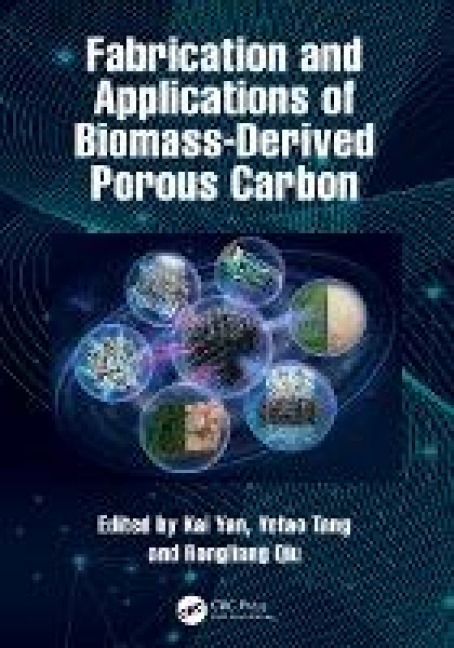
This book systematically introduces the fundamentals, preparation technology, state-of-the-art applications, and future development of biomass-derived porous carbon materials. The authors provide a theoretical foundation that demonstrates the microstructure and physicochemical properties of carbon materials. The fabrication methods, including physical activation methods, chemical activation methods, and advances in other new fabrication methods are explicitly described. The book also identifies many potential applications of biomass (especially biomass-derived porous carbon materials), such as supercapacitors, removal of organic pollutants from water, CO2 capture, photocatalytic application, and farmland restoration. The book will be a valuable resource for researchers, scientists, and engineers working in the field of biomass-derived porous carbon materials, carbon resource development, and environmental protection.
Kai Yan is a full professor at Sun Yat-sen University. He earned his Ph.D. degree from the Max Planck Institute for Coal Research and RWTH Aachen University in 2011. His current interests are mainly focused on biomass utilization and environmental applications. Yetao Tang is currently a professor at the School of Environmental Science and Engineering, Sun Yat-sen University. His research interests include remediation of water and soil pollution, ecological remediation of mine pollution, phytoremediation, and biogeochemistry of transition metal elements. Rongliang Qiu is the current vice president of South China Agricultural University. His current interests include plant-chemical-microbial combined remediation of heavy metal-contaminated soil, chemical remediation and bioremediation of organic pollution in water and soil environment.
1. Fundamentals of Biomass-Derived Porous Carbon 2. Fabrication of Biomass-Derived Porous Carbon 3. Biomass-Derived Porous Carbon for Supercapacitors 4. Biomass-Derived Porous Carbon for Removal of Organic Pollutants from Water 5. Biomass-Derived Porous Carbon for CO2 Capture 6. Hydrothermal Carbonization of Biomasses for Photocatalytic Application 7. Biomass-Derived Porous Carbon for Farmland Restoration 8. Other Potential Applications for Biomass-Derived Porous Carbon
Dieses eBook wird im PDF-Format geliefert und ist mit einem Adobe Kopierschutz (DRM) versehen. Sie können dieses eBook mit allen Geräten lesen, die das PDF-Format und den Adobe Kopierschutz (DRM) unterstützen.
Zum Beispiel mit den folgenden Geräten:
• tolino Reader
Laden Sie das eBook direkt über den Reader-Shop auf dem tolino herunter oder übertragen Sie das eBook auf Ihren tolino mit einer kostenlosen Software wie beispielsweise Adobe Digital Editions.
• Sony Reader & andere eBook Reader
Laden Sie das eBook direkt über den Reader-Shop herunter oder übertragen Sie das eBook mit der kostenlosen Software Sony READER FOR PC/Mac oder Adobe Digital Editions auf ein Standard-Lesegeräte mit epub- und Adobe DRM-Unterstützung.
• Tablets & Smartphones
Möchten Sie dieses eBook auf Ihrem Smartphone oder Tablet lesen, finden Sie hier unsere kostenlose Lese-App für iPhone/iPad und Android Smartphone/Tablets.
• PC & Mac
Lesen Sie das eBook direkt nach dem Herunterladen mit einer kostenlosen Lesesoftware, beispielsweise Adobe Digital Editions, Sony READER FOR PC/Mac oder direkt über Ihre eBook-Bibliothek in Ihrem Konto unter „Meine eBooks“ - „online lesen“.
Schalten Sie das eBook mit Ihrer persönlichen Adobe ID auf bis zu sechs Geräten gleichzeitig frei.
Bitte beachten Sie, dass die Kindle-Geräte das Format nicht unterstützen und dieses eBook somit nicht auf Kindle-Geräten lesbar ist.