Und dann auf "Zum Home-Bildschirm [+]".

Stöbern
genialokal zum Startbildschirm hinzufügen
Installieren Sie die genialokal App auf Ihrem Startbildschirm für einen schnellen Zugriff und eine komfortable Nutzung.
Installieren Sie die genialokal App auf Ihrem Startbildschirm für einen schnellen Zugriff und eine komfortable Nutzung.
Ihr gewünschter Artikel ist in 0 Buchhandlungen vorrätig - wählen Sie hier eine Buchhandlung in Ihrer Nähe aus:

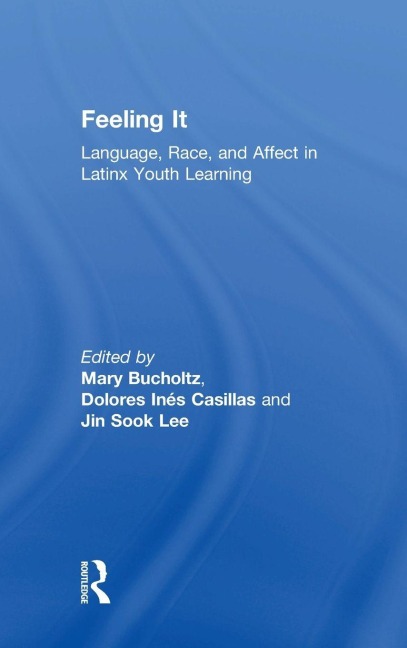

Twelve leading and emergent researchers in Chicanx studies, education, feminist studies, linguistics and translation studies cohesively explore Latinx youth affect, language, and learning, drawing on data from an innovative university-community partnership that combines academic preparation for low-income youth of color with a social justice focus.
Mary Bucholtz is Professor in the Department of Linguistics at the University of California, Santa Barbara (UCSB). She was the founding director and is currently an associate director of SKILLS (School Kids Investigating Language in Life and Society), UCSB's academic outreach, research, and social justice program. Dolores Inés Casillas is Associate Professor in Chicana and Chicano Studies at the University of California, Santa Barbara. She is also an associate director of SKILLS. Jin Sook Lee is Professor of Education in the Gevirtz Graduate School of Education at the University of California, Santa Barbara. She is the current director of SKILLS.
Chapter 1. You Feel Me?: Language and Youth Affective Agency in a Racializing World. Mary Bucholtz, Dolores Inés Casillas, and Jin Sook Lee. Part 1: Teaching, Learning, and the Affective Challenges of Social Justice. Chapter 2. "Just" Emotions: The Politics of Racialized and Gendered Affect in a Graduate Sociolinguistic Justice Classroom, Rachel Rys. Chapter 3. Joint Creation: The Art of Accompaniment in the Language Beliefs of Transformative Teachers, Elizabeth Mainz. Chapter 4. Sounding White and Boring: Race, Identity, and Youth Freedom in an After-School Program, Anna Bax and Juan Sebastian Ferrada. Part 2: Ideologies of Race and Language in the Lives of Youth. Chapter 5. "There's No Such Thing as Bad Language, but...": Colorblindness and Teachers' Ideologies of Linguistic Appropriateness, Jessica Love-Nichols. Chapter 6. "I Feel Like Really Racist for Laughing": White Laughter and White Public Space in a Multiracial Classroom, Meghan Corella. Chapter 7. "You Don't Look Like You Speak English": Raciolinguistic Profiling and Latinx Youth Agency, Adanari Zarate. Chapter 8. The Complexities in Seguir Avanzando: Incongruences between the Linguistic Ideologies of Students and Their Familias, Zuleyma Nayeli Carruba-Rogel. Part 3: Youth as Affective Agents. Chapter 9. Keeping Grandpa's Stories and Grandma's Recipes Alive: Exploring Family Language Policy in an Academic Preparation Program, Tijana Hirsch. Chapter 10. "Without Me, That Wouldn't Be Possible": Affect in Latinx Youth Discussions of Language Brokering, Audrey Lopez. Chapter 11. "To Find the Right Words": Bilingual Students' Reflections on Translation and Translatability, Katie Lateef-Jan. Chapter 12. Co-Constructing Academic Concepts in Hybrid Learning Spaces: Latinx Students' Navigation of "Communities of Practice", María José Aragón. Chapter 13. After Affects, Mary Bucholtz, Dolores Inés Casillas, and Jin Sook Lee.