Und dann auf "Zum Home-Bildschirm [+]".

Stöbern
genialokal zum Startbildschirm hinzufügen
Installieren Sie die genialokal App auf Ihrem Startbildschirm für einen schnellen Zugriff und eine komfortable Nutzung.
Installieren Sie die genialokal App auf Ihrem Startbildschirm für einen schnellen Zugriff und eine komfortable Nutzung.
Ihr gewünschter Artikel ist in 0 Buchhandlungen vorrätig - wählen Sie hier eine Buchhandlung in Ihrer Nähe aus:

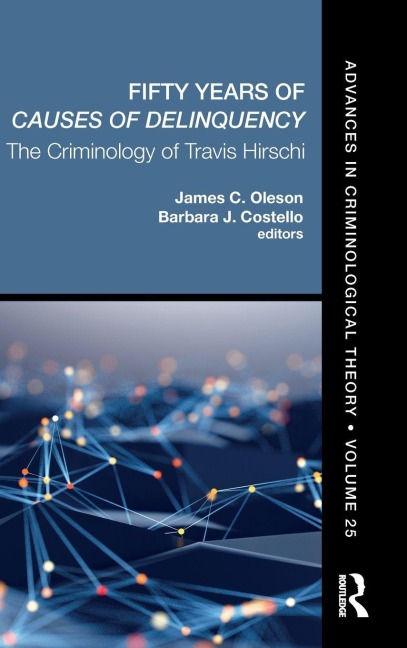
Fifty Years of Causes of Delinquency: The Criminology of Travis Hirschi describes the current state of control theory and suggests its future directions, as well as demonstrating its enduring importance for criminological theory and research.
James C. Oleson is Associate Professor of Criminology at the University of Auckland. He has a B.A. from St. Mary's College of California, an M.Phil. and a Ph.D. from Cambridge University, and a J.D. from UC Berkeley. After being selected as a 2004-2005 U.S. Supreme Court Fellow, he led the Criminal Law Policy Staff of the United States Courts until 2010. He is interested in psychological criminology, theory, risk assessment, sentencing, and penology. Barbara J. Costello (Ph.D., University of Arizona) is Professor of Sociology at the University of Rhode Island. Her research has focused on testing and extending control theories of crime and delinquency. Her recent research focuses on peer influence both toward and away from deviant behavior, with an emphasis on the mechanisms by which peers influence each other's behavior.
Introduction: The Criminology of Travis Hirschi: Social Control and Beyond; Part I: Social Control Theory - A Look Back; 1. The Rise of Social Control Theory, Fall of Classic Strain Theory, and Reconciliation between Social Control and General Strain Theories; 2. Linking Bond Theory to Drift Theory; 3. Causes of Delinquency Revisited: Key Findings from the Fayetteville Replication Study; Appendix: List of Indicators Used in Structural Models; 4. A Return to the Girls in the Richmond Youth Project; 5. Social Control Theory and Human Nature; 6. The Status of Hirschi's Social Control Theory after 50 Years; Part II: Looking Forward - New Directions and Applications; 7. A Theory of Commitment and Crime; 8. Infant Socialization and the Development of Self-Control: Filling in the Gap; 9. A Matter of Control: Social Controls and the Gender Gap in Delinquency; Appendix: Decomposition Analyses of the Gender differences in Delinquency; 10. Using a Wider Control Theory to Teach Criminology; 11. A Test of Hirschi's Redefined Control Theory in the Far East; 12. Social Control as Social Exchange: Incorporating Power and Dependency Concepts into a Social Control Model; 13. The Rabbit and the Duck: The Evolution of Hirschi's Control Theory