
Stöbern
genialokal zum Startbildschirm hinzufügen
Installieren Sie die genialokal App auf Ihrem Startbildschirm für einen schnellen Zugriff und eine komfortable Nutzung.
Installieren Sie die genialokal App auf Ihrem Startbildschirm für einen schnellen Zugriff und eine komfortable Nutzung.
Tippen Sie einfach auf Teilen:
 Und dann auf "Zum Home-Bildschirm [+]".
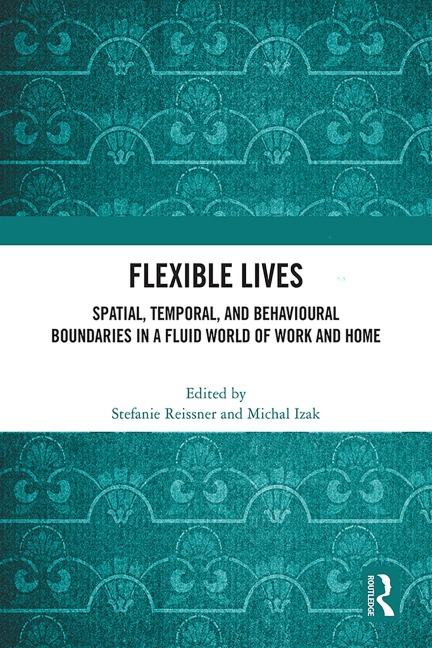
This geographically and methodologically diverse volume shines the spotlight on a variety of flexible working practices beyond the predominantly Western perspective and zooms in on the gendered aspects of flexible working. The increasing use of flexible work arrangements has decoupled work from time and space, making the world of work and home increasingly fluid and challenging to manage. The Covid-19 pandemic, in particular, has been a catalyst for questioning accepted norms of where, when, and how work takes place. This book seeks to explore the impact which this reshaping of traditional modes of working has had on workplace interactions and relationships, as well as on managing the boundaries between familial and working lives. In this way, this collection contributes to a wider dialogue concerning the flexibility challenges encountered by white collar workers, which is needed now more than ever. This book will be relevant to scholars, practitioners, and policymakers in the fields of gender studies, organizational behavior, human resources and labor economics. It will be particularly useful for those examining the impact of remote work, the future of work, organizational culture, and the social and economic implications of shifting work practices. The chapters in this book were originally published in Culture and Organization and are accompanied by an updated Introduction and a new Epilogue.
Stefanie Reissner is Professor of Organization Studies at Durham University Business School, UK. Her research interests include flexible working, sensemaking, identity and qualitative methods. Michal Izak is Professor in Organization Studies at Chester Business School, University of Chester, UK. His research interests include the future of work primarily in the context of its flexibility and sustainability, as well as organizational communication.
Introduction - Flexible lives: spatial, temporal, and behavioural boundaries in a fluid world of work and home 1. Is physical co-presence a prerequisite for Durkheimian collective effervescence? Reflections on remote working during the COVID-19 pandemic 2. 'Another work routine is possible': everyday experiences of (unexpected) remote work in Italy 3. Neither work nor leisure: temporalities and life world realities of split shift work in the Austrian care sector 4. Toiling from the homespace, longing for the workplace: gendered workplace imaginaries in an (in)flexible work scenario 5. 'Half of my body is at work and the other half at home': narratives of placemaking while working from homes in rural and small-town India 6. The multidimensionality of care in remote work: women academics in Chile during the COVID-19 pandemic Epilogue
Dieses eBook wird im PDF-Format geliefert und ist mit einem Adobe Kopierschutz (DRM) versehen. Sie können dieses eBook mit allen Geräten lesen, die das PDF-Format und den Adobe Kopierschutz (DRM) unterstützen.
Zum Beispiel mit den folgenden Geräten:
• tolino Reader
Laden Sie das eBook direkt über den Reader-Shop auf dem tolino herunter oder übertragen Sie das eBook auf Ihren tolino mit einer kostenlosen Software wie beispielsweise Adobe Digital Editions.
• Sony Reader & andere eBook Reader
Laden Sie das eBook direkt über den Reader-Shop herunter oder übertragen Sie das eBook mit der kostenlosen Software Sony READER FOR PC/Mac oder Adobe Digital Editions auf ein Standard-Lesegeräte mit epub- und Adobe DRM-Unterstützung.
• Tablets & Smartphones
Möchten Sie dieses eBook auf Ihrem Smartphone oder Tablet lesen, finden Sie hier unsere kostenlose Lese-App für iPhone/iPad und Android Smartphone/Tablets.
• PC & Mac
Lesen Sie das eBook direkt nach dem Herunterladen mit einer kostenlosen Lesesoftware, beispielsweise Adobe Digital Editions, Sony READER FOR PC/Mac oder direkt über Ihre eBook-Bibliothek in Ihrem Konto unter „Meine eBooks“ - „online lesen“.
Schalten Sie das eBook mit Ihrer persönlichen Adobe ID auf bis zu sechs Geräten gleichzeitig frei.
Bitte beachten Sie, dass die Kindle-Geräte das Format nicht unterstützen und dieses eBook somit nicht auf Kindle-Geräten lesbar ist.