
Stöbern
genialokal zum Startbildschirm hinzufügen
Installieren Sie die genialokal App auf Ihrem Startbildschirm für einen schnellen Zugriff und eine komfortable Nutzung.
Installieren Sie die genialokal App auf Ihrem Startbildschirm für einen schnellen Zugriff und eine komfortable Nutzung.
Tippen Sie einfach auf Teilen:
 Und dann auf "Zum Home-Bildschirm [+]".
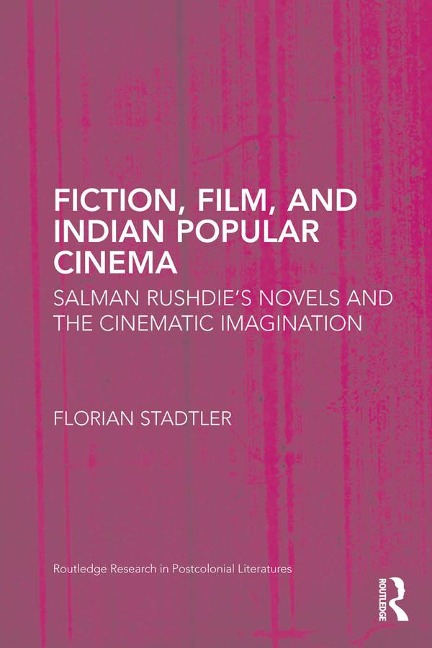
This book analyses the novels of Salman Rushdie and their stylistic conventions in the context of Indian popular cinema and its role in the elaboration of the author's arguments about post-independence postcolonial India. Focusing on different genres of Indian popular cinema, such as the 'Social', 'Mythological' and 'Historical', Stadtler examines how Rushdie's writing foregrounds the epic, the mythic, the tragic and the comic, linking them in storylines narrated in cinematic parameters. The book shows that Indian popular cinema's syncretism becomes an aesthetic marker in Rushdie's fiction that allows him to elaborate on the multiplicity of Indian identity, both on the subcontinent and abroad, and illustrates how Rushdie uses Indian popular cinema in his narratives to express an aesthetics of hybridity and a particular conceptualization of culture with which 'India' has become identified in a global context. Also highlighted are Rushdie's uses of cinema to inflect his reading of India as a pluralist nation and of the hybrid space occupied by the Indian diaspora across the world. The book connects Rushdie's storylines with modes of cinematic representation to explore questions about the role, place and space of the individual in relation to a fast-changing social, economic and political space in India and the wider world.
Florian Stadtler is Lecturer in Global Literature at the University of Exeter, UK. Previously Research Fellow at The Open University, he has published on South Asian writing in English, Indian popular cinema and British Asian fiction and history. He is Reviews Editor for Wasafiri: The Magazine of International Contemporary Writing.
Introduction. 1. Creating 'Imaginary Homelands' 2. Heroines, Mothers and Villains: Cinema and Postcolonial National Identities in Midnight's Children and Shame 3. Filming Rushdie: From Documentaries, Film Criticism to Screenplays 4. The The Satanic Verses and Shree 420: Negotiating Identity through Indian Popular Cinema 5. The Moor's Last Sigh: Rewriting Mother India 6. The Ground Beneath Her Feet and Fury: Bollywood, Superstardom and Celebrity in the Age of Globalisation 7. Rushdie's 'Mission Kashmir': Mughal-e-Azam and Shalimar the Clown. Conclusion.
Dieses eBook wird im PDF-Format geliefert und ist mit einem Adobe Kopierschutz (DRM) versehen. Sie können dieses eBook mit allen Geräten lesen, die das PDF-Format und den Adobe Kopierschutz (DRM) unterstützen.
Zum Beispiel mit den folgenden Geräten:
• tolino Reader
Laden Sie das eBook direkt über den Reader-Shop auf dem tolino herunter oder übertragen Sie das eBook auf Ihren tolino mit einer kostenlosen Software wie beispielsweise Adobe Digital Editions.
• Sony Reader & andere eBook Reader
Laden Sie das eBook direkt über den Reader-Shop herunter oder übertragen Sie das eBook mit der kostenlosen Software Sony READER FOR PC/Mac oder Adobe Digital Editions auf ein Standard-Lesegeräte mit epub- und Adobe DRM-Unterstützung.
• Tablets & Smartphones
Möchten Sie dieses eBook auf Ihrem Smartphone oder Tablet lesen, finden Sie hier unsere kostenlose Lese-App für iPhone/iPad und Android Smartphone/Tablets.
• PC & Mac
Lesen Sie das eBook direkt nach dem Herunterladen mit einer kostenlosen Lesesoftware, beispielsweise Adobe Digital Editions, Sony READER FOR PC/Mac oder direkt über Ihre eBook-Bibliothek in Ihrem Konto unter „Meine eBooks“ - „online lesen“.
Schalten Sie das eBook mit Ihrer persönlichen Adobe ID auf bis zu sechs Geräten gleichzeitig frei.
Bitte beachten Sie, dass die Kindle-Geräte das Format nicht unterstützen und dieses eBook somit nicht auf Kindle-Geräten lesbar ist.