Und dann auf "Zum Home-Bildschirm [+]".

Stöbern
genialokal zum Startbildschirm hinzufügen
Installieren Sie die genialokal App auf Ihrem Startbildschirm für einen schnellen Zugriff und eine komfortable Nutzung.
Installieren Sie die genialokal App auf Ihrem Startbildschirm für einen schnellen Zugriff und eine komfortable Nutzung.


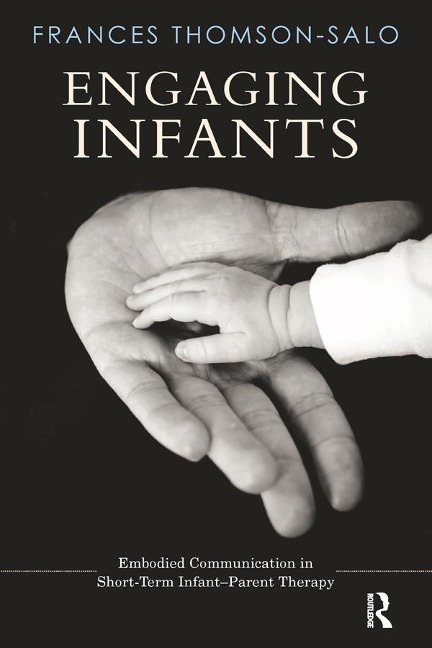
The book begins by describing, within a psychodynamic approach, some traits an infant may bring to an intervention, followed by descriptions of interventions in several specialised perinatal settings. Several chapters focus on parent-infant families who have experienced considerable anxiety and depression, and those who have experienced trauma and lived borderline experiences or of mental illness. An innovative intervention which successfully engaged young parents and their infants so that most of them felt they could understand and relate to their newborn infant is next outlined. Turning to most parents of an infant in a neonatal intensive care unit who feel traumatised which may impact on the emotional relationship with their infants, there is often a need for psychodynamic exploration before these difficulties can be modulated. With such interventions the staff become more containing and may more likely seek an intervention for a premature infant in their own right, attuned to the meaning of his or her mood and behaviour. Infant-parent therapy in paediatric contexts, infants in groups, and relating to infant and parents in the context of family violence are briefly described.
Frances Thomson-Salo
Part 1: Engaging the Infant in Infant-Parent Therapy 1. Recognising the infant as subject 2. What an infant brings Part 2: Engaging Infants in perinatal settings 3. Infants and their parents in the perinatal period 4. Infants with young parents 5. Infants and their parents in neonatal intensive care units Part 3: Engaging Infants in Paediatric Units 6. Infants and their parents in paediatric settings 7. Infants and their parents in therapy groups 8. Relating to infant and parent in the context of family violence Part 4: Towards Understanding Successful Outcomes 9. Countertransference in infant-parent therapy 10. The therapeutic alliance, the presence of the therapist, and transformational moments 11. Responding to infants and interpreting transference 12. Revisiting mechanisms of change in infant-parent therapy
Dieses eBook wird im PDF-Format geliefert und ist mit einem Adobe Kopierschutz (DRM) versehen. Sie können dieses eBook mit allen Geräten lesen, die das PDF-Format und den Adobe Kopierschutz (DRM) unterstützen.
Zum Beispiel mit den folgenden Geräten:
• tolino Reader
Laden Sie das eBook direkt über den Reader-Shop auf dem tolino herunter oder übertragen Sie das eBook auf Ihren tolino mit einer kostenlosen Software wie beispielsweise Adobe Digital Editions.
• Sony Reader & andere eBook Reader
Laden Sie das eBook direkt über den Reader-Shop herunter oder übertragen Sie das eBook mit der kostenlosen Software Sony READER FOR PC/Mac oder Adobe Digital Editions auf ein Standard-Lesegeräte mit epub- und Adobe DRM-Unterstützung.
• Tablets & Smartphones
Möchten Sie dieses eBook auf Ihrem Smartphone oder Tablet lesen, finden Sie hier unsere kostenlose Lese-App für iPhone/iPad und Android Smartphone/Tablets.
• PC & Mac
Lesen Sie das eBook direkt nach dem Herunterladen mit einer kostenlosen Lesesoftware, beispielsweise Adobe Digital Editions, Sony READER FOR PC/Mac oder direkt über Ihre eBook-Bibliothek in Ihrem Konto unter „Meine eBooks“ - „online lesen“.
Schalten Sie das eBook mit Ihrer persönlichen Adobe ID auf bis zu sechs Geräten gleichzeitig frei.
Bitte beachten Sie, dass die Kindle-Geräte das Format nicht unterstützen und dieses eBook somit nicht auf Kindle-Geräten lesbar ist.