
Stöbern
genialokal zum Startbildschirm hinzufügen
Installieren Sie die genialokal App auf Ihrem Startbildschirm für einen schnellen Zugriff und eine komfortable Nutzung.
Installieren Sie die genialokal App auf Ihrem Startbildschirm für einen schnellen Zugriff und eine komfortable Nutzung.
Tippen Sie einfach auf Teilen:
 Und dann auf "Zum Home-Bildschirm [+]".

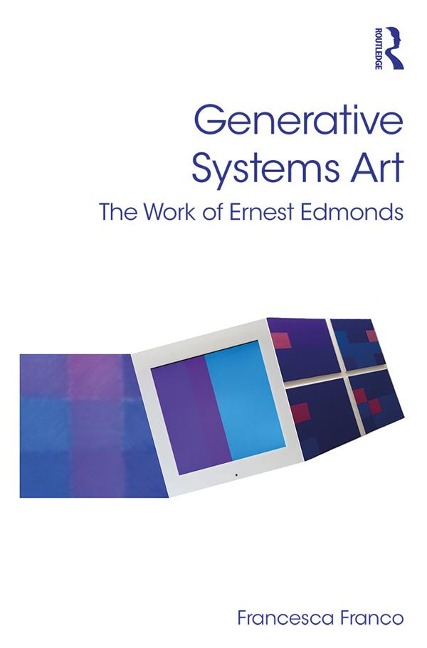
In this unique book the author explores the history of pioneering computer art and its contribution to art history by way of examining Ernest Edmonds' art from the late 1960s to the present day. Edmonds' inventions of new concepts, tools and forms of art, along with his close involvement with the communities of computer artists, constructive artists and computer technologists, provides the context for discussion of the origins and implications of the relationship between art and technology. Drawing on interviews with Edmonds and primary research in archives of his work, the book offers a new contribution to the history of the development of digital art and places Edmonds' work in the context of contemporary art history.
Francesca Franco is a Venetian-born art historian based in the UK. The central theme of Francesca's research is the history of art and technology and the pioneers of Computer art. It concerns issues of Generative and interactive art and the connections between Constructivism and Systems art in early Computational art. A major focus has been the history of the Venice Biennale, culminating in a series of publications in books, academic journals and art magazines, which have been translated into various languages.
Introduction 1. The 1960s: from Figurative Art to Colour Abstraction Introduction 1.1 "Art or Mathematics?" 1.2 From Figurative Art to Black and White Abstraction (1960-1962) 1.3 From Black and White to Colour Abstraction (1962-1966) 1.4 Consolidating a Constructivist Approach: Nineteen (1967-69) 2. The 1970s - Logic, Computers and Communication Introduction 2.1 The Systems Group 2.2 Art, Technology and Participation in the United Kingdom 2.2.1 Malcom Hughes 2.2.2 Edward Ihnatowicz 2.2.3 Roy Ascott 2.2.4 Stephen Willats 2.3 Ernest Edmonds' Early Interactive Art 2.3.1 1970: Computer Graphics'70 -*DATAPACK and Jigsaw 2.3.2 1971: Invention of Problems II - The Communications Game 2.3.3 1972: Cognition and Control - The Communications Game 2 2.4 1974-78: Systems Approaches in Edmonds' Paintings and Drawings 3. The 1980s: Constructivism and Systems Introduction 3.1 Personal Networks and Connections 3.2 Ernest Edmonds' Themes 3.2.1 Structure 3.2.2 Time 3.2.3 Colour 3.3 Exhibiting Space, Duality and Co-existence 3.4 Null Dimension (1988) 3.5 Constructivism: Man versus Environment (1989) 4. The 1990s - Correspondences and Intersections Introduction 4.1 A Busy 1990 4.2 A Key Collaboration: Correspondences 4.3 Residencies and Exhibitions in the 1990s 5. Interactive Generative Art: 2000-2015 Introduction 5.1 The Years 2000 to 2005 5.1.1 Expanding and Evolving Video Constructs (2000-2003) 5.1.2 Audio-Visual Artworks: Ernest Edmonds with Mark Fell (2003-2004) 5.1.3 New Interactive Generative Works (2004-2005) 5.2 2005-2010 5.2.1. Tango Tangle (2006) 5.2.2 Shaping Form (from 2007) 5.2.3 Cities Tango: Between Belfast and Sydney (2009) 5.3 2010-2015 5.3.1 Automatic Art, London 2014 5.3.2 Primary Codes, Rio de Janeiro 2015 6. Structure and Systems Introduction 6.1 Structure and Interaction 6.2 Fifty Two (1980) 6.3 Four Shaped Forms (2014) 7. New Media, New Technologies and New Systems Introduction 7.1 Technical Innovations 7.1.1 Iterative Software Design Methods 7.1.2 Adaptable User Interfaces 7.1.3 User Interface Architectures 7.1.4 Creativity Support Tools 7.2 Art and Technology Crossovers 7.2.1 Creativity and Cognition 7.2.2 Living Laboratories for Interactive Art 7.2.3 Logic, Constructive Mathematics and Generative Art 7.2.4 Logic Programming for Time-based Generative Art Conclusions Bibliography Endorsements