
Stöbern
genialokal zum Startbildschirm hinzufügen
Installieren Sie die genialokal App auf Ihrem Startbildschirm für einen schnellen Zugriff und eine komfortable Nutzung.
Installieren Sie die genialokal App auf Ihrem Startbildschirm für einen schnellen Zugriff und eine komfortable Nutzung.
Tippen Sie einfach auf Teilen:
 Und dann auf "Zum Home-Bildschirm [+]".
Ihr gewünschter Artikel ist in 0 Buchhandlungen vorrätig - wählen Sie hier eine Buchhandlung in Ihrer Nähe aus:

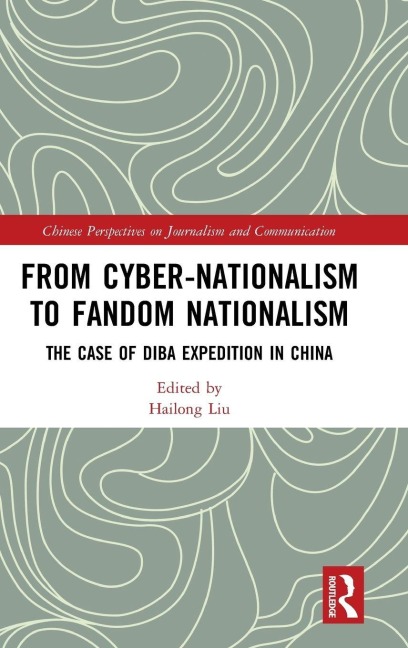

This book gives a deep description of a new trend in Chinese cyber-nationalism through an examination of Diba Expedition 2016. The eight chapters, written by researchers from the United States and China, touch on the topics of history, mobilization, and the organization of new cyber nationalism; the evolution of symbolic devices; and the impact of information and communications technologies (ICTs), consumerism, fans culture, and Internet subcultures on cyber-nationalism and the political consequences of it. The authors have embedded the Diba Expedition and new cyber-nationalism, which may be called fandom nationalism, in the media ecology of social media, the mobile Internet, the smartphone, and a new generation of ICTs. They also try to explain the change in the Chinese political culture from the turn of the twenty-first century up to now under the impact of official nationalistic education, commercial culture, and the grassroots Internet culture. Readers interested in political culture, Internet culture, and youth culture will find this book helpful in understanding why traditional nationalism, with hatred, anger, and actions in the real world, has evolved into fandom nationalism, with love, satire, and actions in the virtual world, as illustrated in the Diba Expedition.
Liu Hailong, PhD, is a professor at the School of Journalism and Communication, Renmin University of China, in Beijing. Liu is the chief editor of the Chinese Journal of Journalism and Communication. He is the author of Revisiting the Grey Area: Narration and Memories in the History of Communication Studies and Propaganda: Ideas, Discourse and Legitimation. His research interests include political communication, the history of Chinese communication study, and intellectual history of communication.
Contents List of figures and tables List of contributors 1 Performing Cyber-nationalism in 21st-century-China: The Case of the Diba Expedition Guobin Yang 2 Understanding Chinese Nationalism: A Historical Perspective Hongmei Li 3 From Fans to "Little Pinks": The Production and Mobilization Mechanism of National Identity under New Media Commercial Culture Jing Wu, Simin Li and Hongzhe Wang 4 "We Are All Diba Members Tonight": Cyber-Nationalism as Emotional and Playful Actions Online Wang Zhe 5 Memetic Communication and Consensus Mobilization in the Cyber Nationalist Movement Xiaoan Guo and Shaoting Yang 6 Collective Action as Interaction Ritual in Cyberspace Guoqiang Liu 7 Contested Visual Activism: Cyber-Nationalism in China from a Visual Communication Perspective Kui Zhou and Weishan Miao 8 Love Your Nation the Way You Love an Idol: New Media and the Emergence of Fandom Nationalism Hailong Liu