Und dann auf "Zum Home-Bildschirm [+]".

Stöbern
genialokal zum Startbildschirm hinzufügen
Installieren Sie die genialokal App auf Ihrem Startbildschirm für einen schnellen Zugriff und eine komfortable Nutzung.
Installieren Sie die genialokal App auf Ihrem Startbildschirm für einen schnellen Zugriff und eine komfortable Nutzung.

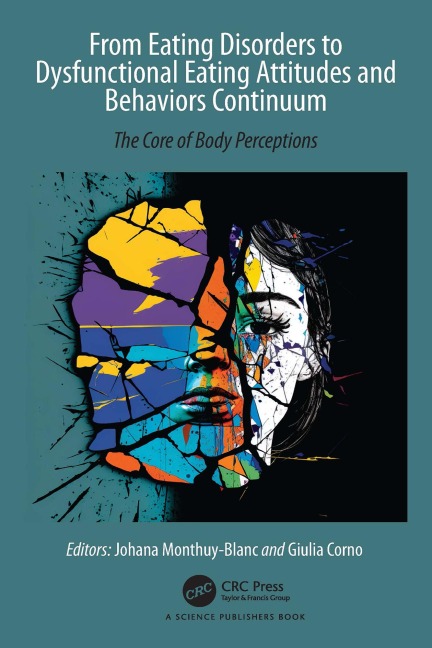
This edited volume offers a comprehensive, evidence-based exploration of dysfunctional eating attitudes and behaviours through the lens of body perceptions. Bringing together international experts, the book bridges theoretical, empirical, and applied perspectives to deepen understanding of how body image, embodiment, and sociocultural factors shape eating-related distress. The volume highlights the impact of contemporary phenomena, such as social media and the COVID-19 pandemic, while proposing innovative approaches to assessment and intervention, including virtual reality and prevention programs. By adopting a dimensional and inclusive framework, this volume moves beyond diagnostic categories to address diverse populations and real-world contexts, ultimately promoting integrated, person-centered strategies for mental health and well-being.
Johana Monthuy-Blanc is a researcher at the Montreal Health Institute Research Center and a professor in the Department of Education Sciences at Université du Québec à Trois-Rivières, affiliated with the Department of Psychiatry and Addiction Medicine at Université de Montréal. With the Loricorps research team, she developed a transdisciplinary model of dysfunctional eating attitudes and behaviours linked to body perceptions and mental health. Her work targets prevention and intervention in community and clinical settings, using transdisciplinary approaches and digital health innovations. Giulia Corno is a professor in the Department of Psychoeducation and Psychology at the Université du Québec en Outaouais. She is the co-director of the TechCare Research Lab, and is affiliated with the Research Center of the CISSS de l'Outaouais, the Montreal Mental Health University Institute Research Center, and the Loricorps research team. Her research focuses on body image and eating-related difficulties, with an interest in innovative, technology-based assessment and intervention methods and inclusive, evidence-informed, mental-health practices.
Preface. FROM THEORETICAL AND EMPIRICAL SUPPORT...Social Media and Body Image. The Role of Self-Compassion in Body Image. Applications of Virtual Reality in the Assessment and Treatment of Eating Disorders. Attentional Bias and Body Perceptions in Dysfunctional Eating Attitudes and Behaviors. Dysfunctional Eating Attitudes and Behaviors, and Body Dysmorphia Among LGBTQ+ People. Negative Physical Self-perception in Athletes with Dysfunctional Eating Attitudes and Behaviors. Beyond the Mirror: Exploring Body Image in Individuals with Obesity. TO PRACTICAL APPLICATIONS IN SOCIOCULTURAL CONTEXTS. Prevention of Dysfunctional Eating Attitudes and Behaviors Focusing on Body Image. Body Experience in Eating Disorders: Clinical Guidelines. Dysfunctional Eating Attitudes and Behaviours, Meaningful Occupations and Perceptual Disturbances: A Multidimensional Perspective. Challenges and Perspectives for Informal Caregivers in Dysfunctional Eating Attitudes and Behaviors: French Insights. Patient Partner in DEAB Intervention: Experiential Knowledge of the Body. Bodies in Context: How Gender and Sexuality Shape Body Perception Disturbances and Dysfunctional Eating Attitudes and Behaviors. Body Image and Embodied Cognition in Eating Disorders: Clinical and Therapeutic Perspectives. Conclusion. Index.