Und dann auf "Zum Home-Bildschirm [+]".

Stöbern
genialokal zum Startbildschirm hinzufügen
Installieren Sie die genialokal App auf Ihrem Startbildschirm für einen schnellen Zugriff und eine komfortable Nutzung.
Installieren Sie die genialokal App auf Ihrem Startbildschirm für einen schnellen Zugriff und eine komfortable Nutzung.
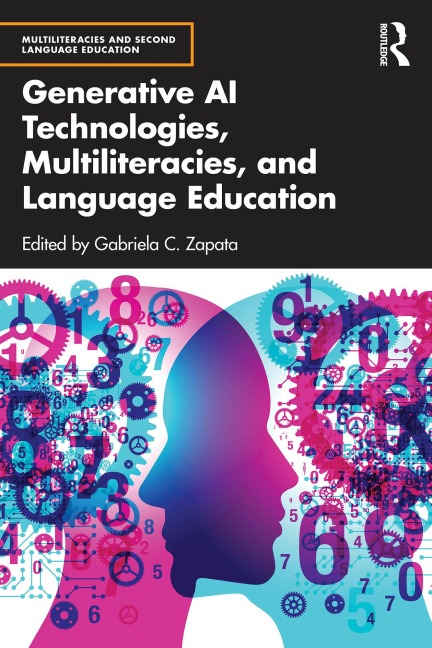
Generative AI Technologies, Multiliteracies, and Language Education is a comprehensive edited volume that examines the integration of Generative AI (GenAI) technologies within the framework of multiliteracies pedagogies to enhance language teaching and learning. This collection of chapters offers an in-depth understanding of how GenAI can transform language education through theoretical insights and empirical research. Featuring contributions from leading scholars in the field, this innovative volume provides both foundational concepts and innovative practices alongside evidence-based methodologies and practical strategies for educators, enhancing both teaching effectiveness and student engagement in multiliteracies environments. The book investigates the role that GenAI grounded in multiliteracies can play in language education, providing readers with comprehensive theoretical and pedagogical bases for the use of GenAI technologies in language teaching and learning, empirical evidence from research work, and solid guidelines and recommendations for practice and implementation in the language classroom. Generative AI Technologies, Multiliteracies, and Language Education will be of interest to those involved in teaching, researching, or developing curriculum that integrates technology and multiliteracies with language learning.
Gabriela C. Zapata is Associate Professor in Education at the University of Nottingham in the United Kingdom. She also serves as the editor of the book series Multiliteracies and Second Language Education (Routledge) and co-editor-in-chief of the journal Diversity & Inclusion Research. Her main research areas are Learning by Design and second and heritage language pedagogy, generative AI in higher education and teacher training, and multimodal social semiotics.
Introduction: Generative AI Technologies in Language Education: What We Know So Far Chapter 1: Language Learning After Generative AI Chapter 2: Translanguaging and Transposition in the Generative AI Era: Exploring Multimodal Meaning Without Borders in Second Language Education Chapter 3: Culturally Responsive AI Integration in Language Education Chapter 4: Teacher Agency in Response to the Emergence of Generative AI: A Scaffolded Writing Project Within a Multiliteracies Framework Chapter 5: Exploring the Design and Implementation of Generative AI-Supported Activities for Multimodal Language Learning Chapter 6: "If ChatGPT was used ... then it shouldn't be graded": Understanding Pre-Service Teachers' Perceptions Towards Generative Artificial Intelligence for English Teaching and Learning Chapter 7: Reflections and Future Directions
Dieses eBook wird im PDF-Format geliefert und ist mit einem Adobe Kopierschutz (DRM) versehen. Sie können dieses eBook mit allen Geräten lesen, die das PDF-Format und den Adobe Kopierschutz (DRM) unterstützen.
Zum Beispiel mit den folgenden Geräten:
• tolino Reader
Laden Sie das eBook direkt über den Reader-Shop auf dem tolino herunter oder übertragen Sie das eBook auf Ihren tolino mit einer kostenlosen Software wie beispielsweise Adobe Digital Editions.
• Sony Reader & andere eBook Reader
Laden Sie das eBook direkt über den Reader-Shop herunter oder übertragen Sie das eBook mit der kostenlosen Software Sony READER FOR PC/Mac oder Adobe Digital Editions auf ein Standard-Lesegeräte mit epub- und Adobe DRM-Unterstützung.
• Tablets & Smartphones
Möchten Sie dieses eBook auf Ihrem Smartphone oder Tablet lesen, finden Sie hier unsere kostenlose Lese-App für iPhone/iPad und Android Smartphone/Tablets.
• PC & Mac
Lesen Sie das eBook direkt nach dem Herunterladen mit einer kostenlosen Lesesoftware, beispielsweise Adobe Digital Editions, Sony READER FOR PC/Mac oder direkt über Ihre eBook-Bibliothek in Ihrem Konto unter „Meine eBooks“ - „online lesen“.
Schalten Sie das eBook mit Ihrer persönlichen Adobe ID auf bis zu sechs Geräten gleichzeitig frei.
Bitte beachten Sie, dass die Kindle-Geräte das Format nicht unterstützen und dieses eBook somit nicht auf Kindle-Geräten lesbar ist.