
Stöbern
genialokal zum Startbildschirm hinzufügen
Installieren Sie die genialokal App auf Ihrem Startbildschirm für einen schnellen Zugriff und eine komfortable Nutzung.
Installieren Sie die genialokal App auf Ihrem Startbildschirm für einen schnellen Zugriff und eine komfortable Nutzung.
Tippen Sie einfach auf Teilen:
 Und dann auf "Zum Home-Bildschirm [+]".
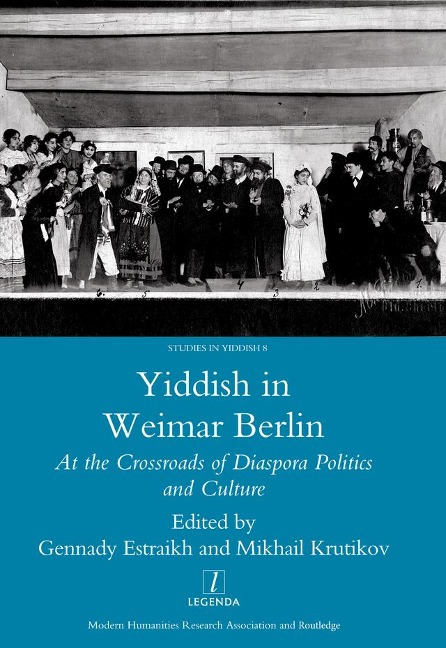
"Berlin emerged from the First World War as a multicultural European capital of immigration from the former Russian Empire, and while many Russian emigres moved to France and other countries in the 1920s, a thriving east European Jewish community remained. Yiddish-speaking intellectuals and activists participated vigorously in German cultural and political debate. Multilingual Jewish journalists, writers, actors and artists, invigorated by the creative atmosphere of the city, formed an environment which facilitated exchange between the main centres of Yiddish culture: eastern Europe, North America and Soviet Russia. All this came to an end with the Nazi rise to power in 1933, but Berlin remained a vital presence in Jewish cultural memory, as is testified by the works of Sholem Asch, Israel Joshua Singer, Zalman Shneour, Moyshe Kulbak, Uri Zvi Grinberg and Meir Wiener. This volume includes contributions by an international team of leading scholars dealing with various aspects of history, arts and literature, which tell the dramatic story of Yiddish cultural life in Weimar Berlin as a case study in the modern European culture."
Gennady Estraikh
Introduction: Yiddish on the Spree 1. Deciphering the Hieroglyphics of the Metropolis: Literary Topographies of Berlin in Hebrew and Yiddish Modernism 2. A Yiddish Poet Engages with German Society: A. N. Stencl's Weimar Period 3. Like fires in overgrown forests': Moyshe Kulbak's Contemporary Berlin Poetics 4. Belarus in Berlin, Berlin in Belarus: Moyshe Kulbak's Raysn and Meshiekh ben-Efrayim between Nostalgia and Apocalypse 5. The air outside is bloody': Leyb Kvitko and his Pogrom Cycle 1919 6. A Warm Morning Gown and a Shawl from Berlin: Liebe Zaltsman's Yiddish Letters to Helene Koigen 7. The Berlin Bureau of the New York Forverts 8. Max Weinreich in Weimar Germany 9. Reports from the 'Republic Lear': David Eynhorn in Weimar Berlin 1920-24 10. Jewish Universalism, the Yiddish Encyclopedia, and the Nazi Rise to Power 11. Yiddish, the Storyteller, and German-Jewish Modernism: A New Look at Alfred Döblin in the 1920s 12. Between Literature and History: Israel Joshua Singer's Berlin Novel the Family Carnovsky as a Cul-de-Sac of the German-Jewish 'Symbiosis' 13. Unkind Mirrors: Berlin in Three Yiddish Novels of the 1930s