Und dann auf "Zum Home-Bildschirm [+]".

Stöbern
genialokal zum Startbildschirm hinzufügen
Installieren Sie die genialokal App auf Ihrem Startbildschirm für einen schnellen Zugriff und eine komfortable Nutzung.
Installieren Sie die genialokal App auf Ihrem Startbildschirm für einen schnellen Zugriff und eine komfortable Nutzung.
Ihr gewünschter Artikel ist in 0 Buchhandlungen vorrätig - wählen Sie hier eine Buchhandlung in Ihrer Nähe aus:
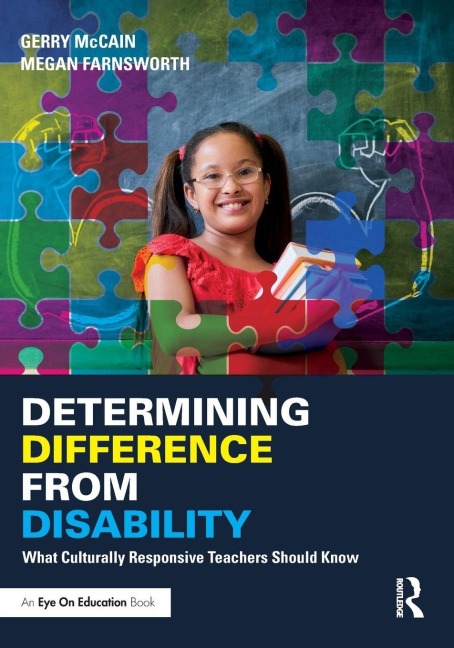
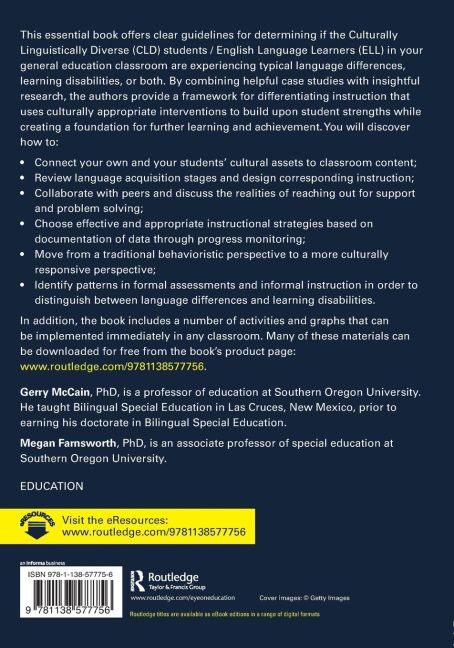
This essential book offers clear guidelines for determining if the Culturally Linguistically Diverse (CLD) students / English Language Learners (ELL) in your general education classroom are experiencing typical language differences, learning disabilities, or both. By combining helpful case-studies with insightful research, the authors provide a framework for differentiating instruction that uses culturally appropriate interventions to build upon student strengths while creating a foundation for further learning and achievement. You will discover how to:
Connect your own and your students' cultural assets to classroom content;
Review language acquisition stages and design corresponding instruction;
Collaborate with peers and discuss the realities of reaching out for support and problem solving;
Choose effective and appropriate instructional strategies based on documentation of data through progress monitoring;
Move from a traditional behavioristic perspective to a more culturally responsive perspective;
Identify patterns in formal assessments and informal instruction in order to distinguish between language differences and learning disabilities.
In addition, the book includes a number of activities and graphs that can be implemented immediately in any classroom. Many of these materials can be downloaded for free from the book's product page: www.routledge.com/9781138577756.
Gerry McCain, PhD, is a professor of education at Southern Oregon University. He taught Bilingual Special Education in Las Cruces, New Mexico, prior to earning his doctorate in Bilingual Special Education. Megan Farnsworth, PhD, is an associate professor of special education at Southern Oregon University.
Contents Foreword by Catherine Collier Meet the Authors Acknowledgments eResources Introduction Chapter 1: The Role of the Cultural Self in Teaching and Learning Chapter 2: File Review: Get to Know Your Students' Culture(s) and Language(s) Chapter 3: Inclusive Classrooms Begin With Culturally Responsive Pedagogy Chapter 4: Collaboration for Resilient Socioemotional Identities Chapter 5: Moving Beyond Behavior Management to Student Empowerment Chapter 6: Weighing Evidence: Challenges Due to Intrinsic or Extrinsic Conditions? Chapter 7: Discussion and Final Thoughts Appendix A: Trent's Full IEP Appendix B: Emotion Words List Appendix C: Rosa's AQS III Scoring Form Appendix D: Jun's NLP Appendix E: Jun's AQS III Scoring Form Appendix F: Collaborating with Families of English Language Learners, the "Sharing Basket" Project" Appendix G: Rosa's Story Appendix H: When I Feel Angry, I Can Make Choices. I Can Handle My Anger in Good Ways! Appendix I: Strategies and Examples for Less Acculturated Students