
Stöbern
genialokal zum Startbildschirm hinzufügen
Installieren Sie die genialokal App auf Ihrem Startbildschirm für einen schnellen Zugriff und eine komfortable Nutzung.
Installieren Sie die genialokal App auf Ihrem Startbildschirm für einen schnellen Zugriff und eine komfortable Nutzung.
Tippen Sie einfach auf Teilen:
 Und dann auf "Zum Home-Bildschirm [+]".

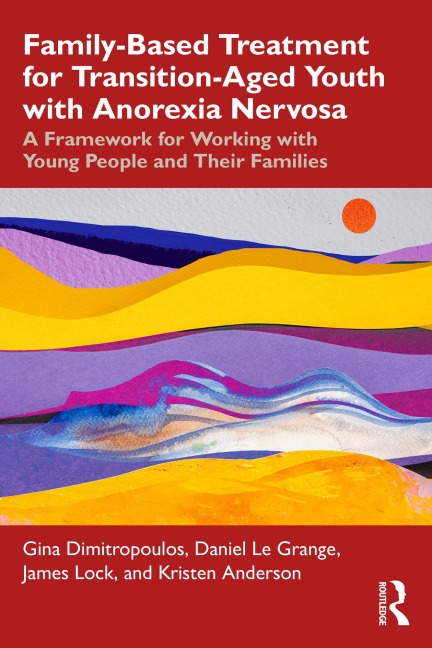
This book provides a comprehensive theoretical, empirical, and clinical account for the use of an adapted form of family-based therapy for transition-aged youth (FBT-TAY) aged 16-25 with anorexia nervosa. In FBT-TAY, the treatment team prioritizes addressing the young person's concerns and challenges related to their developmental stage, such as solidifying their identity, educational or vocational aspirations, relationships, and future life goals. Therapy sessions incorporate discussions and interventions that are relevant and meaningful to the young person's developmental stage while recommending specific ways to appropriately engage parents/caregivers to support the recovery process. The book includes an introduction to FBT-TAY concepts and strategies with a detailed description of each phase of treatment, a review of the available data and scientific support for this intervention, and discussions of FBT-TAY application with patients in post-secondary education from diverse families, those without family involvement, and underserved areas. This book provides a foundation to clinicians who seek a tailored approach of FBT to fit the needs of their transition-aged patients with anorexia nervosa, in a series of chapters authored by leading experts in FBT-TAY and clinicians in the eating disorder field.
Gina Dimitropoulos is a professor at the Faculty of Social Work, University of Calgary, and is cross appointed with the departments of psychiatry and paediatrics. Daniel Le Grange is an emeritus professor of psychiatry and behavioural sciences at University of California, San Francisco, and emeritus professor of psychiatry and behavioural neuroscience at the University of Chicago. James Lock is a professor of child psychiatry and the director of the eating disorder program at Stanford University. Kristen Anderson is a licensed clinical social worker and the co-founder of the Chicago Center for Evidence Based Treatment, a specialized eating disorders treatment program serving individuals with eating disorders across the lifespan.
Introduction 1. What is FBT-TAY? 2. Why use FBT-TAY? The Scientific and Clinical Rationale 3. Overview of Late Adolescent and Young Development in FBT-TAY 4. Setting Up Treatment for FBT-TAY 5. Phase 1 - Session 1 6. Phase 1 - Session 2 (The Family Meal) 7. Remainder of Phase 1 8. Phase 2 9. Phase 3 - Emerging Adulthood, Relapse Prevention and Termination of Treatment 10. Contextual Considerations in FBT-TAY 11. Post-Secondary Considerations 12. FBT-TAY for Diverse Families 13. FBT-TAY for Young People Without Family Involvement 14. Book Summary and Conclusion