Und dann auf "Zum Home-Bildschirm [+]".

Stöbern
genialokal zum Startbildschirm hinzufügen
Installieren Sie die genialokal App auf Ihrem Startbildschirm für einen schnellen Zugriff und eine komfortable Nutzung.
Installieren Sie die genialokal App auf Ihrem Startbildschirm für einen schnellen Zugriff und eine komfortable Nutzung.
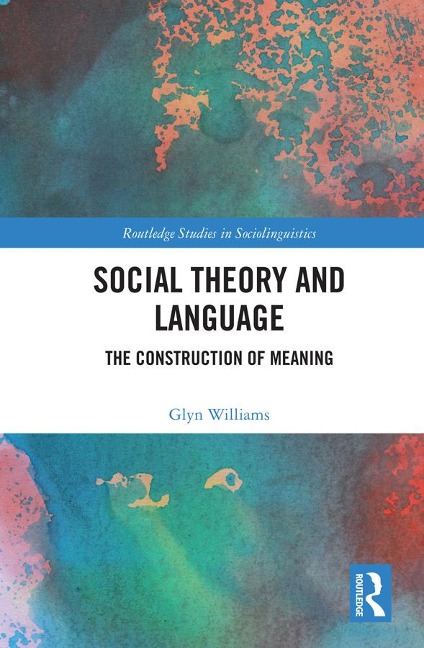
This volume offers a comprehensive treatment of the historical developments underpinning our present understandings of the relationship between language and the social by integrating the study of language with key strands of sociological theory. The book posits that theory conditions how objects are constructed and in turn the meanings allocated to them and explores the implications for the relationship between language and the social. The volume traces this relationship from its foundations in the work of Enlightenment philosophers, in which sociology and linguistics emerged as coherent disciplines. Taking this work as a point of departure, the book examines the unfolding of the interplay between language and the social across developments in sociological theory in subsequent eras, encompassing such strands as Marxism, functionalism, interactionism, anti-foundationalism, poststructuralism, critical theory, and critical realism. A final chapter turns its eye toward contemporary sociolinguistics and its treatment of different sociological perspectives and future directions for its continued development. Reflecting on trajectories in sociological theory toward informing our understanding of the relationship between language and the social today, this book will be key reading for students and scholars in sociolinguistics, philosophy of language, and those working in sociology and geography with an interest in language issues.
Glyn Williams has authored or co-authored fourteen books, including Sociolinguistics: A Sociological Critique (1992) and French Discourse Analysis: The Method of Poststructuralism (1999).
Preface ............................................................................................................. i CHAPTER 1: THEORY AS METADISCOURSE ................................................. 1 CHAPTER 2: EARLY SOCIAL SCIENCE ............................................................ 28 CHAPTER 3: MARXISM AND LANGUAGE ..................................................... 51 CHAPTER 4: FUNCTIONALISM AND LANGUAGE ......................................... 71 CHAPTER 5: INERACTIONISM AND LANGUAGE .......................................... 84 CHAPTER 6: ANTI-FUNDATIONALISM ..........................................................109 CHAPTER 7: POST-STRUCTURALISM .............................................................126 CHAPTER 8: CRITICAL SOCIAL THEORY .........................................................154 CHAPTER 9: CRITICAL REALISM AND DISCOURSE .......................................179 CHAPTER 10: SOCIOLINGUISTICS AND SOCIAL THEORY ........................... 206 BIBLIOGRAPHY: ...............................................................................................232
Dieses eBook wird im PDF-Format geliefert und ist mit einem Adobe Kopierschutz (DRM) versehen. Sie können dieses eBook mit allen Geräten lesen, die das PDF-Format und den Adobe Kopierschutz (DRM) unterstützen.
Zum Beispiel mit den folgenden Geräten:
• tolino Reader
Laden Sie das eBook direkt über den Reader-Shop auf dem tolino herunter oder übertragen Sie das eBook auf Ihren tolino mit einer kostenlosen Software wie beispielsweise Adobe Digital Editions.
• Sony Reader & andere eBook Reader
Laden Sie das eBook direkt über den Reader-Shop herunter oder übertragen Sie das eBook mit der kostenlosen Software Sony READER FOR PC/Mac oder Adobe Digital Editions auf ein Standard-Lesegeräte mit epub- und Adobe DRM-Unterstützung.
• Tablets & Smartphones
Möchten Sie dieses eBook auf Ihrem Smartphone oder Tablet lesen, finden Sie hier unsere kostenlose Lese-App für iPhone/iPad und Android Smartphone/Tablets.
• PC & Mac
Lesen Sie das eBook direkt nach dem Herunterladen mit einer kostenlosen Lesesoftware, beispielsweise Adobe Digital Editions, Sony READER FOR PC/Mac oder direkt über Ihre eBook-Bibliothek in Ihrem Konto unter „Meine eBooks“ - „online lesen“.
Schalten Sie das eBook mit Ihrer persönlichen Adobe ID auf bis zu sechs Geräten gleichzeitig frei.
Bitte beachten Sie, dass die Kindle-Geräte das Format nicht unterstützen und dieses eBook somit nicht auf Kindle-Geräten lesbar ist.