Und dann auf "Zum Home-Bildschirm [+]".

Stöbern
genialokal zum Startbildschirm hinzufügen
Installieren Sie die genialokal App auf Ihrem Startbildschirm für einen schnellen Zugriff und eine komfortable Nutzung.
Installieren Sie die genialokal App auf Ihrem Startbildschirm für einen schnellen Zugriff und eine komfortable Nutzung.
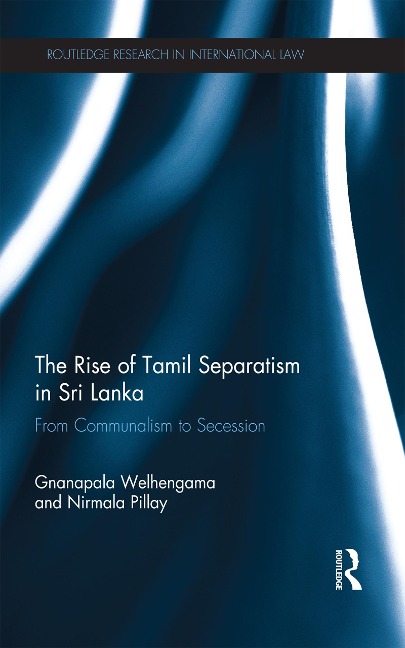
Among the examples of civil wars, armed secessionist movements and minority uprisings in the world today, many involve conflict between a minority group's aim for political self-determination, and the nation state's resistance to any diminution of sovereignty. With the expansion of the international regime of human rights, minority groups have reconceptualised their struggle with the understanding that a minority which is linguistically, religiously or ethnically distinctive is entitled to self-determination if their aspirations cannot be met. This book explores the relationship between minority rights, self-determination and secession within international law, by contextualising these issues in a detailed case study of the rise of Tamil separatism in Sri Lanka. Welhengama and Pillay show how Tamil communalism hardened into secession and assess whether the Sri Lankan government has met its obligations with respect to the right to self-determination short of secession. Focusing on the legal and human rights arguments for secession by the Tamil community of the North and East of Sri Lanka, the book demonstrates how the language of international law and international human rights played a major role in the development of the arguments for secession. Through a close examination of the case of the Tamil's secessionist movement the book presents valuable insights into why modern nation states find themselves threatened by separatist claims and bids for independence based on ethnicity.
G. Welhengama is now retired but was previously principle of the Liverpool Community College. He was a lawyer and judge in Sri Lanka and also stood as an MP for the Rajapaksha party in Sri Lanka, before teaching at Liverpool John Moores University in the Faculty of Law. Nirmala Pillay is senior lecturer in law at Liverpool John Moores University, UK.
1. Introduction 2. The Island and its People 3. The gift of Empire 4. The Dawn of Communalism 5. The role of Tamil Politicians of the time: The Ponnambalm Brothers 6. Winter of Discontent: Tamil Communalism 7. Politicians who championed communalism: G.G. Ponnambalm 8. The Emergence of Federalism 9. Edging Towards Secession. 10. Tamil separatism. Was it due to Sinhala Communalism? 11. Tamil Eelam by Virtue of Self-Determination 12. Devolution of Power as a Solution to the Ethnic Conflict of Sri Lanka 13. Conclusion
Dieses eBook wird im PDF-Format geliefert und ist mit einem Adobe Kopierschutz (DRM) versehen. Sie können dieses eBook mit allen Geräten lesen, die das PDF-Format und den Adobe Kopierschutz (DRM) unterstützen.
Zum Beispiel mit den folgenden Geräten:
• tolino Reader
Laden Sie das eBook direkt über den Reader-Shop auf dem tolino herunter oder übertragen Sie das eBook auf Ihren tolino mit einer kostenlosen Software wie beispielsweise Adobe Digital Editions.
• Sony Reader & andere eBook Reader
Laden Sie das eBook direkt über den Reader-Shop herunter oder übertragen Sie das eBook mit der kostenlosen Software Sony READER FOR PC/Mac oder Adobe Digital Editions auf ein Standard-Lesegeräte mit epub- und Adobe DRM-Unterstützung.
• Tablets & Smartphones
Möchten Sie dieses eBook auf Ihrem Smartphone oder Tablet lesen, finden Sie hier unsere kostenlose Lese-App für iPhone/iPad und Android Smartphone/Tablets.
• PC & Mac
Lesen Sie das eBook direkt nach dem Herunterladen mit einer kostenlosen Lesesoftware, beispielsweise Adobe Digital Editions, Sony READER FOR PC/Mac oder direkt über Ihre eBook-Bibliothek in Ihrem Konto unter „Meine eBooks“ - „online lesen“.
Schalten Sie das eBook mit Ihrer persönlichen Adobe ID auf bis zu sechs Geräten gleichzeitig frei.
Bitte beachten Sie, dass die Kindle-Geräte das Format nicht unterstützen und dieses eBook somit nicht auf Kindle-Geräten lesbar ist.