Und dann auf "Zum Home-Bildschirm [+]".

Stöbern
genialokal zum Startbildschirm hinzufügen
Installieren Sie die genialokal App auf Ihrem Startbildschirm für einen schnellen Zugriff und eine komfortable Nutzung.
Installieren Sie die genialokal App auf Ihrem Startbildschirm für einen schnellen Zugriff und eine komfortable Nutzung.

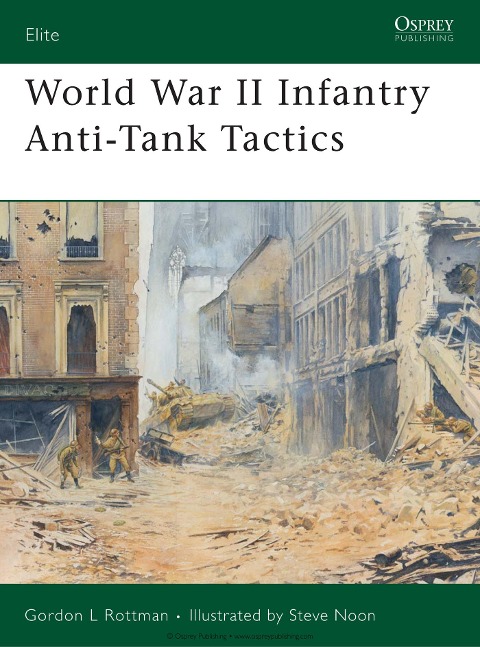
The battlefield interaction between infantry and tanks was central to combat on most fronts in World War II.
The first 'Blitzkrieg' campaigns saw the tank achieve a new dominance. New infantry tactics and weapons - some of them desperately dangerous - had to be adopted, while the armies raced to develop more powerful anti-tank guns and new light weapons. By 1945, a new generation of revolutionary shoulder-fired AT weapons was in widespread use.
This book explains in detail the shifting patterns of anti-tank combat, illustrated with photographs, diagrams and colour plates showing how weapons were actually employed on the battlefield.
Gordon L Rottman entered the US Army in 1967, volunteered for Special Forces and completed training as a weapons specialist. He was assigned to the 7th Special Forces Group until reassigned to the 5th Special Forces Group in Vietnam in 1969-70. He was a Special Operations Forces Intelligence Specialist at the Army's Joint Readiness Center for 12 years, and is now a freelance writer, living in Texas.
Steve Noon was born in Kent, UK, and attended art college in Cornwall. He has had a life-long passion for illustration and since 1985 has worked as a professional artist. As well as illustrating numerous Osprey titles, Steve has provided award-winning illustrations for renowned publishers Dorling Kindersley, where his interest in historical illustration began.
The tank threat
Early war anti-tank defense doctrine
Characteristics & capabilities of AT weapons: AT rifles, AT rocket launchers, AT hand and rifle grenades, AT hand mines, improvised weapons (e.g. 'Molotov cocktails')
Infantry AT tactics
Late-war tank improvements
New AT weapons and 'tank-hunter' tactics
Specifics of national weapons and tactics: USA, Britain, Germany, USSR, Japan
Tables of weapons and capabilities