
Stöbern
genialokal zum Startbildschirm hinzufügen
Installieren Sie die genialokal App auf Ihrem Startbildschirm für einen schnellen Zugriff und eine komfortable Nutzung.
Installieren Sie die genialokal App auf Ihrem Startbildschirm für einen schnellen Zugriff und eine komfortable Nutzung.
Tippen Sie einfach auf Teilen:
 Und dann auf "Zum Home-Bildschirm [+]".
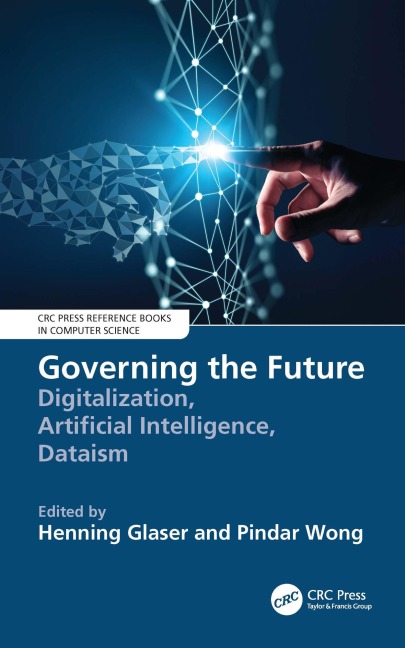
We are living in times of deep and disruptive change. Perhaps the most powerful vector of this change can be described by three related catchphrases: digitalization, artificial intelligence, and dataism. Drawing on considerable expertise from a wide range of scholars and practitioners, this interdisciplinary collection addresses the challenges, impacts, opportunities and regulation of this civilizational transformation from a variety of angles, including technology, philosophy, cultural studies, international law, sociology and economics. This book will be of special interest to scholars, students, analysts, policy planners, and decision-makers in think tanks, international organizations, and state agencies studying and dealing with the development and governance of disruptive technologies.
Henning Glaser is the director, German-Southeast Asian Center of Excellence for Public Policy and Good Governance (CPG), Thammasat University. Pindar Wong is an Internet pioneer and the former Chairman of VeriFi (Hong Kong) Ltd.
Introduction: Governing the Technetronic Revolution? An Uncertain Future Between Paradise and Pandemonium by Henning Glaser Chapter 1: Why Sex Robots Should Fear Us by Nicholas Agar & Pablo García-Barranquero Chapter 2: Global Culture for Global Technology: Religious Values and Progress in Artificial Intelligence by Robert M. Geraci & Yong Sup Song Chapter 3: The Utopia of Universal Control: Critical Thoughts on Transhumanism and Technological Posthumanism by Toni Loh Chapter 4: Corporate Spies: Industrial Cyber Espionage and the Obligation to Prevent Trans-Boundary Harm by Russell Buchan Chapter 5: Machine Supererogation and Deontic Bias by Jonathan Pengelly Chapter 6: The Hacker Way: Moral Decision Logics with Lethal Autonomous Weapons Systems by Elke Schwarz Chapter 7: A Roadmap for Living & Working with Intelligent Machines by Mark Fenwick & Erik P. M. Vermeulen Chapter 8: AI, Chatbots and Transformations of the Self by Anthony Elliott Chapter 9: Computational Power in the Digital World by Massimo Durante Chapter 10: Law, Governance and Artificial Intelligence - the Case of Intelligent Online Dispute Resolution by John Zeleznikow Chapter 11: Total Surveillance - Everybody Watching Everybody Else by Vincent C. Müller
Dieses eBook wird im PDF-Format geliefert und ist mit einem Adobe Kopierschutz (DRM) versehen. Sie können dieses eBook mit allen Geräten lesen, die das PDF-Format und den Adobe Kopierschutz (DRM) unterstützen.
Zum Beispiel mit den folgenden Geräten:
• tolino Reader
Laden Sie das eBook direkt über den Reader-Shop auf dem tolino herunter oder übertragen Sie das eBook auf Ihren tolino mit einer kostenlosen Software wie beispielsweise Adobe Digital Editions.
• Sony Reader & andere eBook Reader
Laden Sie das eBook direkt über den Reader-Shop herunter oder übertragen Sie das eBook mit der kostenlosen Software Sony READER FOR PC/Mac oder Adobe Digital Editions auf ein Standard-Lesegeräte mit epub- und Adobe DRM-Unterstützung.
• Tablets & Smartphones
Möchten Sie dieses eBook auf Ihrem Smartphone oder Tablet lesen, finden Sie hier unsere kostenlose Lese-App für iPhone/iPad und Android Smartphone/Tablets.
• PC & Mac
Lesen Sie das eBook direkt nach dem Herunterladen mit einer kostenlosen Lesesoftware, beispielsweise Adobe Digital Editions, Sony READER FOR PC/Mac oder direkt über Ihre eBook-Bibliothek in Ihrem Konto unter „Meine eBooks“ - „online lesen“.
Schalten Sie das eBook mit Ihrer persönlichen Adobe ID auf bis zu sechs Geräten gleichzeitig frei.
Bitte beachten Sie, dass die Kindle-Geräte das Format nicht unterstützen und dieses eBook somit nicht auf Kindle-Geräten lesbar ist.