
Stöbern
genialokal zum Startbildschirm hinzufügen
Installieren Sie die genialokal App auf Ihrem Startbildschirm für einen schnellen Zugriff und eine komfortable Nutzung.
Installieren Sie die genialokal App auf Ihrem Startbildschirm für einen schnellen Zugriff und eine komfortable Nutzung.
Tippen Sie einfach auf Teilen:
 Und dann auf "Zum Home-Bildschirm [+]".
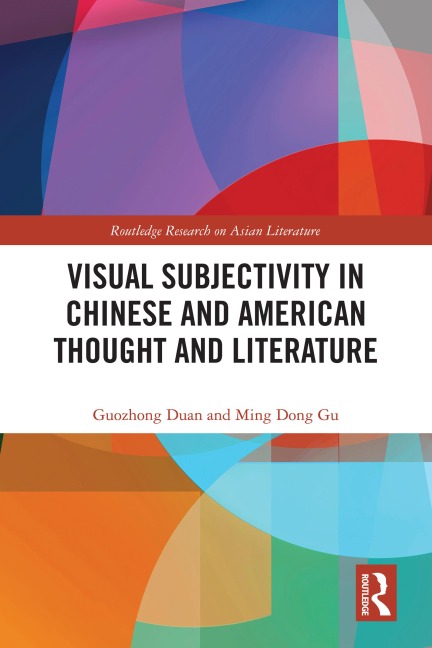
Providing the reader with a systematic study of visual subjectivity in comparative thought and literature, this book analyses the role that vision and visuality, especially interpersonal visuality, plays in the constitution of subject and subjectivity in Chinese and American traditions. Examining the formation of visual subjectivity in the philosophical works by major Chinese and Western thinkers, this book provides a comparative study of four masterworks of Chinese and American fiction, focusing on The Plum in the Golden Vase, The Story of the Stone, Moby Dick, and The Scarlet Letter. It demonstrates that there are both psychologically universal and culturally specific factors and features in the visual constitution and representation of self, identity, subject, and subjectivity. Offering fresh insights for cross-cultural studies of intellectual thought, literature, ideology, and culture through the visual lens, this book will appeal to students and scholars engaged in comparative studies of Chinese and American thought, literature, and narrative theory.
Guozhong Duan received his PhD in literary studies from the University of Texas at Dallas and is currently an associate professor of foreign studies in Yangzhou University, China. He has published numerous Chinese and English articles in journals and volumes including Journal of Qinghua University, Journal of Zhejiang University, Journal of Dr. Sun Yat-sen University, and Social Sciences Abroad, and Routledge Handbook of Modern Chinese Literature. Ming Dong Gu is the Ketherine R. Cecil Professor in the Bass School of Arts, Humanities, Technology at the University of Texas at Dallas. He has authored 5 English monographs and edited three English volumes. His recent publications include: The Nature and Rationale of Zen/Chan and Enlightenment (2024); Fusion of Critical Horizons in Chinese and Western Language, Poetics, and Aesthetics (2021), and Routledge Handbook of Modern Chinese Literature (2019). In addition, he has published more than 160 articles in English and Chinese journals.
Introduction: Visual Subjectivity in Chinese and American Traditions 1. Philosophical Inquiries into Visual Subjectivity in Chinese and Western Thought 2. Intellectual Background for Visual Representations of Subjectivity in Chinese and American Novels 3. Visual Politics and Narcissistic Imagining: The Sin of Seeing in the Plum in the Golden vase 4. Hall of Mirrors and Self Identity: Tragic Vision in the Story of the Stone 5. Visual Trap: Transcendentalist Vision and Subjectivity in Moby Dick 6. Dualistic Vision and Disciplinary Gaze: Ethics of Visuality in the Scarlet Letter 7. Conclusion: A Transcultural Notion of Visual Subjectivity
Dieses eBook wird im PDF-Format geliefert und ist mit einem Adobe Kopierschutz (DRM) versehen. Sie können dieses eBook mit allen Geräten lesen, die das PDF-Format und den Adobe Kopierschutz (DRM) unterstützen.
Zum Beispiel mit den folgenden Geräten:
• tolino Reader
Laden Sie das eBook direkt über den Reader-Shop auf dem tolino herunter oder übertragen Sie das eBook auf Ihren tolino mit einer kostenlosen Software wie beispielsweise Adobe Digital Editions.
• Sony Reader & andere eBook Reader
Laden Sie das eBook direkt über den Reader-Shop herunter oder übertragen Sie das eBook mit der kostenlosen Software Sony READER FOR PC/Mac oder Adobe Digital Editions auf ein Standard-Lesegeräte mit epub- und Adobe DRM-Unterstützung.
• Tablets & Smartphones
Möchten Sie dieses eBook auf Ihrem Smartphone oder Tablet lesen, finden Sie hier unsere kostenlose Lese-App für iPhone/iPad und Android Smartphone/Tablets.
• PC & Mac
Lesen Sie das eBook direkt nach dem Herunterladen mit einer kostenlosen Lesesoftware, beispielsweise Adobe Digital Editions, Sony READER FOR PC/Mac oder direkt über Ihre eBook-Bibliothek in Ihrem Konto unter „Meine eBooks“ - „online lesen“.
Schalten Sie das eBook mit Ihrer persönlichen Adobe ID auf bis zu sechs Geräten gleichzeitig frei.
Bitte beachten Sie, dass die Kindle-Geräte das Format nicht unterstützen und dieses eBook somit nicht auf Kindle-Geräten lesbar ist.