
Stöbern
genialokal zum Startbildschirm hinzufügen
Installieren Sie die genialokal App auf Ihrem Startbildschirm für einen schnellen Zugriff und eine komfortable Nutzung.
Installieren Sie die genialokal App auf Ihrem Startbildschirm für einen schnellen Zugriff und eine komfortable Nutzung.
Tippen Sie einfach auf Teilen:
 Und dann auf "Zum Home-Bildschirm [+]".

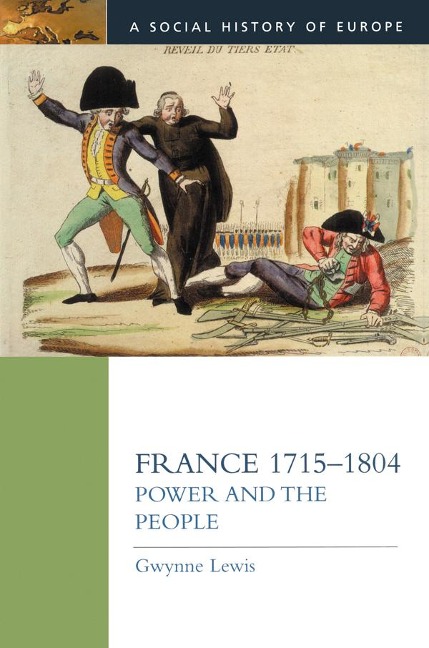
Gwynne Lewis' history opens with a full analysis of all the components of traditional France, including political and religious structures, the seigneurial system, the bourgeoisie and the poor. Part two examines the meaning and challenge of the Enlightenment, with particular reference to women and the mass of the poor. Part three concentrates upon the relationship between the shift to laissez-faire economics, popular revolts and government repression, providing the essential background to the Revolutionary decade of the 1790s. The Revolution witnessed the rise of a politicised 'Popular Movement' that achieved, briefly, a measure of popular democracy. War and counter-revolution blocked the move towards real democracy, strengthened the authority of the centralised state, and enhanced the credibility of bourgeois political and economic power. One of the main contentions of this work is that the failure of both monarchical and Revolutionary regimes to deal with the massive social problem of poverty played a far larger part in explaining the collapse of the Bourbons in 1789, and the failure of democracy during the 1790s, than most historians have allowed. Likewise, the importance of religion in directing the momentous events of this period has also been under-estimated.
Gwynne Lewis is Emeritus Professor at The University of Warwick. She has also taught in Canada and in Tanzania. Her works include The Second Vendee (1978); The Advent of Modern Capitalism in France 1770-1840 (1993) and The French Revolution: Rethinking the Debate (Routledge, 1993).
General Editor's Preface. Preface. Introduction. PART ONE: 'LA FRANCE PROFONDE'. 1. Louis XIV And The Regent: War And Peace. 2. The Catholic Church And French Society. 3. The Nobility And The Seigneurial System. 4. The Ancien Regime Bourgeoisie. 5. A 'Fourth Estate' Of Poverty. PART TWO: 'WINDS OF CHANGE'. 6. 'Enlightenments' And The People. 7. 'Enlightenments' And The State. PART THREE: REFORM AND REACTION. 8. 'New Ideological Wine In Old Constitutional Bottles': Reform And Reaction, 1774-1791. 9. War And Dictatorship. Conclusion. Glossary. Notes. Index.