Und dann auf "Zum Home-Bildschirm [+]".

Stöbern
genialokal zum Startbildschirm hinzufügen
Installieren Sie die genialokal App auf Ihrem Startbildschirm für einen schnellen Zugriff und eine komfortable Nutzung.
Installieren Sie die genialokal App auf Ihrem Startbildschirm für einen schnellen Zugriff und eine komfortable Nutzung.
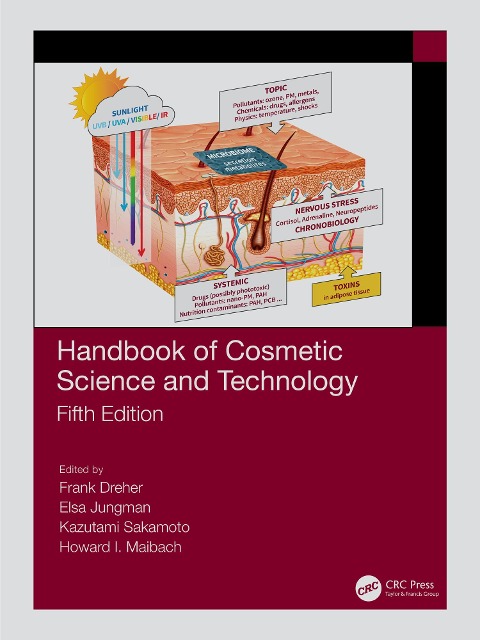
With chapters from experienced and internationally renowned contributors holding positions in research, industry, and clinical practice, this is the fifth edition of what has become the standard reference for cosmetic scientists and dermatologists seeking the latest innovations and technology for the formulation, design, testing, use, and production of cosmetic products for the skin. *Offers in-depth analysis of specific topics in cosmetic science and research *Presents the latest in international research and its translation to practice *Gives an indispensable guide to a hotly competitive area for research and practice
Frank Dreher, PhD, is Founder and President of Topalix LLC, San Francisco, California, USA. Elsa Jungman, PhD, is Founder and CEO of ELSI Skin Health, Inc., San Francisco, California, USA. Kazutami Sakamoto, PhD, is Guest Professor of Pure and Applied Chemistry, Tokyo University of Science, Japan. He is also editor of Cosmetic Science and Technology: Theoretical Principles and Applications. Howard I. Maibach, MD, is Professor of Dermatology at the University of California School of Medicine, San Francisco, California, USA. He is also the editor of Cosmeceuticals and Active Cosmetics 3E, Handbook of Systemic Drug Treatment in Dermatology 2E, Contact Urticaria Syndrome, Textbook of Cosmetic Dermatology 5E, Dermatotoxicology 8E, and Topical Nail Products and Ungual Drug Delivery, among many others.
Biophysical characteristics of skin: Relation to skin of color, age, gender, and site, 2.) Skin Moisturization, 3.) Skin pH and buffering capacity, 4.) Skin ceramides, 5.) Sensitive skin: Sensory, clinical, and physiological factors, 6.) New developments in understanding of sensitive skin, 7.) The role of neuromediators in skin conditions, 8.) Contact Dermatitis: Principles, mechanisms, and allergies related to cosmetics, 9.) Race as a possible endogenous factor in Irritant Contact Dermatitis: Comparing the irritant response among White, Black, and Asian individuals, 10.) Skin aging: Physical and physiological changes, 11.) Skin aging: Impact of smoking and air pollution, 12.) Skin barrier and transepidermal water loss (TEWL): A critical overview, 13.) Skin lipid organization by electron paramagnetic resonance, 14.) Determination of skin color in relation to ethnicity, gender, age, site, and environmental factors: An overview, 15.) Ultraviolet imaging of skin and cosmetics, 16.) Tribology of skin, 17.) Formation and performance of cosmetic films in cosmetics, 18.) Sensitive skin testing, 19.) Neurophysiological responses and cosmetics, 20.) Noninvasive clinical assessment of skin inflammation, 21.)Validated alternative methods available for human Health and Safety assessment of cosmetic products and their ingredients in the European Union, 22.) Pre-clinical human skin models for cosmetic efficacy testing, 23.) Skin cleansing: New trends, 24.) Removal methods and evaluation of makeup cosmetics, 25.) Hydrating substances, 26.) Skin care occlusive ingredients: Predicting occlusion's effects using partition coefficients, 27.) Antioxidant technology in skin care, 28.) Sunscreens and sun protection, 29.) Pollution-induced oxidative stress in skin and related potential antioxidant protection, 30.) New perspectives in the control of the skin aging process, 31.) Epigenetics and cosmetics, 32.) Skin lightening agents, 33.) Baby care products, 34.) Skin care products: Artificial tanning, 35.) Skin restoration products after cosmetic procedures, 36.) Skin surface pH and its implication in skin health, 37.) Formulating Cosmetic Products, 38.) Silicones in cosmetics, 39.) Plants, plant products, and indigenous practices in cosmetics and skin care, 40.) Aquatic environmental impact of cosmetics, 41.) Regulatory trends in Cosmetic Dermatology: Europe, 42.) Regulatory trends in Cosmetic Dermatology: Singapore, 43.) Standardization: ISO and cosmetics, Index
Dieses eBook wird im PDF-Format geliefert und ist mit einem Adobe Kopierschutz (DRM) versehen. Sie können dieses eBook mit allen Geräten lesen, die das PDF-Format und den Adobe Kopierschutz (DRM) unterstützen.
Zum Beispiel mit den folgenden Geräten:
• tolino Reader
Laden Sie das eBook direkt über den Reader-Shop auf dem tolino herunter oder übertragen Sie das eBook auf Ihren tolino mit einer kostenlosen Software wie beispielsweise Adobe Digital Editions.
• Sony Reader & andere eBook Reader
Laden Sie das eBook direkt über den Reader-Shop herunter oder übertragen Sie das eBook mit der kostenlosen Software Sony READER FOR PC/Mac oder Adobe Digital Editions auf ein Standard-Lesegeräte mit epub- und Adobe DRM-Unterstützung.
• Tablets & Smartphones
Möchten Sie dieses eBook auf Ihrem Smartphone oder Tablet lesen, finden Sie hier unsere kostenlose Lese-App für iPhone/iPad und Android Smartphone/Tablets.
• PC & Mac
Lesen Sie das eBook direkt nach dem Herunterladen mit einer kostenlosen Lesesoftware, beispielsweise Adobe Digital Editions, Sony READER FOR PC/Mac oder direkt über Ihre eBook-Bibliothek in Ihrem Konto unter „Meine eBooks“ - „online lesen“.
Schalten Sie das eBook mit Ihrer persönlichen Adobe ID auf bis zu sechs Geräten gleichzeitig frei.
Bitte beachten Sie, dass die Kindle-Geräte das Format nicht unterstützen und dieses eBook somit nicht auf Kindle-Geräten lesbar ist.