Und dann auf "Zum Home-Bildschirm [+]".

Stöbern
genialokal zum Startbildschirm hinzufügen
Installieren Sie die genialokal App auf Ihrem Startbildschirm für einen schnellen Zugriff und eine komfortable Nutzung.
Installieren Sie die genialokal App auf Ihrem Startbildschirm für einen schnellen Zugriff und eine komfortable Nutzung.
Ihr gewünschter Artikel ist in 0 Buchhandlungen vorrätig - wählen Sie hier eine Buchhandlung in Ihrer Nähe aus:

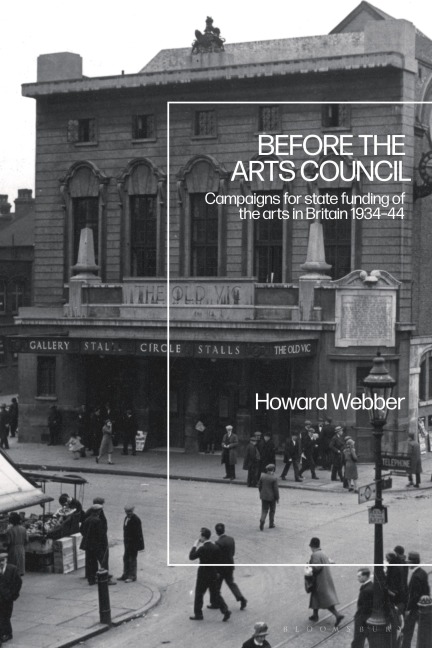
This book explores the hitherto neglected history of the campaign for state funding of the arts. By focusing on the important but forgotten movements for music and drama subsidy before and during WWII, Howard Webber makes an important contribution to the history of arts subsidy. Before the Arts Council rediscovers three forgotten but influential campaigns for state support of the arts in Britain in the 1930s and wartime. Webber's impressive historical excavation challenges existing scholarship, which argues that arts subsidy was the result of the war, and instead re-situates the campaign's origins in the pre-war years. Webber does so by drawing on correspondence from influential figures including Ralph Vaughan Williams, John Maynard Keynes and J.B Priestley, along with extensive use of government papers. Before the Arts Council is a lively, compelling and scrupulously researched account of a subject consistently misunderstood and misrepresented. It changes our understanding of an aspect of British cultural history we thought we knew well. It will appeal to students of twentieth century social and political history and to anyone with a general interest in the arts and in this period.
Howard Webber
Acknowledgements Chapter 1: The Creation Myth of the Arts Council Introduction The Creation Myth and its Persistence Scope and Aims of this Book Chapter 2: Theatre and Classical Music in 1930s Britain Introduction Cinema v Theatre Broadcasting v Live Music Conclusion Chapter 3: The League of Audiences: (i) 'I am progressing Almost Beyond my Hopes': A Forgotten Debate 'Advancing Upon the Iron Portals of Whitehall': the League Begins Alfred Wareing The League and the Press The League's Supporters The League's Programme 'A Piece of Idealistic Blackmailing': the League Gains Support Chapter 4: The League of Audiences: (ii) Fear of the Machine and Distrust of the State Introduction The League and Mechanised Art: (a) 'A Sensation of Impotence and Dumb Acquiescence' 'Condemned to Death by Being Canned Alive': The Scope of the Issue 'Death to Hollywood'? Opposition to 'Mechanised Music' The League and Mechanised Art: (b) The Involvement of the Churches 'Under the Shadow of a New State Obligation': Opposition to the League of Audiences Conclusion Chapter 5: The League of Audiences: (iii) Decline, Fall and Legacy Introduction 'Mr Wareing is Filled With Something of the Crank Ingredient': The League of Audiences and the BBC The League of Audiences and the Theatrical Establishment The End of The League of Audiences: (A) Decline The End of The League of Audiences: (B) Fall The End of The League of Audiences: (C) Lingering Death The Significance and Legacy of The League of Audiences Chapter 6: John Christie and the 'Council of Power': 1936-39 Introduction The Beginnings: 'I Want to Form a Royal Society of Music' The Glyndebourne Conference of March 1938 Christie Prepares Discussion at the Conference The July 1938 Conference Christie in the Approach to War conclusion Chapter 7 'Cema is Already Broken Down': John Christie and the National Council of Music 1939-41 Introduction Preliminary Lobbying: to Summer 1940 'The Psychological Moment Has Arrived': to December 1940 Christie and the Musicians Successes and Excesses 'Let the Flags Be Out. Let Us Drive in State': to Spring 1941 Christie's Friends and Supporters in Spring 1941 Conclusion Chapter 8: Butler, Keynes and the End of Christie's National Council of Music: 1941-44 Global Ambitions and Legal Minutiae: the NCM Spring to Autumn 1941 'We Are At Last Unofficially Accepted & Wanted': Christie Misunderstands - Autumn 1941 to Spring 1942 'Damn the Machine': Keynes Blocks the NCM - Spring and Summer 1942 'I See Nothing But Hate and Envy': Late 1942 to Spring 1943 The End of the NCM: Spring 1943 to Autumn 1944 Conclusion Chapter 9: 'No Levy on Laughter and no Fine on Fun!': the Campaign Against Entertainments Duty Introduction Origin and History of Entertainments Duty to 1933 1933-34 - The Old Vic and Sadler's Wells: Music, Drama and Education The Campaign 1933-39: 'Why Should "Crazy Nights at Clacton" Escape?' Conclusion: 'Bringing an Aesthetic Principle into Politics'? Chapter 10: Restoring the Picture The Picture Revealed Completing the Picture Bibliography