
Stöbern
genialokal zum Startbildschirm hinzufügen
Installieren Sie die genialokal App auf Ihrem Startbildschirm für einen schnellen Zugriff und eine komfortable Nutzung.
Installieren Sie die genialokal App auf Ihrem Startbildschirm für einen schnellen Zugriff und eine komfortable Nutzung.
Tippen Sie einfach auf Teilen:
 Und dann auf "Zum Home-Bildschirm [+]".
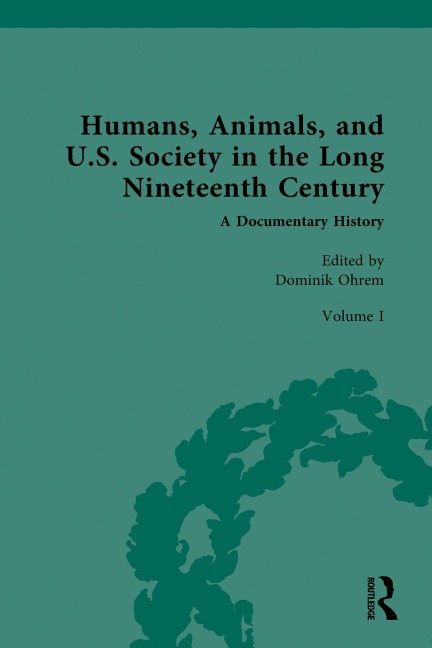
Volume I traces the significance of animals, and the "problem" of animality, within the currents of U.S. social and scientific thought during a period marked by a rapid expansion of American and transatlantic print culture. It provides insights into how evolving ideas about animal intelligence, sociality, morality, and language interacted with contemporary notions of human nature in ways that could be mobilised both to defend and to challenge traditional claims to human uniqueness and rigid distinctions between human and animal life.
Dominik Ohrem is Research Associate at MESH - Multidisciplinary Environmental Studies in the Humanities and Postdoctoral Researcher at HESCOR (Cultural Evolution in Changing Climate: Human and Earth System Coupled Research) at the University of Cologne, Germany. His research is focused on the history and philosophy of human-animal and multispecies relations.
Volume 1: Animal and Human in American Thought (Part 1) General Introduction Volume 1 Introduction 1. William Bartram, "Anecdotes of an American Crow", Philadelphia Medical and Physical Journal 1 (1804): 89-95. 2. Frederick Augustus Rauch, extract from Psychology; or, a View of the Human Soul; Including Anthropology (New York: M. W. Dodd, 1841), pp. 9-17, 30-44. 3. Phrenology and Animal "Character" in the American Phrenological Journal (1845-1851) 3.1 [Orson Fowler], "The Physiology, Phrenology, and Natural History, of the Ourang Outang, or Chimpanze." American Phrenological Journal 7, no. 3 (March 1845): 65-70. 3.2 "Animal Phrenology." American Phrenological Journal 13, no. 1 (January 1851): 6-7. 3.3 "Animal Phrenology. Number II." American Phrenological Journal 13, no. 2 (February 1851): 32. 4. Lewis Henry Morgan, "Animal Psyhology", in The American Beaver and His Works (Philadelphia: J. B. Lippincott and Co., 1868). 5. Arthur E. Brown, [Primate Minds and Morals in the Philadelphia Zoo], The American Naturalist (1878-1883) 5. 1 Arthur Erwin Brown. "The Serpent and the Ape." The American Naturalist 12, no. 4 (April 1878): 225-28. 5.2 ----, "Grief in the Chimpanzee." The American Naturalist 13, no. 3 (March 1879): 173-75. 5.3 ----, "The Kindred of Man." The American Naturalist 17, no. 2 (February 1883): 119-30. 6. Francis Bowen, "The Human and the Brute Mind", The Princeton Review 56 (May 1880): 321-29, 331-34, 336-38, 340-43. 7. William James, "What Is an Instinct?" Scribner's Magazine 1, no. 3 (March 1887): 355-65. 8. Richard Lynch Garner, [Learning the Simian Tongue], from The Speech of Monkeys" (New York: Charles L. Webster & Co., 1892), pp. 3-21, 30-9, 57-67 9. Edward Lee Thorndike, "Do Animals Reason?" Popular Science Monthly 55 (August 1899): 480-490, and "Correspondence: 'Do Animals Reason?'" Popular Science Monthly 55 (October 1899): 843-847. 10. Ernest Ingersoll, "Do Animals Commit Suicide? A Study of Brute Limitations', in The Wit of the Wild. (New York: Dodd, Mead and Company, 1906), pp. 196-210. 11. William Temple Hornaday, [Animal Crime and Criminal Animals], "The Psychology of Wild Animals", McClure's Magazine 30, no. 4 (February 1908): 469-79. 12. Margaret Floy Washburn, [Mathods and Challenges in Studying Animal Minds], from The Animal Mind: A Text-Book of Comparative Psychology (New York: The Macmillan Company, 1908), pp. 1-5, 7-13, 24-36. 13. Charles Abram Ellwood, "The Origin of Society." American Journal of Sociology 15, no. 3 (November 1909): 394-404. 14. Ira Woods Howerth, "The Great War and the Instinct of the Herd", International Journal of Ethics 29, no. 2 (1919): 174-87. Index
Dieses eBook wird im PDF-Format geliefert und ist mit einem Adobe Kopierschutz (DRM) versehen. Sie können dieses eBook mit allen Geräten lesen, die das PDF-Format und den Adobe Kopierschutz (DRM) unterstützen.
Zum Beispiel mit den folgenden Geräten:
• tolino Reader
Laden Sie das eBook direkt über den Reader-Shop auf dem tolino herunter oder übertragen Sie das eBook auf Ihren tolino mit einer kostenlosen Software wie beispielsweise Adobe Digital Editions.
• Sony Reader & andere eBook Reader
Laden Sie das eBook direkt über den Reader-Shop herunter oder übertragen Sie das eBook mit der kostenlosen Software Sony READER FOR PC/Mac oder Adobe Digital Editions auf ein Standard-Lesegeräte mit epub- und Adobe DRM-Unterstützung.
• Tablets & Smartphones
Möchten Sie dieses eBook auf Ihrem Smartphone oder Tablet lesen, finden Sie hier unsere kostenlose Lese-App für iPhone/iPad und Android Smartphone/Tablets.
• PC & Mac
Lesen Sie das eBook direkt nach dem Herunterladen mit einer kostenlosen Lesesoftware, beispielsweise Adobe Digital Editions, Sony READER FOR PC/Mac oder direkt über Ihre eBook-Bibliothek in Ihrem Konto unter „Meine eBooks“ - „online lesen“.
Schalten Sie das eBook mit Ihrer persönlichen Adobe ID auf bis zu sechs Geräten gleichzeitig frei.
Bitte beachten Sie, dass die Kindle-Geräte das Format nicht unterstützen und dieses eBook somit nicht auf Kindle-Geräten lesbar ist.