
Stöbern
genialokal zum Startbildschirm hinzufügen
Installieren Sie die genialokal App auf Ihrem Startbildschirm für einen schnellen Zugriff und eine komfortable Nutzung.
Installieren Sie die genialokal App auf Ihrem Startbildschirm für einen schnellen Zugriff und eine komfortable Nutzung.
Tippen Sie einfach auf Teilen:
 Und dann auf "Zum Home-Bildschirm [+]".
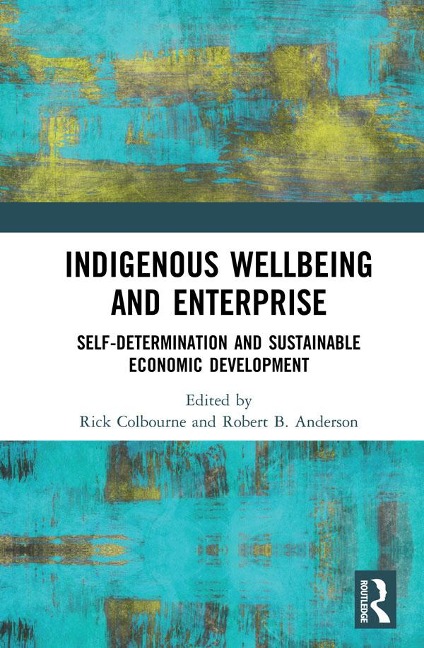
In this book, we explore the economic wellbeing of Indigenous peoples globally through case studies that provide practical examples of how Indigenous wellbeing is premised on sustainable self- determination that is in turn dependent on a community's evolving model for economic development, its cultural traditions, its relationship to its traditional territories and its particular spiritual practices. Adding to the richness, geographically these chapters cover North, Central and South America, Northern Europe, the Circumpolar Arctic, Southern Europe, the Middle East, Asia and Oceania and a resulting diverse set of Indigenous peoples. The book addresses key issues related to economic, environmental, social and cultural value creation activities and provides numerous examples and case studies of Indigenous communities globally which have successfully used entrepreneurship in the pursuit of sustainable development and wellbeing. Readers will gain practical understandings of the nature of sustainable economic development from a cross- section of case studies of Indigenous perspectives globally. The chapters map out the international development of Indigenous rights and the influence that this has had on Indigenous communities globally in asserting their sovereignty and acting on their rights to develop sustainable governance and economic development practices. Readers will develop insights into the intersection of Indigenous governance with sustainable practice and community wellbeing through practical case studies that explain the need for Indigenous- led economic development and governance strategies, which are responsive to local, regional, national and international realities in developing sustainable Indigenous economies focused on economic, environmental, social and cultural value creation. This book will be useful for Indigenous and non- Indigenous business students studying undergraduate business or MBA programs who seek to understand the global context and the varied experiences of Indigenous peoples in developing sustainable economic development strategies that promote community wellbeing.
Rick Colbourne is Algonquin Anishinaabe. He is a Fulbright Fellow and Assistant Professor in Indigenous Leadership and Management at Carleton University's Sprott School of Business. His research is focused on understanding the intersection of Indigenous ways of knowing and organizing economic development and entrepreneurship. Robert B. Anderson is Professor Emeritus at the Hill/Levene Schools of Business, University of Regina. His areas of interest include entrepreneurship/economic development, resource management/sustainable development, corporate social responsibility, corporate/Indigenous alliances, Indigenous land claims/economic development, financial reporting in Indigenous organizations and the creation/commercialization of intellectual property.
Introduction 1. Invitation to ethical space: a dialogue on sustainability and reconciliation 2. Coyote learns commerce 3. Resistance to 'development' amongst the Kogui of the Sierra Nevada de Santa Marta 4. Consultation or free, informed and prior consent? A comparative legal analysis of Indigenous consultation during natural resource activities in Australia and Canada 5. Towards measuring Indigenous sustainability: merging vernacular and modern knowledge 6. The Inuit: sustaining themselves, the Arctic and the World 7. Self-gentrification as a pro-active response to tourism development: cases of Indigenous entrepreneurship in mainland China and Taiwan 8. What is a river? Cross-disciplinary and Indigenous assessment 9. Indigenous and Community Conserved Areas (ICCAs) in Galiza: indigeneity or peasanthood? 10. Sustainable development through Indigenous community-based enterprises 11. Andean enterprises: a case study of Bolivia's Royal Quinoa entrepreneurs 12. Relational and social aspects of Indigenous entrepreneurship: the Hupacasath case Index
Dieses eBook wird im PDF-Format geliefert und ist mit einem Adobe Kopierschutz (DRM) versehen. Sie können dieses eBook mit allen Geräten lesen, die das PDF-Format und den Adobe Kopierschutz (DRM) unterstützen.
Zum Beispiel mit den folgenden Geräten:
• tolino Reader
Laden Sie das eBook direkt über den Reader-Shop auf dem tolino herunter oder übertragen Sie das eBook auf Ihren tolino mit einer kostenlosen Software wie beispielsweise Adobe Digital Editions.
• Sony Reader & andere eBook Reader
Laden Sie das eBook direkt über den Reader-Shop herunter oder übertragen Sie das eBook mit der kostenlosen Software Sony READER FOR PC/Mac oder Adobe Digital Editions auf ein Standard-Lesegeräte mit epub- und Adobe DRM-Unterstützung.
• Tablets & Smartphones
Möchten Sie dieses eBook auf Ihrem Smartphone oder Tablet lesen, finden Sie hier unsere kostenlose Lese-App für iPhone/iPad und Android Smartphone/Tablets.
• PC & Mac
Lesen Sie das eBook direkt nach dem Herunterladen mit einer kostenlosen Lesesoftware, beispielsweise Adobe Digital Editions, Sony READER FOR PC/Mac oder direkt über Ihre eBook-Bibliothek in Ihrem Konto unter „Meine eBooks“ - „online lesen“.
Schalten Sie das eBook mit Ihrer persönlichen Adobe ID auf bis zu sechs Geräten gleichzeitig frei.
Bitte beachten Sie, dass die Kindle-Geräte das Format nicht unterstützen und dieses eBook somit nicht auf Kindle-Geräten lesbar ist.