
Stöbern
genialokal zum Startbildschirm hinzufügen
Installieren Sie die genialokal App auf Ihrem Startbildschirm für einen schnellen Zugriff und eine komfortable Nutzung.
Installieren Sie die genialokal App auf Ihrem Startbildschirm für einen schnellen Zugriff und eine komfortable Nutzung.
Tippen Sie einfach auf Teilen:
 Und dann auf "Zum Home-Bildschirm [+]".
Ihr gewünschter Artikel ist in 0 Buchhandlungen vorrätig - wählen Sie hier eine Buchhandlung in Ihrer Nähe aus:

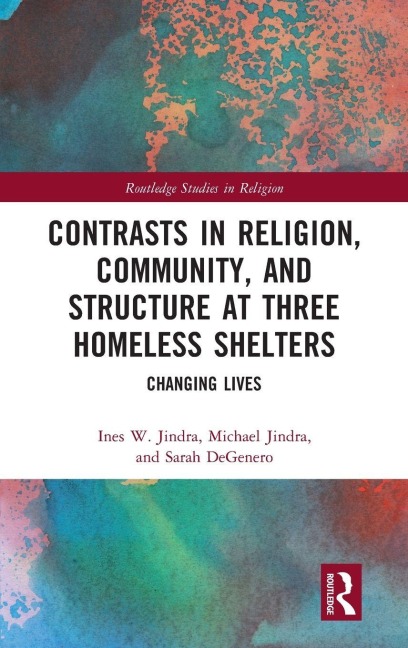
How do people in poverty and homelessness change their lives and get back on their feet? Homeless shelters across the world play a huge role in this process. Many of them are religious, but there is a lot of diversity in faith-based non-profits that assist people affected by poverty and homelessness. In this timely book, the authors look at three homeless shelters that take more or less intensive approaches to faith, community, and programming.
In one shelter, for instance, residents are required to do a program of classes that includes group Bible study, worship, and self-evaluation. The other two examined are significantly less faith-based, but in different ways and with different structures. The authors show how the three shelters tackle homelessness differently, drawing on narrative biographical interviews and case studies with residents, interviews with staff, and case study research of the three shelters.
Entering into significant debates in social theory over religion, agency, cognitive action, and culture, this book is important reading for scholars and students in religious studies, sociology and social work.
Ines W. Jindra is an assistant professor of Social Work and BSW program director in the Department of Sociology, Social Work, and Criminology at Idaho State University in Pocatello, U.S.A. Michael Jindra is a cultural anthropologist at the Institute on Culture, Religion & World Affairs at Boston University, U.S.A. Sarah DeGenero is a graduate from Gordon College, U.S.A.
Chapter 1. Introduction: Homelessness and faith-based organizations Chapter 2. Theoretical concepts and methods Chapter 3. Religion and spirituality, community, and program structure at Grace Ministries, a faith-permeated organization Chapter 4. Self-sufficiency and program structure at house of hope, a faith-affiliated organization Chapter 5. Respite center: optional participation and divergent responses in a largely secular nonprofit Chapter 6. What we found and why it matters Methodological appendix