Und dann auf "Zum Home-Bildschirm [+]".

Stöbern
genialokal zum Startbildschirm hinzufügen
Installieren Sie die genialokal App auf Ihrem Startbildschirm für einen schnellen Zugriff und eine komfortable Nutzung.
Installieren Sie die genialokal App auf Ihrem Startbildschirm für einen schnellen Zugriff und eine komfortable Nutzung.
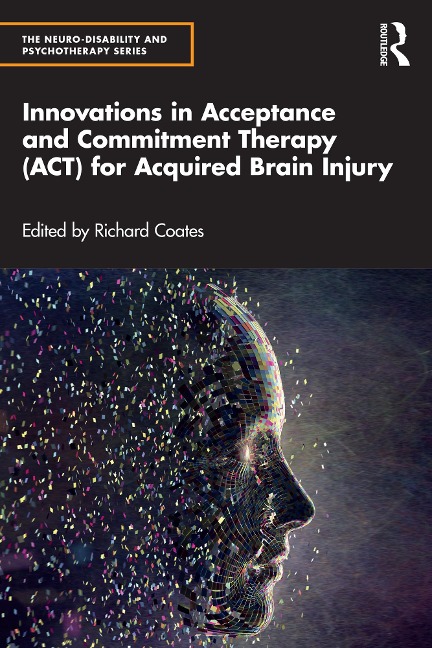
Acceptance and Commitment Therapy (ACT) allows people with acquired brain injury to develop psychological flexibility, in order to lead a vital life, despite all the difficult thoughts, feelings and brain injury symptoms that are present. Innovations in Acceptance and Commitment Therapy (ACT) for Acquired Brain Injury brings together contributions from highly experienced clinicians, using innovative approaches in ACT for acquired brain injury, in the context of individuals, working with relatives, groups and multidisciplinary teams. This book will be a valuable resource for clinical psychologists, clinical neuropsychologists, counselling psychologists, cognitive behaviour therapists, psychiatrists and counsellors working therapeutically with clients with acquired brain injury.
Richard Coates works as a Consultant Clinical Neuropsychologist in Independent Practice. He co-founded the Neuro-ACT Facebook group, which aims to connect clinicians and researchers worldwide using Acceptance and Commitment Therapy (ACT) with people with neurological conditions. Richard is engaged with ACT in many contexts: his work with clients, supervision, training, research, community and himself. Connection, creativity, learning and kindness matter to him.
CHAPTER ONE ACT resilience training in multiple sclerosis Kenneth I. Pakenham and Ambra Mara Giovannetti CHAPTER TWO "Rather than be in a cage, be in a cocoon": A pilot yoga- Acceptance and Commitment Therapy group for people with Acquired Brain Injury Mairéad Jones, Jenn Galvin and Marcia Ward CHAPTER THREE ACT with older adults after stroke Ana Rita Silva, Paula Castilho and Sérgio A. Carvalho CHAPTER FOUR Relational approaches: ACT with female relatives of people with brain injury Jo Johnson CHAPTER FIVE ACTing through the stroke journey: Acute, inpatient and community rehabilitation from the perspective of a stroke survivor and two psychologists Lucy Martin, Marcia Ward and Fiadhnait O' Keeffe CHAPTER SIX Creative interventions with ACT and severe brain injury Richard Coates CHAPTER SEVEN Informing therapeutic practice after a traumatic brain injury: Values identification and achievement during engagement in Acceptance and Commitment Therapy Diane Whiting, Grahame Simpson and Frank Deane CHAPTER EIGHT Life asks you questions: Presence as process in Acceptance and Commitment Therapy for adults with aphasia Fiona O'Neill CHAPTER NINE Applying the Relational Frame Theory account of the self to self-related issues following a traumatic brain injury Alison Stapleton, Richard Coates, Fergus Gracey and Louise McHugh CHAPTER TEN Evaluating a novel, online Acceptance and Commitment Therapy intervention for allied healthcare professionals in a neurorehabilitation setting Karen Kinsella, Marcia Ward and Sharon Houghton
Dieses eBook wird im PDF-Format geliefert und ist mit einem Adobe Kopierschutz (DRM) versehen. Sie können dieses eBook mit allen Geräten lesen, die das PDF-Format und den Adobe Kopierschutz (DRM) unterstützen.
Zum Beispiel mit den folgenden Geräten:
• tolino Reader
Laden Sie das eBook direkt über den Reader-Shop auf dem tolino herunter oder übertragen Sie das eBook auf Ihren tolino mit einer kostenlosen Software wie beispielsweise Adobe Digital Editions.
• Sony Reader & andere eBook Reader
Laden Sie das eBook direkt über den Reader-Shop herunter oder übertragen Sie das eBook mit der kostenlosen Software Sony READER FOR PC/Mac oder Adobe Digital Editions auf ein Standard-Lesegeräte mit epub- und Adobe DRM-Unterstützung.
• Tablets & Smartphones
Möchten Sie dieses eBook auf Ihrem Smartphone oder Tablet lesen, finden Sie hier unsere kostenlose Lese-App für iPhone/iPad und Android Smartphone/Tablets.
• PC & Mac
Lesen Sie das eBook direkt nach dem Herunterladen mit einer kostenlosen Lesesoftware, beispielsweise Adobe Digital Editions, Sony READER FOR PC/Mac oder direkt über Ihre eBook-Bibliothek in Ihrem Konto unter „Meine eBooks“ - „online lesen“.
Schalten Sie das eBook mit Ihrer persönlichen Adobe ID auf bis zu sechs Geräten gleichzeitig frei.
Bitte beachten Sie, dass die Kindle-Geräte das Format nicht unterstützen und dieses eBook somit nicht auf Kindle-Geräten lesbar ist.