Und dann auf "Zum Home-Bildschirm [+]".

Stöbern
genialokal zum Startbildschirm hinzufügen
Installieren Sie die genialokal App auf Ihrem Startbildschirm für einen schnellen Zugriff und eine komfortable Nutzung.
Installieren Sie die genialokal App auf Ihrem Startbildschirm für einen schnellen Zugriff und eine komfortable Nutzung.
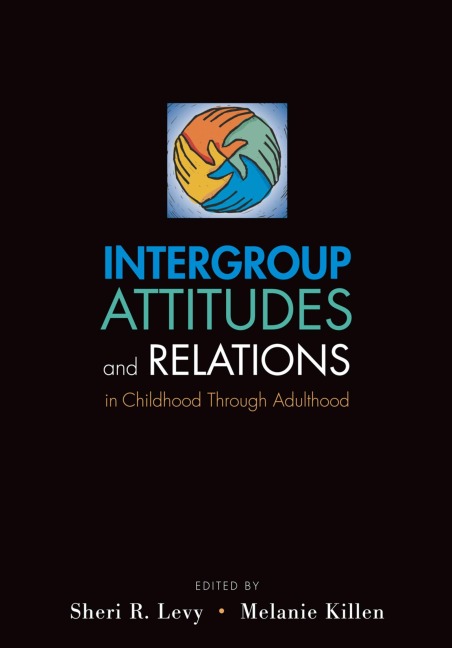
* Winner of Honorable Mention Award for the Otto Klineberg Intercultural and International Relations Prize competition from SSPSI * This edited volume captures an exciting new trend in research on intergroup attitudes and relations, which concerns how individuals make judgments, and interact with individuals from different group categories, broadly defined in terms of gender, race, age, culture, religion, sexual orientation, and body type. This new approach is an integrative perspective, one which draws on theory and research in the areas of developmental and social psychology. Throughout human history, intergroup conflict has often served as the basis for societal conflict, strife, and tension. Over the past several decades, individual and group mobility has enabled individuals to interact with a wider range of people from different backgrounds than ever before. On the one hand, this level of societal heterogeneity contributes to intergroup conflict. On the other hand, the experience of such heterogeneity has also reduced stereotypes, and increased an understanding of others' perspectives and experiences. Where does it begin? When do children acquire stereotypes about the other? What are the sources of influence, and how does change come about? To provide a deeper understanding of the origins, stability, and reduction of intergroup conflict, scholars in this volume report on current, cutting edge theory and new research findings. Progress in the area of intergroup attitudes relies on continued advances in both the understanding of the origins and the trajectory of intergroup conflict and harmony (as historically studied by developmental psychologists) and the understanding of contexts and conditions that contribute to positive and negative intergroup attitudes and relations (as historically studied by social psychologists). Recent social and developmental psychology research clarifies the multifaceted nature of prejudice and the need for an interdisciplinary approach to addressing prejudice. The recent blossoming of research on the integration of developmental and social psychology represented in this volume will appeal to scholars and students in the areas of developmental psychology, social psychology, cognitive psychology, education, social neuroscience, law, business, and political science.
SRL: Associate Professor of Psychology, SUNY Stony Brook MK: Professor of Human Development, University of Maryland College Park
1. Introduction: Sheri R. Levy and Melanie Killen Section I: The Formation of Intergroup Attitudes and Relationships 2. Children's subjective identification with social groups: Mark Bennett and Fabio Sani 3. Peer Group Rejection and Children's Intergroup Prejudice: Drew Nesdale 4. The Development of Subjective Group Dynamics: Dominic Abrams and Adam Rutland 5. Gender Stereotyping and Prejudice in Young Children: A Developmental Intergroup Perspective: Andrea E. Arthur, Rebecca S. Bigler, Lynn S. Liben, Susan A. Gelman, Diane N. Ruble 6. The Development of Intergroup Social Cognition: Early Emergence, Implicit Nature, and Sensitivity to Group Status: Mahzarin R. Banaji, Andrew Scott Baron, Yarrow Dunham, Kristina Olson Section II: Social Evaluation and Reasoning about Intergroup Attitudes and Relationships 7. Intergroup attitudes and reasoning about social exclusion in majority and minority children in Spain: Ileana Enesco, Silvia Guerrero, Carolina Callejas, Irene Solbes, and Alejandra Navarro 8. Explicit Judgments and Implicit Bias: A Developmental Perspective: Melanie Killen, Heidi McGlothlin, & Alexandra Henning 9. A Social-Developmental Perspective on Lay theories and Intergroup Relations: Sheri R. Levy, Dina M. Karafantis, and Luisa Ramirez 10. Multiculturalism and group evaluations among minority and majority groups: Maykel Verkuyten 11. The multifaceted nature of sexual prejudice: How adolescents reason about sexual orientation and sexual prejudice: Stacey S. Horn Section III: Fostering Change in Intergroup Attitudes and Relationships 12. An Integrative Approach to Changing Children's Intergroup Attitudes: Lindsey Cameron and Adam Rutland 13. The Common Ingroup Identity Model: Applications to Children and Adults: Samuel L. Gaertner, John F. Dovidio, Rita Guerra, Margarida Rebelo, Maria Benedicta Monteiro, Blake M. Riek, Melissa A. Houlette 14. A Mutual Acculturation Model for Understanding and Undermining Prejudice Among Adolescents: Michele A. Wittig 15. The Role of Intergroup Contact in Predicting Children's Inter-Ethnic Attitudes: Evidence from Meta-Analytic and Field Studies: Linda R. Tropp and Mary A. Prenovost 16. Intergroup name-calling and conditions for creating assertive bystanders: Frances E Aboud and Anna Joong
Dieses eBook wird im PDF-Format geliefert und ist mit einem Adobe Kopierschutz (DRM) versehen. Sie können dieses eBook mit allen Geräten lesen, die das PDF-Format und den Adobe Kopierschutz (DRM) unterstützen.
Zum Beispiel mit den folgenden Geräten:
• tolino Reader
Laden Sie das eBook direkt über den Reader-Shop auf dem tolino herunter oder übertragen Sie das eBook auf Ihren tolino mit einer kostenlosen Software wie beispielsweise Adobe Digital Editions.
• Sony Reader & andere eBook Reader
Laden Sie das eBook direkt über den Reader-Shop herunter oder übertragen Sie das eBook mit der kostenlosen Software Sony READER FOR PC/Mac oder Adobe Digital Editions auf ein Standard-Lesegeräte mit epub- und Adobe DRM-Unterstützung.
• Tablets & Smartphones
Möchten Sie dieses eBook auf Ihrem Smartphone oder Tablet lesen, finden Sie hier unsere kostenlose Lese-App für iPhone/iPad und Android Smartphone/Tablets.
• PC & Mac
Lesen Sie das eBook direkt nach dem Herunterladen mit einer kostenlosen Lesesoftware, beispielsweise Adobe Digital Editions, Sony READER FOR PC/Mac oder direkt über Ihre eBook-Bibliothek in Ihrem Konto unter „Meine eBooks“ - „online lesen“.
Schalten Sie das eBook mit Ihrer persönlichen Adobe ID auf bis zu sechs Geräten gleichzeitig frei.
Bitte beachten Sie, dass die Kindle-Geräte das Format nicht unterstützen und dieses eBook somit nicht auf Kindle-Geräten lesbar ist.