
Stöbern
genialokal zum Startbildschirm hinzufügen
Installieren Sie die genialokal App auf Ihrem Startbildschirm für einen schnellen Zugriff und eine komfortable Nutzung.
Installieren Sie die genialokal App auf Ihrem Startbildschirm für einen schnellen Zugriff und eine komfortable Nutzung.
Tippen Sie einfach auf Teilen:
 Und dann auf "Zum Home-Bildschirm [+]".

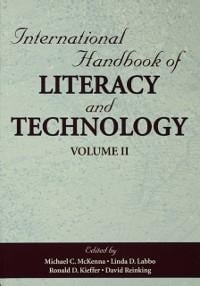
This Handbook provides a comprehensive and international representation of state-of-the art research, theory, and practice related to principal areas in which significant developments are occurring in the study of literacy and technology. It offers a glimpse of the commonalities faced by literacy educators around the world, together with specific challenges raised by unique circumstances. Volume I of this Handbook endeavored to lay essential groundwork for the study of literacy and technology; it retains an explanatory value that will not weaken over time. Volume II differs considerably in conception. It assumes for the most part a higher level of expertise on the part of readers, and the projects and applications described by the contributors are characterized by greater sophistication. The scope of technology use is broader, and the challenges that have emerged are in sharper focus. A powerful feature of this volume is the addition of commentaries from experts across the field on the potential of technology in key dimensions of literacy. The title of Volume II has changed slightly to reflect the inclusion of contributions on a broad geographic basis. It is now a truly international Handbook, with chapter authors from six countries and five continents. The International Handbook of Literacy and Technology: Volume II is organized in five sections: *The Role of Technology in the New Literacies; *Technology Applications with Specific Populations; *Literacy Software and the Internet; *Teacher Education and Professional Development; and *The Potential of Technology in Key Dimensions of Literacy. The effects of technology on literate activity have been both sweeping and subtle, marked by an increasing variety of changes that are difficult to evaluate and project. Perhaps the only prediction that can be offered with certainty is that the impact of technology is irreversible. Specific changes may come and go, but literacy and technology seem inextricably linked. This Handbook is dedicated to that linkage and to examining the intricacies that define it. International Handbook of Literacy and Technology: Volume II is an essential reference for researchers, professionals, and students in reading/literacy education, literacy and technology, educational technology, and related areas, and will serve well as a text for upper-level and graduate courses on these topics.
Ronald D. Kieffer, Michael C. McKenna, Linda D. Labbo, David Reinking
Contents: Preface. M.C. McKenna, Introduction: Trends and Trajectories of Literacy and Technology in the New Millennium. Part I: The Role of Technology in the New Literacies.J. Lemke, Towards Critical Multimedia Literacy: Technology, Research, and Politics. R. Hobbs, Multiple Visions of Multimedia Literacy: Emerging Areas of Synthesis. O. Henao Alvarez, Developing Digital Literacies: Educational Initiatives and Research in Colombia. L. Verhoeven, E. Segers, J. Bronkhorst, L. Boves, Towards Interactive Literacy Education in the Netherlands. Part II: Technology Applications With Specific Populations.R.K. Olson, B. Wise, Computer-Based Remediation for Reading and Related Phonological Disabilities. B. Dalton, N. Strangman, Improving Struggling Readers' Comprehension Through Scaffolded Hypertexts and Other Computer-Based Literacy Programs. J. Turbill, J. Murray, Early Literacy and New Technologies in Australian Schools: Policy, Research, and Practice. M.J. Adams, The Promise of Automatic Speech Recognition for Fostering Literacy Growth in Children and Adults. A.G. Bus, M.T. de Jong, M. Verhallen, CD-ROM Talking Books: A Way to Enhance Early Literacy? Part III: Literacy Software and the Internet.J. Coiro, R.A.K. Klein, S. Walpole, Critically Evaluating Educational Technologies for Literacy Learning: Current Trends and New Paradigms. B. Stafford, L. Miller, M. Ollivierre, A Science-Based Development and Implementation Model for Online and CD-ROM Curriculum Programs. A. Fullerton, Can Information Get What It Wants? Barriers to Open-Access in Literacy Education. Y. Liu, D. Zhang, ICT and Chinese Literacy Education: Recent Developments in China. Part IV: Teacher Education and Professional Development.C.K. Kinzer, D.W. Cammack, L.D. Labbo, W.H. Teale, R. Sanny, Using Technology to (Re)Conceptualize Pre-Service Literacy Teacher Education: Considerations of Design, Pedagogy, and Research. R.E. Ferdig, L.R. Roehler, P.D. Pearson, Video-and Database-Driven Web Environments for Pre-Service Literacy Teaching and Learning. C. Harrison, D. Pead, M. Sheard, "P, not-P, and Possibly Q": Literacy Teachers Learning From Digital Representations of the Classroom. M.C. McKenna, K.M. Proctor, The Role of Technology in the Professional Development of Literacy Educators. Part V: The Potential of Technology in Key Dimensions of Literacy.L.B. Gambrell, Technology and the Engaged Literacy Learner. M.R. Kuhn, S.A. Stahl, More Than Skill and Drill: Exploring the Potential of Computers in Decoding and Fluency Instruction. P.A. Edwards, Family Literacy and Technology: Challenges and Promising Constructive Designs. N.K. Duke, E. Schmar-Dobler, S. Zhang, Comprehension and Technology. D.E. Alvermann, Technology Use and Needed Research in Youth Literacies. S. Templeton, Dispelling Spelling Assumptions: Technology and Spelling, Present and Future. C.L.Z. Blachowicz, J. Beyersdorfer, P. Fisher, Vocabulary Development and Technology: Teaching and Transformation. K. Bromley, Technology and Writing. E.B. Bernhardt, Real and Imagined Roles for Technology in Acquiring Second-Language Literacy. K.H. Au, Diversity, Technology, and the Literacy Achievement Gap. L.M. McGee, D.J. Richgels, Can Technology Support Emergent Reading and Writing?: Directions for the Future. E.J. Kame'enui, J.U. Wallin, Information Technology and the Literacy Needs of Special Populations: Ode to FedEx and Dairy Farmers. B.J. Walker, S.K. Goetze, Integrating Reading Assessment and Technology.