Und dann auf "Zum Home-Bildschirm [+]".

Stöbern
genialokal zum Startbildschirm hinzufügen
Installieren Sie die genialokal App auf Ihrem Startbildschirm für einen schnellen Zugriff und eine komfortable Nutzung.
Installieren Sie die genialokal App auf Ihrem Startbildschirm für einen schnellen Zugriff und eine komfortable Nutzung.
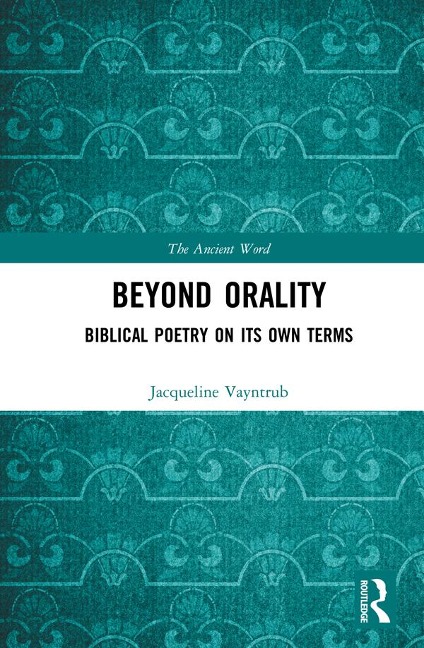
Central to understanding the prophecy and prayer of the Hebrew Bible are the unspoken assumptions that shaped them-their genres. Modern scholars describe these works as "poetry," but there was no corresponding ancient Hebrew term or concept. Scholars also typically assume it began as "oral literature," a concept based more in evolutionist assumptions than evidence. Is biblical poetry a purely modern fiction, or is there a more fundamental reason why its definition escapes us? Beyond Orality: Biblical Poetry on its Own Terms changes the debate by showing how biblical poetry has worked as a mirror, reflecting each era's own self-image of verbal art. Yet Vayntrub also shows that this problem is rooted in a crucial pattern within the Bible itself: the texts we recognize as "poetry" are framed as powerful and ancient verbal performances, dramatic speeches from the past. The Bible's creators presented what we call poetry in terms of their own image of the ancient and the oral, and understanding their native theories of Hebrew verbal art gives us a new basis to rethink our own.
Jacqueline Vayntrub is Assistant Professor of Hebrew Bible at Yale Divinity School, USA.
Acknowledgments; Introduction; Chapter 1. From Proverbs and Poetry to Prose: The Bible's Own "Great Divide"; Chapter 2. The Idea of Mashal: Scholarship's Quest for the Essence of Poetry; Chapter 3. Wisdom, Orality, and Recovering Native Poetics; Chapter 4. The Speech Performance Frame: The Case of Balaam's Speeches; Chapter 5. Social Dimensions of Speech and its Framing in Isaiah 14 and 1 Samuel 24; Chapter 6. Titles and Tales: Framing Speech Performance; Conclusion; Bibliography; Writings Index; Subject Index
Dieses eBook wird im PDF-Format geliefert und ist mit einem Adobe Kopierschutz (DRM) versehen. Sie können dieses eBook mit allen Geräten lesen, die das PDF-Format und den Adobe Kopierschutz (DRM) unterstützen.
Zum Beispiel mit den folgenden Geräten:
• tolino Reader
Laden Sie das eBook direkt über den Reader-Shop auf dem tolino herunter oder übertragen Sie das eBook auf Ihren tolino mit einer kostenlosen Software wie beispielsweise Adobe Digital Editions.
• Sony Reader & andere eBook Reader
Laden Sie das eBook direkt über den Reader-Shop herunter oder übertragen Sie das eBook mit der kostenlosen Software Sony READER FOR PC/Mac oder Adobe Digital Editions auf ein Standard-Lesegeräte mit epub- und Adobe DRM-Unterstützung.
• Tablets & Smartphones
Möchten Sie dieses eBook auf Ihrem Smartphone oder Tablet lesen, finden Sie hier unsere kostenlose Lese-App für iPhone/iPad und Android Smartphone/Tablets.
• PC & Mac
Lesen Sie das eBook direkt nach dem Herunterladen mit einer kostenlosen Lesesoftware, beispielsweise Adobe Digital Editions, Sony READER FOR PC/Mac oder direkt über Ihre eBook-Bibliothek in Ihrem Konto unter „Meine eBooks“ - „online lesen“.
Schalten Sie das eBook mit Ihrer persönlichen Adobe ID auf bis zu sechs Geräten gleichzeitig frei.
Bitte beachten Sie, dass die Kindle-Geräte das Format nicht unterstützen und dieses eBook somit nicht auf Kindle-Geräten lesbar ist.