Und dann auf "Zum Home-Bildschirm [+]".

Stöbern
genialokal zum Startbildschirm hinzufügen
Installieren Sie die genialokal App auf Ihrem Startbildschirm für einen schnellen Zugriff und eine komfortable Nutzung.
Installieren Sie die genialokal App auf Ihrem Startbildschirm für einen schnellen Zugriff und eine komfortable Nutzung.
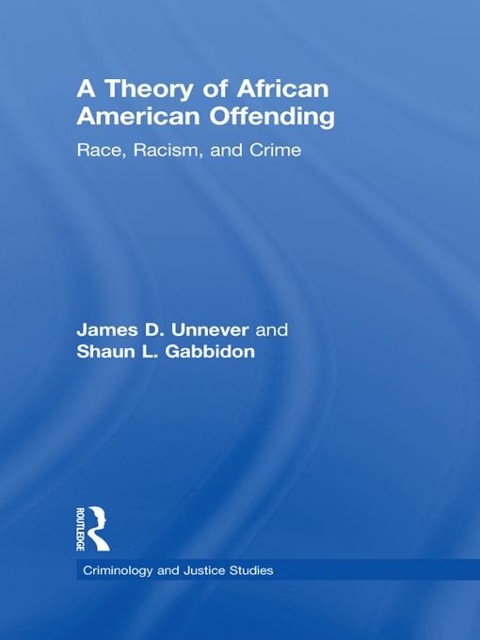
A little more than a century ago, the famous social scientist W.E.B. Du Bois asserted that a true understanding of African American offending must be grounded in the "real conditions" of what it means to be black living in a racial stratified society. Today and according to official statistics, African American men - about six percent of the population of the United States - account for nearly sixty percent of the robbery arrests in the United States. To the authors of this book, this and many other glaring racial disparities in offending centered on African Americans is clearly related to their unique history and to their past and present racial subordination. Inexplicably, however, no criminological theory exists that fully articulates the nuances of the African American experience and how they relate to their offending. In readable fashion for undergraduate students, the general public, and criminologists alike, this book for the first time presents the foundations for the development of an African American theory of offending.
James D. Unnever is a Professor of Criminology at the University of South Florida-Sarasota-Manatee. Dr. Unnever was the Recipient of the Donal A.J. MacNamara Award by the Academy of Criminal Justice Sciences in 2009. The author of over 40 publications appearing in such journals as Social Forces, Criminology, Social Problems, Journal of Research in Crime and Delinquency, and Justice Quarterly, Dr. Unnever was ranked as the fifth most innovative author in criminology from 2000-2010. His areas of expertise include race and crime, public opinion about crime-related issues including the death penalty, the testing of theories of crime, and school bullying. Shaun L. Gabbidon is Distinguished Professor of Criminal Justice in the School of Public Affairs at Penn State Harrisburg. Dr. Gabbidon has served as a fellow at Harvard University's W.E.B. Du Bois Institute for Afro-American Research, and as an adjunct faculty member in the Center for Africana Studies at the University of Pennsylvania. The author of more than 100 scholarly publications including 50 peer-reviewed articles and 10 books, his most recent books include Race, Ethnicity, Crime and Justice: An International Dilemma and Criminological Perspectives on Race and Crime (2nd edition). Dr. Gabbidon currently serves as the editor of the new SAGE journal, Race and Justice: An International Journal. The recipient of numerous awards, Dr. Gabbidon was most recently awarded the 2009 W.E.B. Du Bois Award from the Western Society of Criminology for his outstanding contributions in the area of race, ethnicity, and justice.
1. Introduction 2. Two Worlds Far Apart 3. Perceptions of a Racist Criminal Justice System 4. Perceptions of Racial Discrimination 5. Racial Socialization 6. Anger, Hostility, Defiance and Weak Social Bonds 7. Conclusions
Dieses eBook wird im PDF-Format geliefert und ist mit einem Adobe Kopierschutz (DRM) versehen. Sie können dieses eBook mit allen Geräten lesen, die das PDF-Format und den Adobe Kopierschutz (DRM) unterstützen.
Zum Beispiel mit den folgenden Geräten:
• tolino Reader
Laden Sie das eBook direkt über den Reader-Shop auf dem tolino herunter oder übertragen Sie das eBook auf Ihren tolino mit einer kostenlosen Software wie beispielsweise Adobe Digital Editions.
• Sony Reader & andere eBook Reader
Laden Sie das eBook direkt über den Reader-Shop herunter oder übertragen Sie das eBook mit der kostenlosen Software Sony READER FOR PC/Mac oder Adobe Digital Editions auf ein Standard-Lesegeräte mit epub- und Adobe DRM-Unterstützung.
• Tablets & Smartphones
Möchten Sie dieses eBook auf Ihrem Smartphone oder Tablet lesen, finden Sie hier unsere kostenlose Lese-App für iPhone/iPad und Android Smartphone/Tablets.
• PC & Mac
Lesen Sie das eBook direkt nach dem Herunterladen mit einer kostenlosen Lesesoftware, beispielsweise Adobe Digital Editions, Sony READER FOR PC/Mac oder direkt über Ihre eBook-Bibliothek in Ihrem Konto unter „Meine eBooks“ - „online lesen“.
Schalten Sie das eBook mit Ihrer persönlichen Adobe ID auf bis zu sechs Geräten gleichzeitig frei.
Bitte beachten Sie, dass die Kindle-Geräte das Format nicht unterstützen und dieses eBook somit nicht auf Kindle-Geräten lesbar ist.