Und dann auf "Zum Home-Bildschirm [+]".

Stöbern
genialokal zum Startbildschirm hinzufügen
Installieren Sie die genialokal App auf Ihrem Startbildschirm für einen schnellen Zugriff und eine komfortable Nutzung.
Installieren Sie die genialokal App auf Ihrem Startbildschirm für einen schnellen Zugriff und eine komfortable Nutzung.
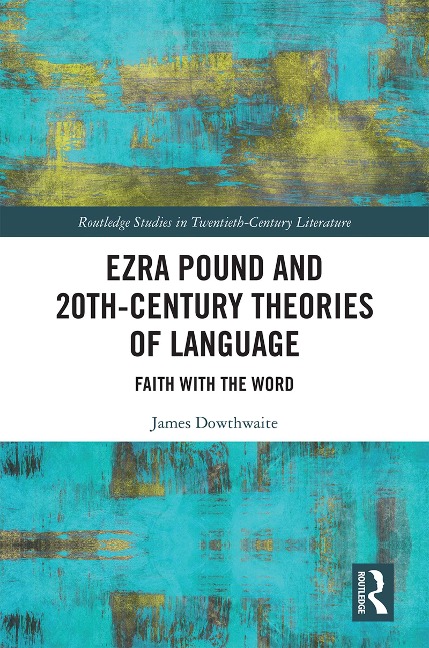
Ezra Pound is one of the most significant poets of the twentieth century, a writer whose poetry is particularly notable for the intensity of its linguistic qualities. Indeed, from the principles of Imagism to the polyphony of his Cantos, Pound is central to our conception of modernism's relationship with language. This volume explores the development of Pound's understanding of language in the context of twentieth-century linguistics and the philosophy of language. It draws on largely unpublished archival material in order to provide a broadly chronological account of the development of Pound's views and their relation to both his own poetry and to modernist writing as a whole. Beginning with Pound's contentious relationship with philology and his antagonism towards academia, the book traces continuities and shifts across Pound's career, culminating in a discussion of the centrality of language to the conception of his Cantos. While it contains discussions around significant figures in twentieth-century linguistic thought, such as Ferdinand de Saussure and Ludwig Wittgenstein, the book attempts to recover the work of theorists such as Leonard Bloomfield, Lucien Lévy-Bruhl, and C.K. Ogden, figures who were once central to modernism, but who have largely been pushed to the periphery of modernist studies. The picture of Pound that emerges is a figure whose understanding of language is not only bound up with modernist approaches to anthropology, politics, and philosophy, but which calls for a new understanding of modernism's relationship to each.
James Dowthwaite was born and raised in Winchester and studied, first, at Royal Holloway, University of London, before completing his doctorate at The Queen's College, University of Oxford in July 2016. He now teachings English and American literature at the University of Jena, having previously taught at the University of Göttingen. He lives in Heidelberg with his wife.
Introduction: 'The Word Beyond Formulated Language' Chapter 1. 'End Fact. Try Fiction': Post-Philology in Pound's Early Writing Chapter 2 Re-assessing The Chinese Written Character: Language, Consciousness, and Phenomena Chapter 3 'Words So Full of Detail': Paideuma and Linguistic Relativity Chapter 4 Definition and Debabelization: Utopian Language in the Work of Ezra Pound and C.K. Ogden Chapter 5 'In Nature are Signatures': The Problem of Universals in Modernist Poetry Afterword: Pound's Linguistic Legacy
Dieses eBook wird im PDF-Format geliefert und ist mit einem Adobe Kopierschutz (DRM) versehen. Sie können dieses eBook mit allen Geräten lesen, die das PDF-Format und den Adobe Kopierschutz (DRM) unterstützen.
Zum Beispiel mit den folgenden Geräten:
• tolino Reader
Laden Sie das eBook direkt über den Reader-Shop auf dem tolino herunter oder übertragen Sie das eBook auf Ihren tolino mit einer kostenlosen Software wie beispielsweise Adobe Digital Editions.
• Sony Reader & andere eBook Reader
Laden Sie das eBook direkt über den Reader-Shop herunter oder übertragen Sie das eBook mit der kostenlosen Software Sony READER FOR PC/Mac oder Adobe Digital Editions auf ein Standard-Lesegeräte mit epub- und Adobe DRM-Unterstützung.
• Tablets & Smartphones
Möchten Sie dieses eBook auf Ihrem Smartphone oder Tablet lesen, finden Sie hier unsere kostenlose Lese-App für iPhone/iPad und Android Smartphone/Tablets.
• PC & Mac
Lesen Sie das eBook direkt nach dem Herunterladen mit einer kostenlosen Lesesoftware, beispielsweise Adobe Digital Editions, Sony READER FOR PC/Mac oder direkt über Ihre eBook-Bibliothek in Ihrem Konto unter „Meine eBooks“ - „online lesen“.
Schalten Sie das eBook mit Ihrer persönlichen Adobe ID auf bis zu sechs Geräten gleichzeitig frei.
Bitte beachten Sie, dass die Kindle-Geräte das Format nicht unterstützen und dieses eBook somit nicht auf Kindle-Geräten lesbar ist.