Und dann auf "Zum Home-Bildschirm [+]".

Stöbern
genialokal zum Startbildschirm hinzufügen
Installieren Sie die genialokal App auf Ihrem Startbildschirm für einen schnellen Zugriff und eine komfortable Nutzung.
Installieren Sie die genialokal App auf Ihrem Startbildschirm für einen schnellen Zugriff und eine komfortable Nutzung.
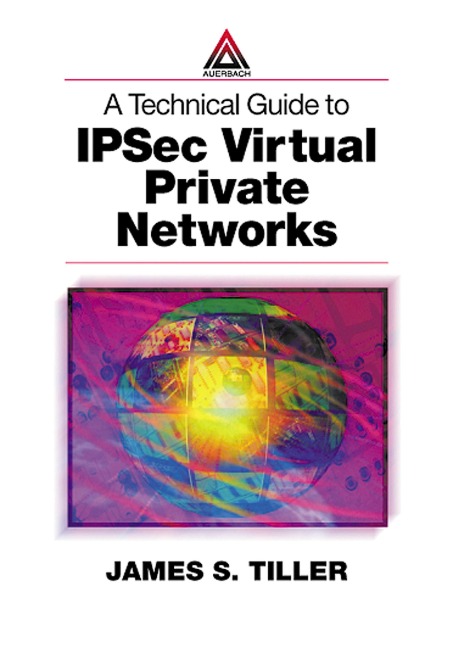
What is IPSec? What's a VPN? Why do the need each other? Virtual Private Network (VPN) has become one of the most recognized terms in our industry, yet there continuously seems to be different impressions of what VPNs really are and can become. A Technical Guide to IPSec Virtual Private Networks provides a single point of information that represents hundreds or resources and years of experience with IPSec VPN solutions. It cuts through the complexity surrounding IPSec and the idiosyncrasies of design, implementation, operations, and security. Starting with a primer on the IP protocol suite, the book travels layer by layer through the protocols and the technologies that make VPNs possible. It includes security theory, cryptography, RAS, authentication, IKE, IPSec, encapsulation, keys, and policies. After explaining the technologies and their interrelationships, the book provides sections on implementation and product evaluation. A Technical Guide to IPSec Virtual Private Networks arms information security, network, and system engineers and administrators with the knowledge and the methodologies to design and deploy VPNs in the real world for real companies.
James S. Tiller (Raleigh, North Carolina, USA)
Introduction Know the Terrain The Internet TCP/IP Quickie Information Age Security Concepts Cryptography The Other Guys Why are "VPNs" So HOT? IP Security Primer History Structure Applications Quality of Service Policy Encryption Symmetrical Encryption Asymmetrical Encryption Message Authentication Code Perfect Forward Secrecy Diffie-Hellman IPSEC Architecture Domain of Interpretation Security Associations Transport Mode Tunnel Mode Authentication Shared Secret Certificates Public Key Cryptography Non-IPSec Authentication Security Protocols Encapsulating Security Payload Authentication Header Key Management The Roll of Key Management Creating IKE for IPSec Phase One Phase Two Implementation Considerations Network to Network Client to Network Client Interaction Rollout Concepts Product Evaluation Business Drivers Grading Methodology Lab Testing Pilot Processes Trend Analysis
Dieses eBook wird im PDF-Format geliefert und ist mit einem Adobe Kopierschutz (DRM) versehen. Sie können dieses eBook mit allen Geräten lesen, die das PDF-Format und den Adobe Kopierschutz (DRM) unterstützen.
Zum Beispiel mit den folgenden Geräten:
• tolino Reader
Laden Sie das eBook direkt über den Reader-Shop auf dem tolino herunter oder übertragen Sie das eBook auf Ihren tolino mit einer kostenlosen Software wie beispielsweise Adobe Digital Editions.
• Sony Reader & andere eBook Reader
Laden Sie das eBook direkt über den Reader-Shop herunter oder übertragen Sie das eBook mit der kostenlosen Software Sony READER FOR PC/Mac oder Adobe Digital Editions auf ein Standard-Lesegeräte mit epub- und Adobe DRM-Unterstützung.
• Tablets & Smartphones
Möchten Sie dieses eBook auf Ihrem Smartphone oder Tablet lesen, finden Sie hier unsere kostenlose Lese-App für iPhone/iPad und Android Smartphone/Tablets.
• PC & Mac
Lesen Sie das eBook direkt nach dem Herunterladen mit einer kostenlosen Lesesoftware, beispielsweise Adobe Digital Editions, Sony READER FOR PC/Mac oder direkt über Ihre eBook-Bibliothek in Ihrem Konto unter „Meine eBooks“ - „online lesen“.
Schalten Sie das eBook mit Ihrer persönlichen Adobe ID auf bis zu sechs Geräten gleichzeitig frei.
Bitte beachten Sie, dass die Kindle-Geräte das Format nicht unterstützen und dieses eBook somit nicht auf Kindle-Geräten lesbar ist.