
Stöbern
genialokal zum Startbildschirm hinzufügen
Installieren Sie die genialokal App auf Ihrem Startbildschirm für einen schnellen Zugriff und eine komfortable Nutzung.
Installieren Sie die genialokal App auf Ihrem Startbildschirm für einen schnellen Zugriff und eine komfortable Nutzung.
Tippen Sie einfach auf Teilen:
 Und dann auf "Zum Home-Bildschirm [+]".
Ihr gewünschter Artikel ist in 0 Buchhandlungen vorrätig - wählen Sie hier eine Buchhandlung in Ihrer Nähe aus:

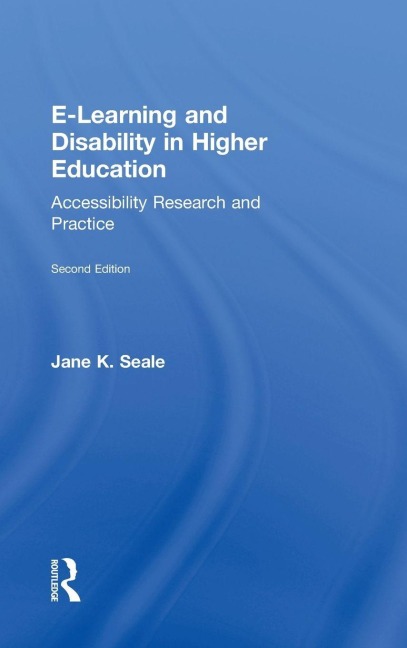
Most people working within the higher education sector understand the importance of making e-learning accessible to students with disabilities, yet it is not always clear exactly how this should be accomplished. E-Learning and Disability in Higher Education evaluates current accessibility practice and critiques the extent to which 'best' practices can be confidently identified and disseminated.
Dr. Jane K. Seale is a Professor of Inclusive Education in the Graduate School of Education, University of Exeter, UK.
1. CONTEXTUALING THE SCENE Chapter 1: Opening up spaces for dialogue, critique and imagination in accessibility research and practice. Chapter 2: Being a disabled student in higher education. Chapter 3: Drivers for change in higher education accessibility practice. Chapter 4: The stakeholders of accessibility practice. 2. SURVEYING THE SCENE: MAKING SENSE OF PRACTICE Chapter 5: Guiding accessibility practice. Chapter 6: Evaluating accessibility practice. Chapter 7: Conceptualising accessibility practice. 3. CRITIQUING THE SCENE: MAKING SENSE OF VOICES AND SILENCES Chapter 8: Mediated voices: what do we really know about disabled students' accessibility experiences? Chapter 9: Missing voices: What do we really know about the perspectives and experiences of accessibility stakeholders? Chapter 10: The call for accessibility training and the silences surrounding what works. Chapter 11: Critical silences around Universal Design. 4. RE-IMAGINING THE SCENCE: VOICING THE FUTURE FOR ACCESSIBILITY RESEARCH AND PRACTICE Chapter 12: Re-imagining accessibility research: methods to enable a democratic voice to be heard. Chapter 13: Re-imagining accessibility practice: embracing the discourse of digital inclusion.