Und dann auf "Zum Home-Bildschirm [+]".

Stöbern
genialokal zum Startbildschirm hinzufügen
Installieren Sie die genialokal App auf Ihrem Startbildschirm für einen schnellen Zugriff und eine komfortable Nutzung.
Installieren Sie die genialokal App auf Ihrem Startbildschirm für einen schnellen Zugriff und eine komfortable Nutzung.

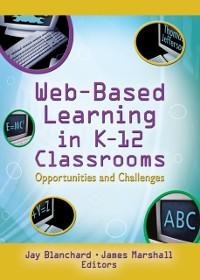
Make sure your students get the most from their online learning experiences Even though nearly every K-12 public school in the United States has broadband Internet access, the Web's vast potential as a teaching and learning tool has still not been realized. Web-based learning opportunities have been expensive, slow to develop, and time-consuming to implement, despite pressure on schools to adopt technology solutions that will cure their educational ills. Web-Based Learning in K-12 Classrooms: Opportunities and Challenges chronicles the up and downs of online learning and offers unique insights into its future, providing a comprehensive, curriculum-wide treatment of K-12 content areas (reading, science, mathematics, social studies), special education, counseling, virtual schools, exemplary schools, implementation issues, and educational Web sites. The Internet represents a powerful, complex set of technologies that offers your students access to unlimited knowledgebut that access doesn't replace the human interactions found in classrooms. Placing a student in front of a computer monitor is a supplement to classroom learning, not a substitute for it. Academics and education professionals address questions surrounding the key issues involved in successfully incorporating the wide range of Web-based learning opportunities (formal courses, demonstrations, simulations, collaborations, searches) into the classroom, including technology, content, and implementation. Web-Based Learning in K-12 Classrooms examines: - inquiry-based learning - online interaction - displaying student work online - Internet accessibility for students with disabilities - initiating school counselors into e-learning technologies - the role of government in virtual schools - Web-based schools in California, Virginia, Pennsylvania, Vermont, and Texas - a 13-category classification system for online educational resources - the ATLAS model for program implementation - evaluations of more than 1,000 pieces of online information (articles, research, reports, news, and statistics) and 900 Web applications (tutorials, drills, games, and tests) with evaluation criteria Web-Based Learning in K-12 Classrooms is a vital resource for educators interested in online learning applications across the K-12 curriculum.
Jay Blanchard,, James Marshall
- INTRODUCTION (Jay Blanchard) - The Web and Reading Instruction (Jay Blanchard, Jared McLain, and Patrick Bartshe) - The Web and Early Literacy (Marguerite Hillman and Terry J. Moore) - Supporting Inquiry in Science Classrooms with the Web (Krista Simons and Doug Clark) - K-12 Mathematics and the Web (Evan Glazer) - Social Studies and the Web Today (Robert H. Lombard) - The Web and Special Education (Lucinda Ray and Kimberly Atwill) - The Web and School Counseling (John Carey and Carey Dimmitt) - The Web and Virtual Schools (Lynne Schrum) - Exemplary Web-Based Schools (Michael Milone) - Analysis of Recognized Web-Based Educational Resources (Trey Martindale, Ward Mitchell Cates, and Yufeng Qian) - Implementation and Web-Based Learning: The Unimplemented Program Yields Few Results (James Marshall) - Web-Based Resources and Applications: Quality and Influence (Leping Liu and D. LaMont Johnson) - The Web in K-12 Eduction: Is There a Future? (Cleborne D. Maddux) - Index - Reference Notes Included