Und dann auf "Zum Home-Bildschirm [+]".

Stöbern
genialokal zum Startbildschirm hinzufügen
Installieren Sie die genialokal App auf Ihrem Startbildschirm für einen schnellen Zugriff und eine komfortable Nutzung.
Installieren Sie die genialokal App auf Ihrem Startbildschirm für einen schnellen Zugriff und eine komfortable Nutzung.
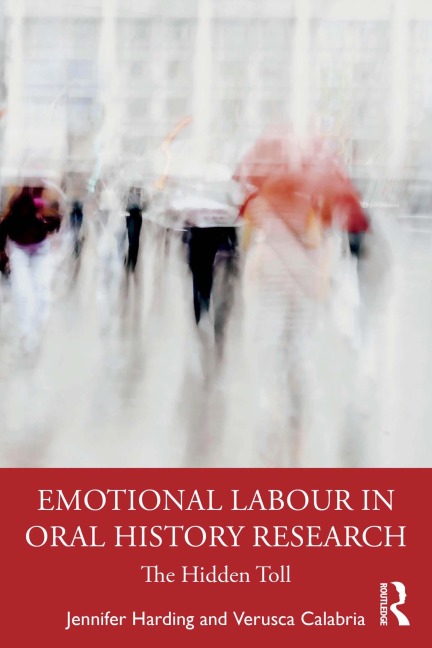
Emotional Labour in Oral History Research critically appraises the many complex ways in which emotion management features in oral history research and its specific implications for the researcher. Uniquely, this volume draws on oral historians' personal accounts of conducting sensitive research and assesses the applicability of the term emotional labour to this work. It examines how oral historians may perform emotional labour, highlighting the often-hidden emotional toll it takes on them. This volume considers how the emotionally taxing implications of conducting sensitive research may be exacerbated or mitigated by the institutional relations and contexts in which the researcher works. The authors evaluate recommendations from related disciplinary fields for ways of supporting researchers and consider how an ethics of care can be fostered in local research environments. Emotional Labour in Oral History Research engages critically with theories of emotion, conceptualisations of emotional labour, questions of power and positionality, an ethics of care and debate on the impact of neoliberal ideas and policies on the higher education sector. This book will be of interest to all those using oral history to conduct sensitive research in all locations and at all career stages, including doctoral students, academics new to oral history, established oral historians, community-based oral historians and qualitative researchers in adjacent disciplines.
Jennifer Harding is Professor of Media and Culture at London Metropolitan University. Her research interests include cultural theory, emotions and sexuality. She is a trustee of The Oral History Society and an editor of Oral History. She co-edited Emotions: A Cultural Studies Reader (2009). Verusca Calabria is Associate Professor of Mental Health Histories at Nottingham Trent University. Her research interests include coproduction and the social history of mental healthcare. She is a trustee of The Oral History Society. She co-authored Oral History in UK Doctoral Research (2024).
1. Introduction - what this book is about and how we came to write it 2. A turn to emotion and affect in the social sciences and humanities 3. Emotional labour and emotion work 4. Emotionality in oral history research 5. Positionality and research relations 6. Research contexts, cultures and communities 7. Precarity and hope labour in oral history research 8. Time, affect and care 9. Towards a culture of care in oral history research
Dieses eBook wird im PDF-Format geliefert und ist mit einem Adobe Kopierschutz (DRM) versehen. Sie können dieses eBook mit allen Geräten lesen, die das PDF-Format und den Adobe Kopierschutz (DRM) unterstützen.
Zum Beispiel mit den folgenden Geräten:
• tolino Reader
Laden Sie das eBook direkt über den Reader-Shop auf dem tolino herunter oder übertragen Sie das eBook auf Ihren tolino mit einer kostenlosen Software wie beispielsweise Adobe Digital Editions.
• Sony Reader & andere eBook Reader
Laden Sie das eBook direkt über den Reader-Shop herunter oder übertragen Sie das eBook mit der kostenlosen Software Sony READER FOR PC/Mac oder Adobe Digital Editions auf ein Standard-Lesegeräte mit epub- und Adobe DRM-Unterstützung.
• Tablets & Smartphones
Möchten Sie dieses eBook auf Ihrem Smartphone oder Tablet lesen, finden Sie hier unsere kostenlose Lese-App für iPhone/iPad und Android Smartphone/Tablets.
• PC & Mac
Lesen Sie das eBook direkt nach dem Herunterladen mit einer kostenlosen Lesesoftware, beispielsweise Adobe Digital Editions, Sony READER FOR PC/Mac oder direkt über Ihre eBook-Bibliothek in Ihrem Konto unter „Meine eBooks“ - „online lesen“.
Schalten Sie das eBook mit Ihrer persönlichen Adobe ID auf bis zu sechs Geräten gleichzeitig frei.
Bitte beachten Sie, dass die Kindle-Geräte das Format nicht unterstützen und dieses eBook somit nicht auf Kindle-Geräten lesbar ist.