Und dann auf "Zum Home-Bildschirm [+]".

Stöbern
genialokal zum Startbildschirm hinzufügen
Installieren Sie die genialokal App auf Ihrem Startbildschirm für einen schnellen Zugriff und eine komfortable Nutzung.
Installieren Sie die genialokal App auf Ihrem Startbildschirm für einen schnellen Zugriff und eine komfortable Nutzung.

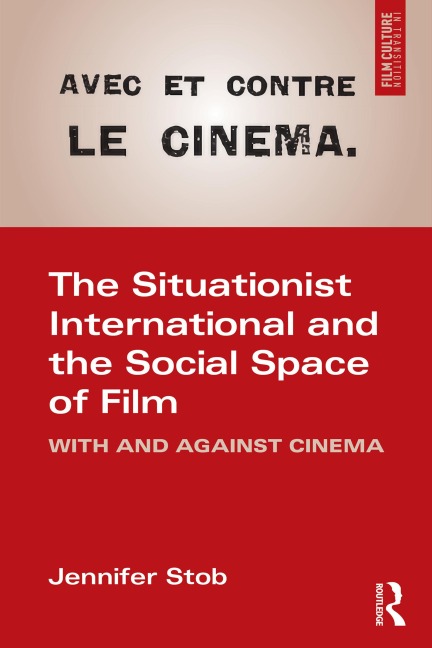
This book explores the Situationist International's paradoxical relationship with cinema from 1957 to 1972. The SI was a postwar avant-garde that condemned representation's erosion of social life. Yet its membership cared deeply for cinema, the epitome of capitalist representation for that era. How did the Situationists reconcile their interest in filmic social space with their hopes to revolutionize social space in city streets? The Situationist International and the Social Space of Film: With and Against Cinema traces the SI's attempts throughout the 1960s to work with cinema's associative power and against its passivity. It follows this project from early encounters with Lettrist cinema to 1968 and beyond, all the while contextualizing Situationist theory with the work of friends and foes like Henri Lefebvre, Marcel Mariën, Alain Resnais, Jean-Luc Godard and Agnès Varda. Meticulously researched and thoughtfully argued, Stob's book offers timely lessons for today's media artists, scholars and activists. Cinema is revealed to be a vital Situationist paradigm for social togetherness as well as for social separation.
Jennifer Stob is a film programmer and associate professor of art history at Texas State University. She is a scholar of media theory, experimental film and transnational cinema. Her contributions to edited volumes include chapters in The Sustainable Legacy of Agnès Varda: Feminist Practice and Pedagogy (2022), On Women's Films: Across Worlds and Generations (2019) and Architectures of Revolt: The Cinematic City circa 1968 (2018).
Introduction: With and Against. 1. Détournement, Social Space and the Cinema 2. Between Auteur and Collective 3. Crossed Paths: The Situationists and Young Cinema 4. From Asocial Space to Entrapment 5. Desire, Détournement and the Feminine 6. Détournement Lost and Found 7. Cinema Détourned. Conclusion: With and Against and Without