
Stöbern
genialokal zum Startbildschirm hinzufügen
Installieren Sie die genialokal App auf Ihrem Startbildschirm für einen schnellen Zugriff und eine komfortable Nutzung.
Installieren Sie die genialokal App auf Ihrem Startbildschirm für einen schnellen Zugriff und eine komfortable Nutzung.
Tippen Sie einfach auf Teilen:
 Und dann auf "Zum Home-Bildschirm [+]".
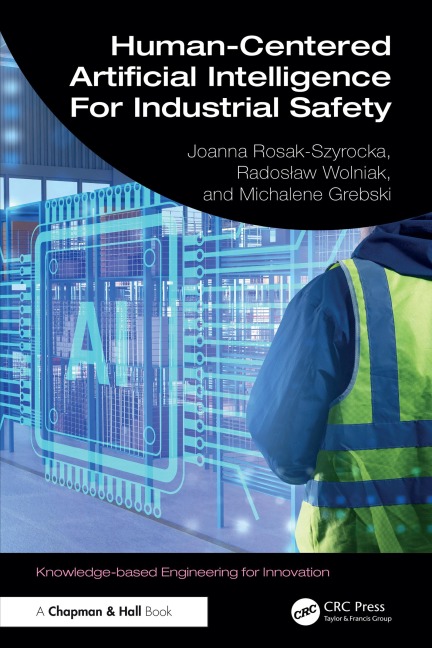
This book examines the transformative role of artificial intelligence (AI) in industrial safety, focusing on the shift from traditional reactive systems to proactive, predictive safety architectures in smart factories. It explores how AI technologies, including machine learning, computer vision, biometrics, wearables, augmented reality, and digital twins, are revolutionising occupational health and safety across industries such as manufacturing, logistics, energy, aviation, and construction. The book highlights the integration of AI-enabled safety systems, addressing real-time risk monitoring, predictive maintenance, employee well-being, and accident prevention. It also delves into the ethical, legal, and regulatory implications of AI in safety-critical systems, including GDPR compliance, algorithm transparency, and ISO 45001 standards. Case studies from global companies like Siemens, Boeing, Samsung, and INVISTA provide practical insights into implementation, challenges, and outcomes.
Joanna Rosak-Szyrocka is an Assistant Professor at the Faculty of Management at Czestochowa University of Technology. Her research interests focus on quality management and process improvement, increasingly linked to digital transformation in industry 4.0 and Quality 4.0 concepts, as well sustainability-oriented management topics such as ESG and responsible innovation. In her scientific output, she addresses organizational and technological determinants of efficiency and quality in manufacturing and service settings, often emphasizing how data-driven tools (e.g., digital quality systems, analytics, and AI-related solutions) can support continuous improvement and sustainable performance. She has been listed in Stanford University's ranking of the World's Top 2% Scientists. Radoslaw Wolniak is Full Professor at the Department of Economics and Informatics at the Silesian University of Technology (Poland). For over two decades he has been dealing with the issues of quality management, Industry 4.0 and Smart City. He has been listed in Stanford University's ranking of the World's Top 2% Scientists. Michalene Eva Grebski is Instructor of Psychology at the Colorado Mesa University. She teaches Psychology and Human Growth and Development courses. Michalene Grebski has a multicultural educational background and believes in a holistic, multidisciplinary approach to education. In her classes, she promotes a democratized, risk-taking culture as well as lateral thinking.
PART 1 - FOUNDATIONS OF AI-DRIVEN SAFETY IN SMART FACTORY Chapter 1. Workplace safety in the AI era 1.1. The Evolution of Safety Systems: from Reactive to Predictive 1.2. Human-Centered Safety in industry 4.0 and 5.0 1.3. Modern Safety Culture in an Era of Data and Automation Chapter 2. Key AI Technologies for Safety System 2.1. ML and AD Algorithms 2.2. Edge Computing, Internet of Things, and Real Time Processing 2.3. Digital Twins and cascading safety architecture Chapter 3. Intelligent Hazard Sensing and Environmental Screening 3.1. Intelligent Sensor Networks and Data Fusion 3.2. Edge-Based Analytics and Latency-Free Alerts 3.3. Integration with SCADA and Predictive Maintenance PART 2 - MODERN APPLIED TECHNOLOGIES AND INDUSTRIAL SOLUTIONS Chapter 4. Wearable Technology and Worker-Focused Safety Monitoring 4.1. Fall Detection, Fatigue Monitoring and Biometric Feedback 4.2. Wearables-to-safety dashboard Integration 4.3. Worker privacy, ethics, and real-time response Chapter 5. AR-enhanced Operational and Safety Support 5.1. Augmented Interfaces and Field-of-Vision Alerts 5.2. AR for industrial training and procedural assistance 5.3. AR Powered Remote Support and Error Reduction Chapter 6. AI-Powered Exoskeletons and Ergonomic Support 6.1. Biomechanical Monitoring and Dynamic Support 6.2. Task-Specific Adaptation and User Feedback 6.3. Strategies for Long-term Health and Injury Prevention Chapter 7. Computer Vision and Image Analytics for Industrial Safety 7.1. Deep Learning for PPE Adherence Tracking 7.2. Real-Time Video Stream for Unsafe Behaviour Detection 7.3. Annotation, FPs, and Ethical Deployment Chapter 8. Real Time Localization and Obstacle Avoidance 8.1. RTLS for Tracking Employee and Machine Movements 8.2. Models of Collision Prediction and Mapping of Risk Zones 8.3. Dynamic emergency alerts and situation awareness of the environment PART 3 - FUTURE OF SAFETY Chapter 9. Ethical, Privacy & Regulatory Considerations for AI Safety Systems 9.1. Algorithmic Accountability and Explainability (XAI) 9.2. GDPR, ISO 45001 and the AI Act in Practice in the Industry 9.3. Participatory Privacy-Preserving Safety System Design Chapter 10. Workplace Safety in Industry 5.0: Customization, Collaboration and Sustainability 10.1. Emotional AI and Worker-Centered Design 10.2. Adaptive systems of inclusion and Variability 10.3. Health and Safety within ESG and Human Capital Policies