
Stöbern
genialokal zum Startbildschirm hinzufügen
Installieren Sie die genialokal App auf Ihrem Startbildschirm für einen schnellen Zugriff und eine komfortable Nutzung.
Installieren Sie die genialokal App auf Ihrem Startbildschirm für einen schnellen Zugriff und eine komfortable Nutzung.
Tippen Sie einfach auf Teilen:
 Und dann auf "Zum Home-Bildschirm [+]".
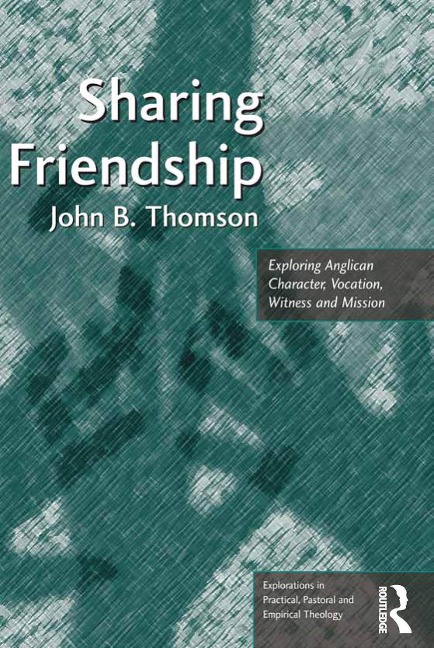
Sharing Friendship represents a post-liberal approach to ecclesiology and theology generated out of the history, practices and traditions of the Anglican Church. Drawing on the theological ethics of Stanley Hauerwas, this book explores the way friendship for the stranger emerges from contextually grounded reflection and conversations with contemporary Anglican theologians within the English tradition, including John Milbank, Oliver O'Donovan, Rowan Williams, Daniel Hardy and Anthony Thiselton. Avoiding abstract definitions of character, mission or friendship, John Thomson explores how the history of the English Church reflects a theology of friendship and how discipleship in the New Testament, the performance of worship, and the shape of Anglican ecclesiology are congruent with such a theology. The book concludes by rooting the theme of sharing friendship within the self-emptying kenotic performance of Jesus' mission, and looks at challenges to the character of contemporary Anglican ecclesiology represented by secularization and globalization as well as by arguments over appropriate new initiatives such as Fresh Expressions.
John B. Thomson is Bishop of Selby in the Diocese of York. He has been Director of Ministry in the Diocese of Sheffield, vicar of an inner urban parish, a theological educator in England and South Africa and a youth chaplain in a suburban parish. He has lived and worked in central and southern Africa and in South Yorkshire, England. Published works include The Ecclesiology of Stanley Hauerwas: A Christian Theology of Liberation (2003), Church on Edge? Practising Christian Ministry Today (2004), DOXA: A Discipleship Course (2007) and Living Holiness: Stanley Hauerwas and the Church (2010). He has also written a number of articles on church, ministry and mission most recently 'Sharing Friendship: God's Love in Ordinary Church Life' in Jeff Astley and Leslie J Francis, eds., Exploring Ordinary Theology - Dimensions of Everyday Christian Existence and the Life of the Church (2013) and 'Let us cook you your tea, vicar!' Church, hermeneutics and postmodernity in the work of Anthony Thiselton and Stanley Hauerwas' in Stanley E. Porter and Matthew Malcolm, eds., Hermeneutics, Paul and Theology: A Festschrift in Honor of Anthony C. Thiselton (2013).
Part I Practice; Chapter 1 Friendship as Character; Chapter 2 Friendship as Love; Chapter 3 Friendship as Discipleship; Chapter 4 Friendship as Worship; Chapter 5 Friendship as Church; Part II Reflection; Chapter 6 Radical Friendship; Chapter 7 Gospel Friendship; Chapter 8 Graceful Friendship; Chapter 9 Listening Friendship; Chapter 10 Wise Friendship; Part III Challenge; Chapter 11 Social Friendship; Chapter 12 Fresh Friendship; Chapter 101 Conclusion;
Dieses eBook wird im PDF-Format geliefert und ist mit einem Adobe Kopierschutz (DRM) versehen. Sie können dieses eBook mit allen Geräten lesen, die das PDF-Format und den Adobe Kopierschutz (DRM) unterstützen.
Zum Beispiel mit den folgenden Geräten:
• tolino Reader
Laden Sie das eBook direkt über den Reader-Shop auf dem tolino herunter oder übertragen Sie das eBook auf Ihren tolino mit einer kostenlosen Software wie beispielsweise Adobe Digital Editions.
• Sony Reader & andere eBook Reader
Laden Sie das eBook direkt über den Reader-Shop herunter oder übertragen Sie das eBook mit der kostenlosen Software Sony READER FOR PC/Mac oder Adobe Digital Editions auf ein Standard-Lesegeräte mit epub- und Adobe DRM-Unterstützung.
• Tablets & Smartphones
Möchten Sie dieses eBook auf Ihrem Smartphone oder Tablet lesen, finden Sie hier unsere kostenlose Lese-App für iPhone/iPad und Android Smartphone/Tablets.
• PC & Mac
Lesen Sie das eBook direkt nach dem Herunterladen mit einer kostenlosen Lesesoftware, beispielsweise Adobe Digital Editions, Sony READER FOR PC/Mac oder direkt über Ihre eBook-Bibliothek in Ihrem Konto unter „Meine eBooks“ - „online lesen“.
Schalten Sie das eBook mit Ihrer persönlichen Adobe ID auf bis zu sechs Geräten gleichzeitig frei.
Bitte beachten Sie, dass die Kindle-Geräte das Format nicht unterstützen und dieses eBook somit nicht auf Kindle-Geräten lesbar ist.