Und dann auf "Zum Home-Bildschirm [+]".

Stöbern
genialokal zum Startbildschirm hinzufügen
Installieren Sie die genialokal App auf Ihrem Startbildschirm für einen schnellen Zugriff und eine komfortable Nutzung.
Installieren Sie die genialokal App auf Ihrem Startbildschirm für einen schnellen Zugriff und eine komfortable Nutzung.
Ihr gewünschter Artikel ist in 0 Buchhandlungen vorrätig - wählen Sie hier eine Buchhandlung in Ihrer Nähe aus:

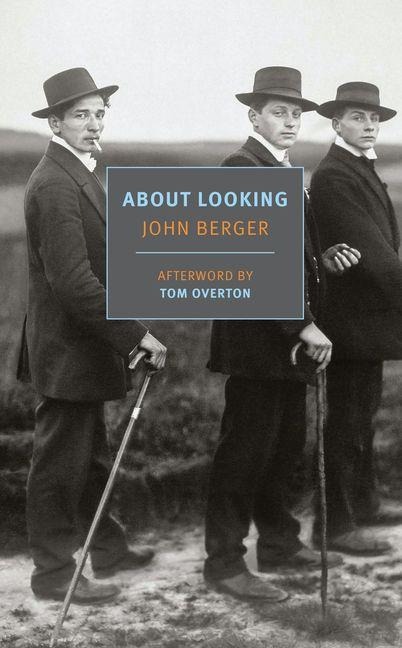
One of the writer and art critic's finest essay collections, which includes his influential essay on animal ethics, "Why Look at Animals?"; a critique of the "bourgeois sexual morality" of Rodin's sculptures; and an unlikely work of criticism linking Francis Bacon and Walt Disney.
John Berger was a thinker and writer of altogether extraordinary independence and range, an essayist, novelist, poet, and lifetime political activist whose work resonates with a voice that is as particular and personal as it is observant and reflective. Central to his long career was the experience of looking at and writing about art, and of all Berger's many collections of essays About Looking is the one that goes to the heart of his understanding of art and criticism and their complicated relation to individual experience, social life, and human history. Beginning with one of his most powerful and influential essays, "Why Look at Animals," the book continues with seminal pieces on the appeal and limits of the photographic image, before turning to consider and reconsider the achievements of painters and sculptors such as J. M. W. Turner, Gustave Courbet, Auguste Rodin, Francis Bacon, and Alberto Giacometti. The book is everywhere marked by Berger's determination, in the face of the specialization and commodification that are capitalism's stock-in-trade, to recall and engage with the essential question of "the meaning and enigma of visibility itself."
Part of an ongoing reissue of Berger's major works of criticism and fiction, About Looking quietly--but fundamentally--alters the vision of all who read it.
John Berger (1926-2017) was born in London and educated at Oxford, the Central School of Arts and Crafts, and the Chelsea School of Art. After serving in World War II, he became a painter, an art teacher, and eventually an art critic. His first novel, A Painter of Our Time, appeared in 1958, and his first collection of essays on art, Permanent Red: Essays in Seeing, in 1960, but Berger became much more widely known in 1972, the year his novel G. was awarded the Booker Prize and he hosted the four-part Ways of Seeing on BBC TV. In 1974, he moved away from Britain to a small town in the French Alps--a region that would make its way into several of his books, including the trilogy of novels Into their Labours (forthcoming from NYRB Classics). In addition to his many books of fiction and nonfiction, Berger was a prolific visual artist, a filmmaker, and a translator of, among others, Bertolt Brecht and Aimé Césaire. NYRB Classics also publishes Berger's G. and the essay collection And Our Faces, My Heart, Brief As Photos.
Tom Overton is the author of a biography of John Berger, John Berger from Life, and the editor of Portraits: John Berger on Artists, Landscapes: John Berger on Art, and The Underground Sea: John Berger on Miners and the Miners' Strike (with Matthew Harle). An archive curator at the Barbican Centre, London, he catalogued Berger's archive at the British Library. Currently he is at work, in collaboration with Katya Berger, on an edition of Berger's letters, to be published by New York Review Books. His website is overton.tw.