Und dann auf "Zum Home-Bildschirm [+]".

Stöbern
genialokal zum Startbildschirm hinzufügen
Installieren Sie die genialokal App auf Ihrem Startbildschirm für einen schnellen Zugriff und eine komfortable Nutzung.
Installieren Sie die genialokal App auf Ihrem Startbildschirm für einen schnellen Zugriff und eine komfortable Nutzung.
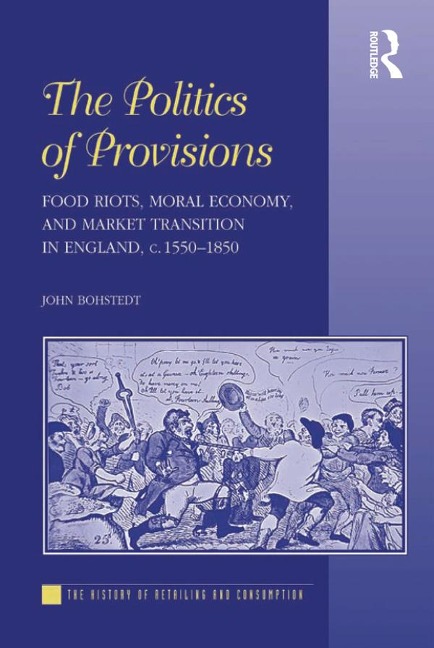
The elemental power of food politics has not been fully appraised. Food marketing and consumption were matters of politics as much as economics as England became a market society. In times of dearth, concatenations of food riots, repression, and relief created a maturing politics of provisions. Over three centuries, some eight hundred riots crackled in waves across England. Crowds seized wagons, attacked mills and granaries, and lowered prices in marketplaces or farmyards. Sometimes rioters parleyed with magistrates. More often both acted out a well-rehearsed political minuet that evolved from Tudor risings and state policies down to a complex culmination during the Napoleonic Wars. 'Provision politics' thus comprised both customary negotiations over scarcity and hunger, and 'negotiations' of the social vessel through the turbulence of dearth. Occasionally troops killed rioters, or judges condemned them to the gallows, but increasingly riots prompted wealthy citizens to procure relief supplies. In short, food riots worked: in a sense they were a first draft of the welfare state. This pioneering analysis connects a generation of social protest studies spawned by E.P. Thompson's essay on the 'moral economy' with new work on economic history and state formation. The dynamics of provision politics that emerged during England's social, economic and political transformations should furnish fruitful models for analyses of 'total war' and famine as well as broader transitions elsewhere in world history.
John Bohstedt is Professor emeritus in the Department of History at the University of Tennessee, Knoxville, USA, and author of Riots and Community Politics in England and Wales, 1790-1810.
Contents: 'We'd rather be hanged than starved!': the politics of provisions; The genesis of provision politics, 1580-1650; The recession of provision politics, 1650-1739; Bolting mills and marketplaces: the formative generation of provisions politics, 1740-1775; A viable, but doomed, provision politics, 1782-1812; The decadence of the politics of provisions, 1812-67; Conclusions: provision politics from the book of orders to World War One; Bibliography of works cited; Index.
Dieses eBook wird im PDF-Format geliefert und ist mit einem Adobe Kopierschutz (DRM) versehen. Sie können dieses eBook mit allen Geräten lesen, die das PDF-Format und den Adobe Kopierschutz (DRM) unterstützen.
Zum Beispiel mit den folgenden Geräten:
• tolino Reader
Laden Sie das eBook direkt über den Reader-Shop auf dem tolino herunter oder übertragen Sie das eBook auf Ihren tolino mit einer kostenlosen Software wie beispielsweise Adobe Digital Editions.
• Sony Reader & andere eBook Reader
Laden Sie das eBook direkt über den Reader-Shop herunter oder übertragen Sie das eBook mit der kostenlosen Software Sony READER FOR PC/Mac oder Adobe Digital Editions auf ein Standard-Lesegeräte mit epub- und Adobe DRM-Unterstützung.
• Tablets & Smartphones
Möchten Sie dieses eBook auf Ihrem Smartphone oder Tablet lesen, finden Sie hier unsere kostenlose Lese-App für iPhone/iPad und Android Smartphone/Tablets.
• PC & Mac
Lesen Sie das eBook direkt nach dem Herunterladen mit einer kostenlosen Lesesoftware, beispielsweise Adobe Digital Editions, Sony READER FOR PC/Mac oder direkt über Ihre eBook-Bibliothek in Ihrem Konto unter „Meine eBooks“ - „online lesen“.
Schalten Sie das eBook mit Ihrer persönlichen Adobe ID auf bis zu sechs Geräten gleichzeitig frei.
Bitte beachten Sie, dass die Kindle-Geräte das Format nicht unterstützen und dieses eBook somit nicht auf Kindle-Geräten lesbar ist.