
Stöbern
genialokal zum Startbildschirm hinzufügen
Installieren Sie die genialokal App auf Ihrem Startbildschirm für einen schnellen Zugriff und eine komfortable Nutzung.
Installieren Sie die genialokal App auf Ihrem Startbildschirm für einen schnellen Zugriff und eine komfortable Nutzung.
Tippen Sie einfach auf Teilen:
 Und dann auf "Zum Home-Bildschirm [+]".
Ihr gewünschter Artikel ist in 0 Buchhandlungen vorrätig - wählen Sie hier eine Buchhandlung in Ihrer Nähe aus:

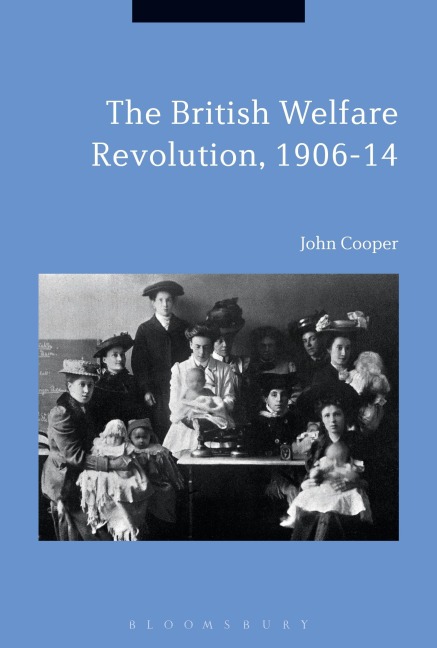
The Welfare Revolution of the early 20th century did not start with Clement Attlee's Labour governments of 1945 to 1951 but had its origins in the Liberal government of forty years earlier. The British Welfare Revolution, 1906-14 offers a fresh perspective on the social reforms introduced by these Liberal governments in the years 1906 to 1914. Reforms conceived during this time created the foundations of the Welfare State and transformed modern Britain; they touched every major area of social policy, from school meals to pensions, the minimum wage to the health service. Cooper uses an innovative approach, the concept of the Counter-Elite, to explain the emergence of the New Liberalism and examines the research that was carried out to devise ways to meet each specific social problem facing Britain in the early 20th century. For example, a group of businessmen, including Booth and Rowntree, invented the poverty survey to pinpoint those living below the poverty line and encouraged a new generation of sociologists. This comprehensive single volume survey presents a new critical angle on the origins of the British welfare state and is an original analysis of the reforms and the leading personalities of the Liberal governments from the late Edwardian period to the advent of the First World War.
John Cooper is a social historian, specializing in Jewish history. He is the author of four previous books including The Child in Jewish History (Aronson) and Pride versus Prejudice: Jewish Doctors and Lawyers in England (Palgrave Macmillan). After studying history at Balliol College, Oxford he practiced in London as a lawyer. He is a Fellow of The Royal Historical Society.
Introduction 1. The Rise of the Counter-Elite 2. The Recruiting Grounds of the Counter-Elite 3. School Meals and Medical Inspection 4. Child Welfare 5. Old Age Pensions 6. The Webbs and the Minority Report on the Poor Law 7. The Great Budget of 1909 8. Sweating and the Minimum Wage 9. National Health Insurance 10. First Steps towards a Health Service 11. Unemployment Insurance 12. Boy Labour and Continuation Education 13. A Partially Reformed Poor Law 14. Municipal Housing and Town Planning 15. From Trade Boards to the Minimum Wage 16. Conclusion