
Stöbern
genialokal zum Startbildschirm hinzufügen
Installieren Sie die genialokal App auf Ihrem Startbildschirm für einen schnellen Zugriff und eine komfortable Nutzung.
Installieren Sie die genialokal App auf Ihrem Startbildschirm für einen schnellen Zugriff und eine komfortable Nutzung.
Tippen Sie einfach auf Teilen:
 Und dann auf "Zum Home-Bildschirm [+]".
Ihr gewünschter Artikel ist in 0 Buchhandlungen vorrätig - wählen Sie hier eine Buchhandlung in Ihrer Nähe aus:

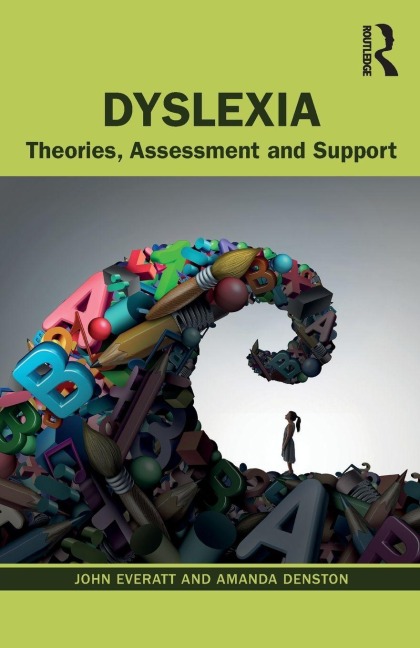
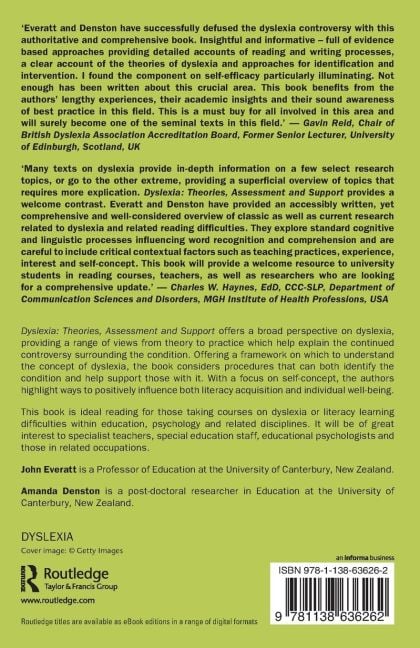
Dyslexia: Theories, Assessment and Support offers a broad perspective on dyslexia, providing a range of views from theory to practice which help explain the continued controversy surrounding the condition. Offering a framework on which to understand the concept of dyslexia, the book considers procedures that can both identify the condition and help support those with it. With a focus on self-concept, the authors highlight ways to positively influence both literacy acquisition and individual well-being.
This book is ideal reading for those taking courses on dyslexia or literacy learning difficulties within education, psychology and related disciplines. It will be of great interest to specialist teachers, special education staff, educational psychologists and those in related occupations.
John Everatt is a Professor of Education at the University of Canterbury, New Zealand. Amanda Denston is a post-doctoral researcher in Education at the University of Canterbury, New Zealand.
PART 1: Introduction to the skills of reading and writing Background to the book The skill of reading and writing Reading and writing development Reading processes or skills Overview of the rest of the book PART 2: A background and framework to understand dyslexia Introduction Reading/learning disability and dyslexia A brief history of dyslexia Dyslexia and intelligence Perspectives and definitions A framework for dyslexia PART 3: Theories of dyslexia Introduction Phonological processing and dyslexia Differences in dyslexia across languages and orthographies Accuracy versus speed and double deficit perspectives Perceptual factors and visual processing deficit accounts Motor and cerebellum deficit viewpoints Morphology and meaning Conclusions PART 4: Identifying dyslexia Introduction Types of assessment methods Assessment procedures and evaluation Comparisons of the performance of dyslexic against norms Differentiating dyslexia from other learning difficulties Dyslexia across orthographies, languages and educational contexts PART 5: Intervention Introduction A classification of intervention perspectives General learning viewpoints Literacy teaching methods Phonological awareness training Response to intervention Assessment-intervention profiling Multisensory learning Working memory or meta-cognitive methods Visual-and motor-related interventions Conclusion PART 6: Self-concept and dyslexia Introduction Defining self-esteem A multi-dimensional model of self-esteem Academic self-concept and education Self-efficacy Self-efficacy and education Academic self-efficacy and beyond in education Resilience Resilience and education Overall Concluding views on improving literacy and self-concept