
Stöbern
genialokal zum Startbildschirm hinzufügen
Installieren Sie die genialokal App auf Ihrem Startbildschirm für einen schnellen Zugriff und eine komfortable Nutzung.
Installieren Sie die genialokal App auf Ihrem Startbildschirm für einen schnellen Zugriff und eine komfortable Nutzung.
Tippen Sie einfach auf Teilen:
 Und dann auf "Zum Home-Bildschirm [+]".
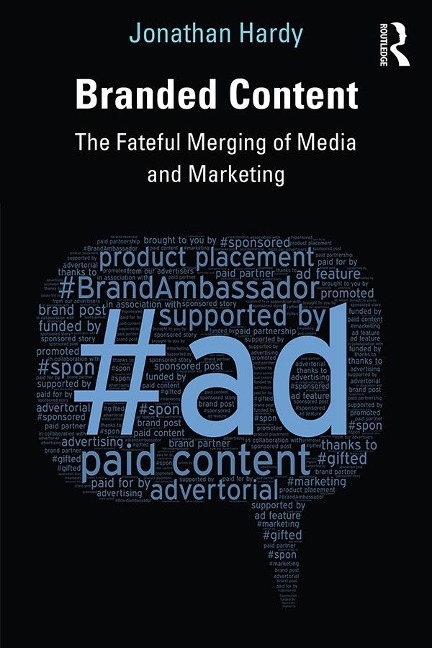
This is a critical study of the changing relationship between media and marketing communications in the digital age. It examines the growth of content funded by brands, including brands' own media, native advertising, and the integration of branded content across film, television, journalism and publishing, online, mobile, and social media. This ambitious historical, empirical, and theoretical study examines industry practices, policies, and 'problems', advancing a framework for analysis of communications governance. Featuring examples from the UK, US, EU, Asia, and other regions, it illustrates and explains industry practices, forms, and formats and their relationship with changing market conditions, policies, and regulation. The book provides a wide-ranging and incisive guide to contemporary advertising and media practices, to different arguments and perspectives on these practices arising in industry, policy, and academic contexts, and to the contribution made by critical scholarship, past and present. It also offers a critical review of industry, regulatory, societal, and academic literatures. Jonathan Hardy examines the erosion of the principle of separating advertising and media and calls for a new framework for distinguishing marketing communications across 21st-century communications. With a focus on key issues in industry, policy, and academic contexts, this is essential reading for students of media industries, advertising, marketing, and digital media.
Jonathan Hardy is Professor of Communications and Media at the University of the Arts London. He writes and comments on media industries, media and advertising, communications regulation, and international media systems. His books include Critical Political Economy of the Media (2014), Cross-Media Promotion (2010), and Western Media Systems (2008). He is co-editor of The Advertising Handbook (2018) and is series editor of Routledge Critical Advertising Studies. He is a member of the editorial boards of Digital Journalism, Political Economy of Communication, Mediterranean Journal of Communication, and TripleC: Communication, Capitalism & Critique.
Part One: Practices 1 Advertising and media: separation and integration 2. News Media and Marketing 3. Branded entertainment and product integration 4. Brand content direct to you: marketers' 'owned' media 5. Going native in digital media 6. Media as Marketers Part Two: Policies and Problems 7. Regulating convergent media and marketing communications 8. Lobbying, liberalisation, normalisation, and contestation 9. Communication gains and losses: economic, cultural, and societal 10. Media and marketing critiques: renewing the radical tradition 11. Advertising and Media (reprise): contesting normalisation
Dieses eBook wird im PDF-Format geliefert und ist mit einem Adobe Kopierschutz (DRM) versehen. Sie können dieses eBook mit allen Geräten lesen, die das PDF-Format und den Adobe Kopierschutz (DRM) unterstützen.
Zum Beispiel mit den folgenden Geräten:
• tolino Reader
Laden Sie das eBook direkt über den Reader-Shop auf dem tolino herunter oder übertragen Sie das eBook auf Ihren tolino mit einer kostenlosen Software wie beispielsweise Adobe Digital Editions.
• Sony Reader & andere eBook Reader
Laden Sie das eBook direkt über den Reader-Shop herunter oder übertragen Sie das eBook mit der kostenlosen Software Sony READER FOR PC/Mac oder Adobe Digital Editions auf ein Standard-Lesegeräte mit epub- und Adobe DRM-Unterstützung.
• Tablets & Smartphones
Möchten Sie dieses eBook auf Ihrem Smartphone oder Tablet lesen, finden Sie hier unsere kostenlose Lese-App für iPhone/iPad und Android Smartphone/Tablets.
• PC & Mac
Lesen Sie das eBook direkt nach dem Herunterladen mit einer kostenlosen Lesesoftware, beispielsweise Adobe Digital Editions, Sony READER FOR PC/Mac oder direkt über Ihre eBook-Bibliothek in Ihrem Konto unter „Meine eBooks“ - „online lesen“.
Schalten Sie das eBook mit Ihrer persönlichen Adobe ID auf bis zu sechs Geräten gleichzeitig frei.
Bitte beachten Sie, dass die Kindle-Geräte das Format nicht unterstützen und dieses eBook somit nicht auf Kindle-Geräten lesbar ist.