
Stöbern
genialokal zum Startbildschirm hinzufügen
Installieren Sie die genialokal App auf Ihrem Startbildschirm für einen schnellen Zugriff und eine komfortable Nutzung.
Installieren Sie die genialokal App auf Ihrem Startbildschirm für einen schnellen Zugriff und eine komfortable Nutzung.
Tippen Sie einfach auf Teilen:
 Und dann auf "Zum Home-Bildschirm [+]".
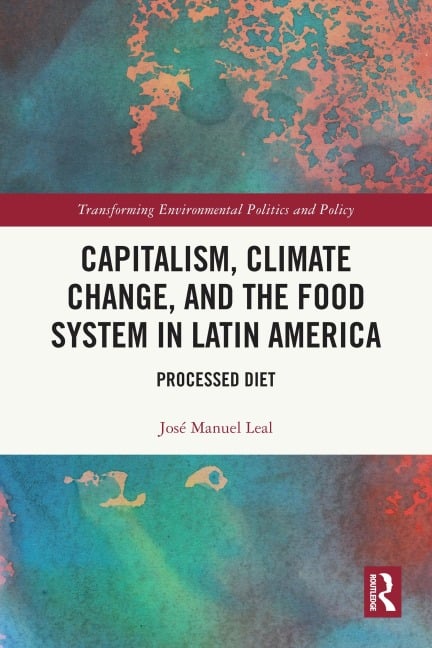
Capitalism, Climate Change, and the Food System in Latin America illustrates the relationship between climate change politics and food systems through a critical international political economy perspective. Economic globalization has changed our daily habits. Specifically, it has significantly influenced our food and dietary habits. In other words, there is a predominance of economic rationality in our daily activities, including eating. This characteristic contributes to greenhouse gas (GHG) emissions. This book shows that food is not just about farming or markets. It is also about politics and power. It argues that understanding the political economy of food is key to understanding the relationship between the food system and climate politics. Moreover, the book explains that food policies often look technical, but they reflect choices about who wins and who loses, and they can hide the real complexity of food systems.It considers the political drivers of dietary habits and policies related to the food sector (that contribute to an increase in GHG emissions), and the interrelation between economic growth, capital accumulation, and the cultural meanings of daily practices (e.g. eating and cooking) that connect food production and GHG emissions. By applying the Gramscian concept of hegemony through consent, the book shows how economic rationality contributes to increased GHG emissions in Latin America. The book proposes a new way of conceptualizing world hegemony by moving away from mainstream conceptions that view hegemony as exercised through material power. Furthermore, it discusses climate change politics and shows how it is not only about processes of governance and rule-making, or about power relations, but also about our daily life activities. It argues that power grows not only through relations between states, but also through alliances among social classes, including a transnational capitalist class. Across the chapters, the book shows how economic actors gain consent and expand influence by shaping food policies and food habits. This happens, for example, when policies prioritize certain products and supply chains, promote products linked to market interests, and encourage consumption of new foods in Latin America, including more processed foods. Capitalism, Climate Change, and the Food System in Latin America will be of great interest to students and scholars of environmental politics, international relations, human geography, food studies, and Latin America, as well as to policymakers in the fields of environmental, economic, and food policy.
José Manuel Leal is a Postdoctoral Fellow at the University of Guadalajara, Mexico. His research focuses on transnational climate change governance and the international political economy of climate change. His latest publication includes La reestructuración del poder en las relaciones internacionales. La participación de actores híbridos en la paradiplomacia mexicana: El caso del estado de Jalisco (with Rocío Melendrez, 2025), La brecha democrática en la política climática: La importancia de las interacciones funcionales para abordar problemas complejos (with Adriana Martínez and Daniel Moya, 2025), La paradiplomacia transversal de la transición energética. Perspectivas para México (2025), and previous publications include Transnational City Networks, Global Political Economy, and Climate Governance: C40 in Mexico and Lima (with Matthew Paterson, 2023), and La economización de la gobernanza global climática: Lecciones desde los mercados de carbono (2023).
Introduction: Capitalism, Climate Change, and the Food System in Latin America Chapter 1. Climate Change and Food Chapter 2. An IPE Approach to Study the Food Sector Chapter 3. Cultural Political Economy of Food Chapter 4. The Expansion of Hegemony Through Consent in Latin America Conclusion