Und dann auf "Zum Home-Bildschirm [+]".

Stöbern
genialokal zum Startbildschirm hinzufügen
Installieren Sie die genialokal App auf Ihrem Startbildschirm für einen schnellen Zugriff und eine komfortable Nutzung.
Installieren Sie die genialokal App auf Ihrem Startbildschirm für einen schnellen Zugriff und eine komfortable Nutzung.
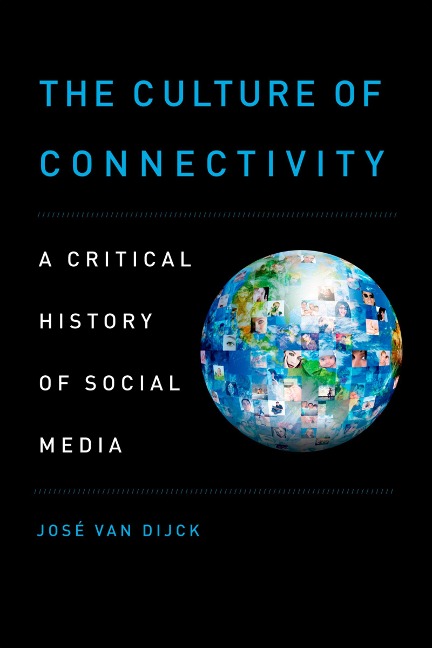
Social media penetrate our lives: Facebook, YouTube, Twitter and many other platforms define daily habits of communication and creative production. This book studies the rise of social media, providing both a historical and a critical analysis of the emergence of major platforms in the context of a rapidly changing ecosystem of connective media. Author José van Dijck offers an analytical prism that can be used to view techno-cultural as well as socio-economic aspects of this transformation as well as to examine shared ideological principles between major social media platforms. This fascinating study will appeal to all readers interested in social media.
José van Dijck is Professor of Comparative Media Studies at the University of Amsterdam, where she also served as Dean of Humanities.
Table of Contents
Acknowledgments
Chapter 1: Engineering Sociality in a Culture of Connectivity 1.1 Introduction 1.2 From Networked Communication to Platformed Sociality 1.3 Making the Web Social: Coding Human Connections. 1.4 Making Sociality Saleable: Connectivity as a Resource 1.5 The Ecosystem of Connective Media in a Culture of Connectivity
Chapter 2: Disassembling Platforms, Reassembling Sociality 2.1 Introduction 2.2 Combining Two Approaches 2.3 Platforms as Techno-cultural Constructs 2.4 Platforms as Socio-economic Structures 2.5 Connecting Platforms, Reassembling Sociality
Chapter 3: Facebook and the Imperative of Sharing 3.1 Introduction 3.2 Coding Facebook: The Devil is in the Default 3.3 Branding Facebook: What You Share Is What You Get 3.4 Shared norms in the Ecosystem of Connective Media
Chapter 4: Twitter and the Paradox of Following and Trending 4.1 Introduction 4.2 Asking the Existential Question: What is Twitter? 4.3 Asking the Strategic Question: What Does Twitter Want? 4.4 Asking the Ecological Question: What Will Twitter Be?
Chapter 5: Flickr between Communities and Commerce 5.1 Introduction 5.2 Flickr Between Connedtedness and Connectivity 5.3 Flickr Between Commons and Commerce 5.4 Flickr Between Participatory and Connective Culture
Chapter 6: YouTube: The Intimate Connection between Television and Video-sharing 6.1 Introduction 179-215 6.2 Out of the Box: Video-sharing Challenges Television 6.3 Boxed In: Channeling Television into the Connective Flow 6.4 YouTube as A Gateway to Connective Culture
Chapter 7: Wikipedia and the Principle of Neutrality 7.1 Introduction 7.2 The Techno-cultural Construction of Consensus 7.3 A Consensual Apparatus between Democracy and Bureaucracy 7.4 A Nonmarket Space in the Ecosystem?
Chapter 8: The Ecosystem of Connective Media: Locked In, Fenced Off, Opt Out? 8.1 Introduction 8.2 Locked In: The Algorithmic Basis of Sociality 8.3 Fenced Off: Vertical Integration and Interoperability 8.4 Opt Out? Connectivity as Ideology
Bibliography Index
Dieses eBook wird im PDF-Format geliefert und ist mit einem Adobe Kopierschutz (DRM) versehen. Sie können dieses eBook mit allen Geräten lesen, die das PDF-Format und den Adobe Kopierschutz (DRM) unterstützen.
Zum Beispiel mit den folgenden Geräten:
• tolino Reader
Laden Sie das eBook direkt über den Reader-Shop auf dem tolino herunter oder übertragen Sie das eBook auf Ihren tolino mit einer kostenlosen Software wie beispielsweise Adobe Digital Editions.
• Sony Reader & andere eBook Reader
Laden Sie das eBook direkt über den Reader-Shop herunter oder übertragen Sie das eBook mit der kostenlosen Software Sony READER FOR PC/Mac oder Adobe Digital Editions auf ein Standard-Lesegeräte mit epub- und Adobe DRM-Unterstützung.
• Tablets & Smartphones
Möchten Sie dieses eBook auf Ihrem Smartphone oder Tablet lesen, finden Sie hier unsere kostenlose Lese-App für iPhone/iPad und Android Smartphone/Tablets.
• PC & Mac
Lesen Sie das eBook direkt nach dem Herunterladen mit einer kostenlosen Lesesoftware, beispielsweise Adobe Digital Editions, Sony READER FOR PC/Mac oder direkt über Ihre eBook-Bibliothek in Ihrem Konto unter „Meine eBooks“ - „online lesen“.
Schalten Sie das eBook mit Ihrer persönlichen Adobe ID auf bis zu sechs Geräten gleichzeitig frei.
Bitte beachten Sie, dass die Kindle-Geräte das Format nicht unterstützen und dieses eBook somit nicht auf Kindle-Geräten lesbar ist.